Shenandoah National Park guide · 1 min read
Billion-Year-Old Rocks of the Blue Ridge
The rocks beneath Shenandoah National Park are some of the oldest in Virginia, and some of them date back more than one billion years.
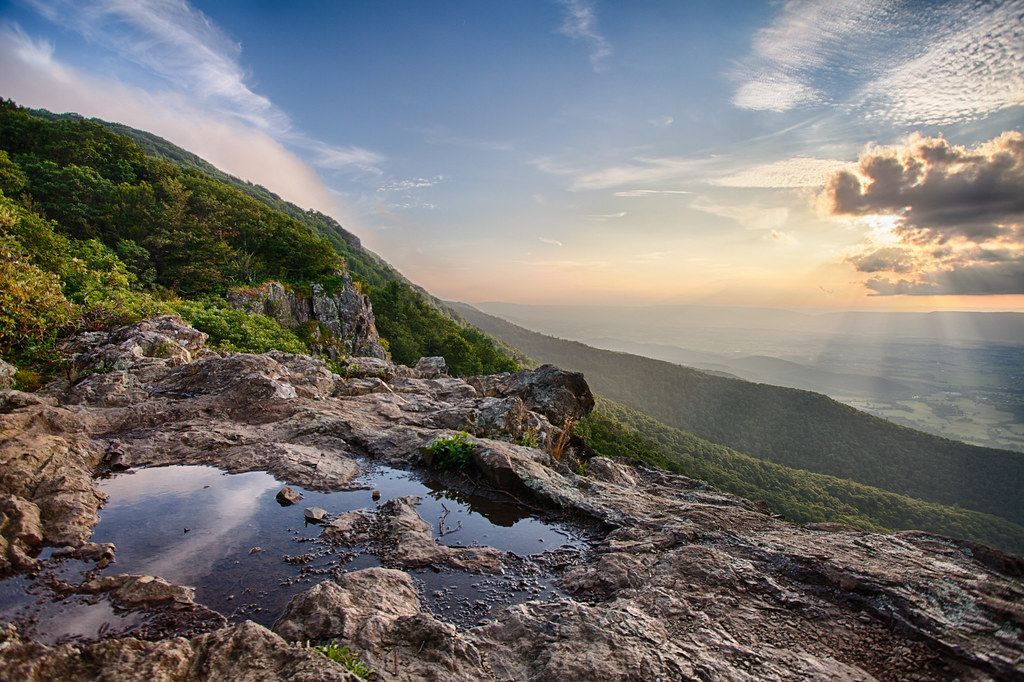
The main bedrock is granitic basement from the Grenville age, formed about 1.2 to 1.0 billion years ago. The park sits within the Blue Ridge Mountains of north-central Virginia and preserves a section of that range.
Younger rock is layered on top of that foundation. The cover is metamorphosed Neoproterozoic rock, roughly 570 to 550 million years old, including sedimentary and volcanic material from the Swift Run and Catoctin formations. Compton Peak has columns of basalt from the Catoctin Formation that have been metamorphosed. The strata here are well exposed, and they belong to the Appalachians, one of the oldest mountain chains on Earth.
Over time, these rocks were altered and eroded to shape today's peaks and hollows. In places, the difference in height between the peaks and the Shenandoah Valley tops 3,000 feet, and two peaks climb past 4,000 feet. The crest of the range also acts as a drainage divide. Streams on its western side feed the Shenandoah River and the Potomac drainage, while streams to the east flow into the James and Rappahannock basins.
Skyline Drive is the park's only public road, and it runs 105 miles along the ridge from one end of the park to the other. Along the way, visitors pass many lookouts and trailheads. The stretch between Thornton Gap and Swift Run Gap, near the center, holds much of the highest ground and a lot of the best lookouts and paths. Hikers can walk to viewpoints such as Stony Man, which offers a view from its summit.