Parka
Valley Forge National Historical Park

Areas in Valley Forge National Historical Park

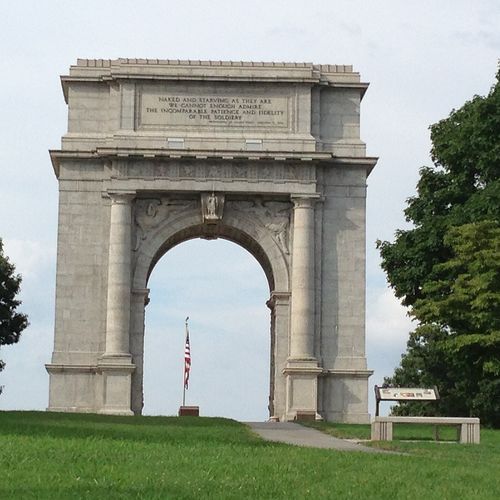
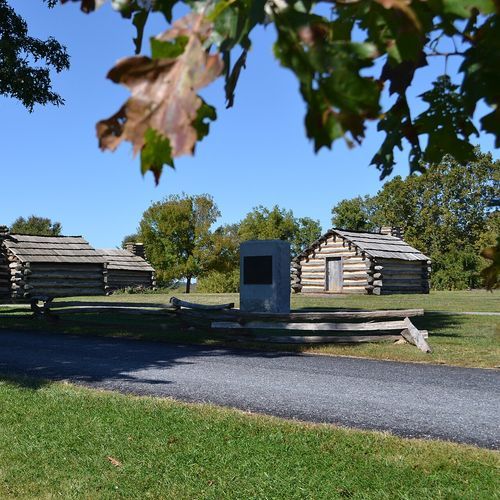
Valley Forge rewards visitors who think of it as a landscape rather than a single monument. Spread across roughly 3,500 acres of rolling southeastern Pennsylvania countryside, the park preserves the ground where George Washington's Continental Army endured the brutal winter of 1777 to 1778 and emerged a far more disciplined fighting force. Admission is free and the grounds stay open all year, so the smartest approach is to start at the visitor center near the park's main entrance, get oriented to the encampment's layout, and then move outward along the tour road. The southern uplands hold the heart of the encampment story: the outer and inner defensive lines, reconstructed log huts standing where brigades once crowded into some 2,000 cabins, earthen redoubts, and the soaring National Memorial Arch, which makes a natural pause for reflection on the roughly 2,000 soldiers who never left camp.

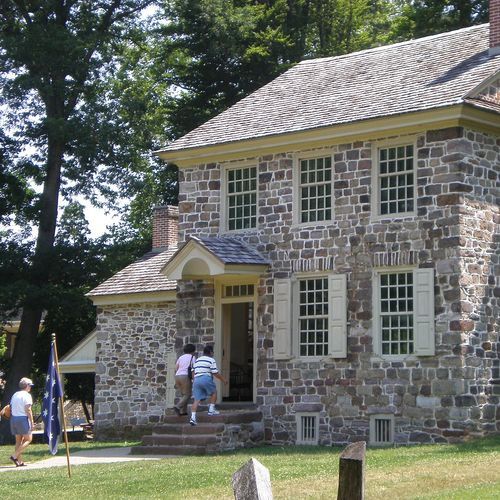
The northern and western reaches have a different character entirely. Here the Schuylkill River bends through the park, and near its meeting with Valley Creek you'll find Washington's restored stone headquarters, furnished to evoke the command center of the encampment, along with the village setting that gave the place its name. Above it rise Mount Joy and Mount Misery, wooded high points at the tail end of the North Valley Hills, and their climbs deliver some of the most rewarding walking in the park. Across the river, quieter trails and riverside paths offer a gentler counterpoint to the monuments and earthworks.

Finally, don't overlook Valley Forge as a natural refuge. Hemmed in on every side by suburban and commercial development, the park shelters a surprising mix of habitats: streamside woodlands along Valley Creek and smaller tributaries like Trout Creek, mature eastern hardwood forest, and sweeping tall-grass meadows that bloom with color in summer and draw birds and wildlife year-round. With about 35 miles of trails linking all these areas, the best visits combine a drive or bike loop past the historic sites with at least one unhurried walk through the meadows or up the wooded hills, letting the history and the landscape reveal themselves together.

2 trails

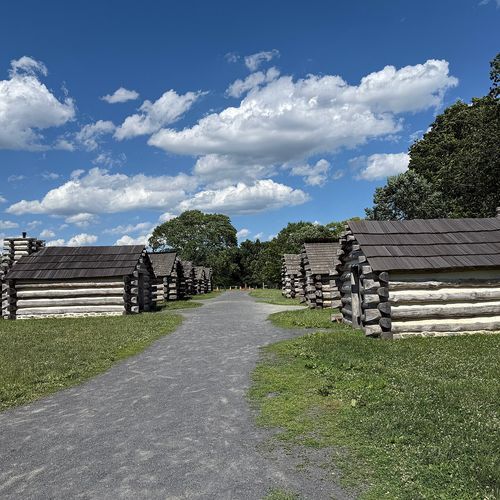
At the east end of the camp, the visitor center and its museum open the Encampment Tour, with a brigade camp as one of the first stops. Nine reconstructed log huts face a gravel company street where Virginia troops under General Peter Muhlenberg wintered in 1777-78, beside a replica bake oven. Some huts hold exhibits on camp life, and costumed rangers and volunteers sometimes demonstrate it. Redoubt 2, a rebuilt earthen fort, guarded the outer line nearby.

Places: Redoubt 2 · Muhlenberg's Brigade · Visitor Center at Valley Forge

2 trails

This corner of the park centers on the old village of Valley Forge at the mouth of Valley Creek. The Isaac Potts House served as George Washington's headquarters during the winter encampment, and the restored train station nearby now works as an information center. Paved paths link the buildings, with von Steuben's quarters a short walk away and trails climbing Mount Joy and Mount Misery. Stories here include Martha Washington, the general's aides and Hannah Till, his enslaved cook.

Places: Washington's Headquarters (Isaac Potts House) · Valley Forge Train Station · Mount Joy · Von Steuben's Quarters · Washington's Marquee Site · New Jersey Monument · George Washington Statue

5 trails

The southern stretch of the encampment centers on a hilltop arch at Gulph Road, modeled by architect Paul Philippe Cret on Rome's Arch of Titus and carved with Washington's praise for his soldiers' patience. Memorial stones for each brigade line the drive, which continues past the Pennsylvania Columns to a mounted Anthony Wayne statue in Wayne's Woods and Redoubt 3. Along Valley Creek stand farmhouses that Knox, Lafayette and Lord Stirling used as quarters.

Places: Knox's Quarters · National Memorial Arch · Redoubt 3 · Lord Stirling's Quarters · Lafayette's Quarters · Anthony Wayne Statue · Massachusetts Monument · Knox Covered Bridge

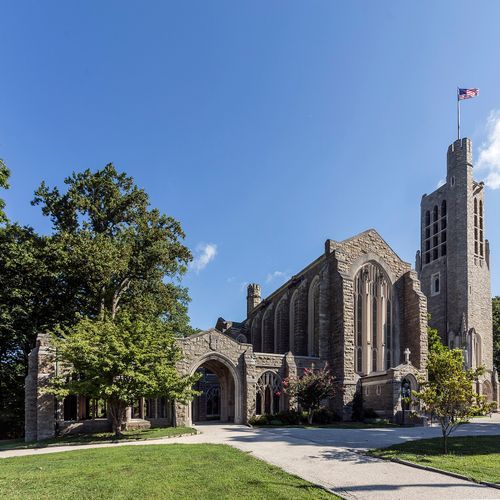
At the heart of the encampment, this ground held most of the Continental Army's cannons, parked between the first and second defensive lines so crews could haul them to the earthen redoubts if the British attacked. Henry Knox trained about 630 artillerymen here, while Baron von Steuben drilled the army on the open parade field nearby. Varnum's Quarters, the Star Redoubt and the Patriots of African Descent Monument are all a short walk away.

Places: Varnum's Quarters · Artillery Park · Redoubt 4 · Star Redoubt · Waterman Monument · Baron von Steuben Statue · Patriots of African Descent Monument · Washington Memorial Chapel

2 trails

Across the Schuylkill River from the main encampment, this quieter side of the park takes in Betzwood, the site of Sullivan's Bridge, and Pawling's farm at Walnut Hill. Flat trails follow the river through floodplain that rises gently toward a higher terrace, and the paved Schuylkill River Trail continues toward Philadelphia and Phoenixville. Below Walnut Hill, large stone and earthen embankments survive from 1940s basins built to catch coal silt from the river.

Places: Sullivan's Bridge Marker · Pawling Sycamore

Explore all areas with offline maps in the Parka app

Download Parka — It's Free

Take it with you

The Parka app keeps your maps, trails and plans working with no signal. What you save here is already there.

Download on the App Store

Explore All 83 Parks

Browse parks by region and discover your next adventure