Canyonlands National Park guide · 2 min read
Floating the Green and Colorado Rivers
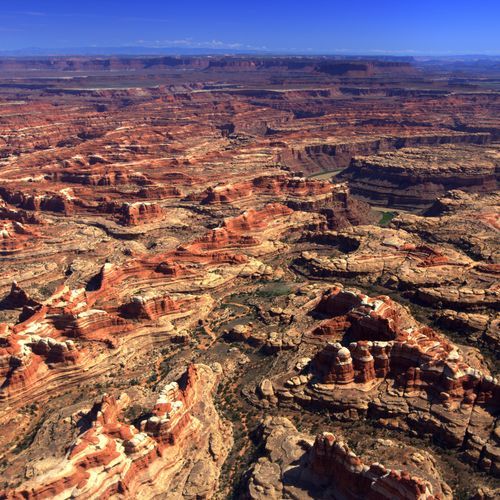
The Green and Colorado Rivers sliced two deep gorges into the layered sandstone at the heart of Canyonlands.
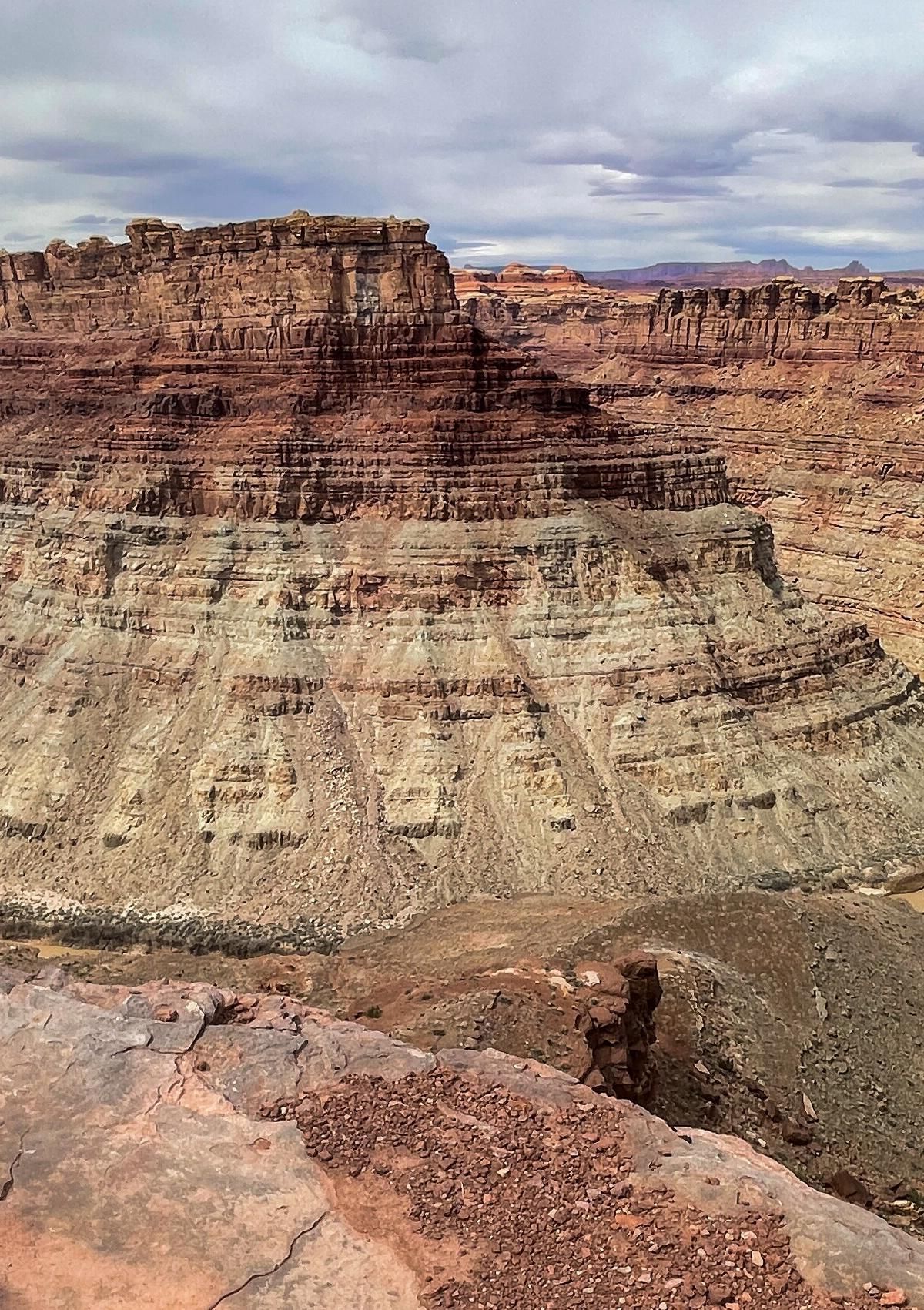
Down along the water, the air is shadier and the banks are thick with plants and wildlife, a sharp change from the hot, exposed desert on the rims.
The Green and Colorado meet near the center of the park at the Confluence, and that junction splits the boating into two very different experiences. Upstream, both rivers stay calm for many miles, so canoeists, sea kayakers, and people in other shallow-draft craft can drift and paddle at an easy pace. Past the junction, the joined current gains speed and drops through Cataract Canyon, where fourteen miles of rapids rate from Class III to Class V. Rafting suits anyone looking for rapids, while paddling the calm water offers a slower look at the canyon walls.
Steep walls often hide the rivers until you are close to them, and no road reaches the water near the Confluence or anywhere in Cataract Canyon. Green River trips commonly launch from Green River State Park, Ruby Ranch, or Mineral Bottom, while most Colorado River parties put in at the Potash or Moab ramps. The rapids of Cataract Canyon carry boaters out of the park and on into Glen Canyon National Recreation Area, with trips ending at the North Wash takeout, where the Dirty Devil River joins the Colorado.
Trips can run from one day to twelve days. Guided outings from local companies range from a half day on the water to a full week, and a typical river journey means camping out for several nights.
In 1869, John Wesley Powell led a crew down the Green and Colorado through this country. He wrote of buttes shaped like cathedrals, cliffs no one could climb, and canyon walls so tall the river seemed tiny beneath them. The corridor has changed since his day, yet it remains remote and wild, and its fragile desert setting is why boaters follow regulations meant to protect it.