Canyonlands National Park guide · 2 min read
Stargazing in an International Dark Sky Park
A moonless night over the Colorado Plateau can be dark enough to catch many visitors off guard.
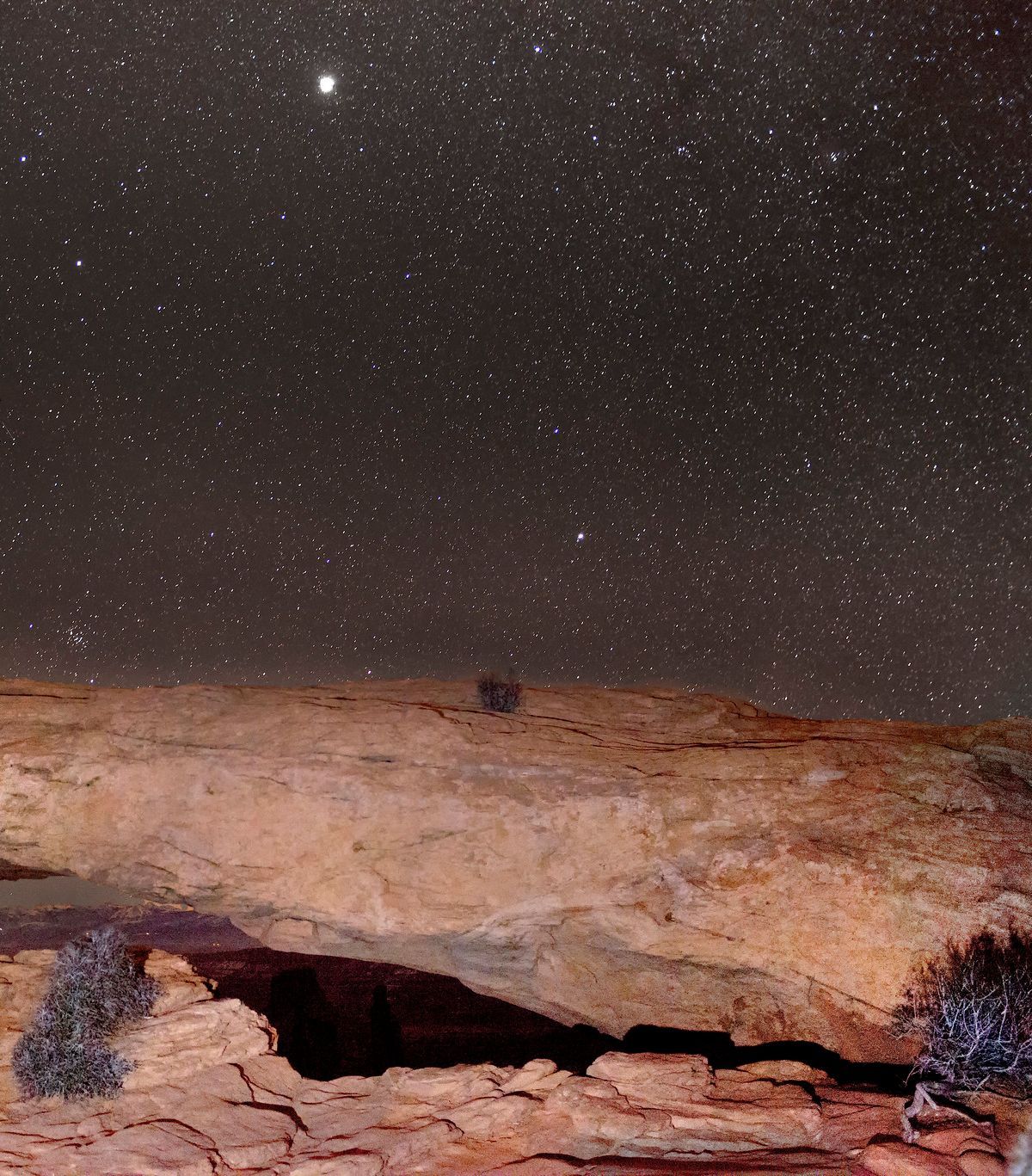
Parks in this region sit under some of the least light-polluted skies left in the lower 48 states, and Canyonlands is one of them. The unaided eye can pick out a dense scatter of stars here. Under the right conditions, ordinary binoculars can show the rings of Saturn. In many cities, streetlight glow hides most of the sky, and only about one in ten Americans live where they can see the roughly 2,500 stars expected under normal conditions.
Rangers occasionally lead stargazing programs at Canyonlands and other parks in southeast Utah. The annual Southeast Utah AstroFest pairs ranger talks and telescope viewing with family-friendly activities across Arches, Canyonlands and Dead Horse Point State Park. At the Island in the Sky district, the festival's programs take place at Grand View Point and Green River Overlook, with telescopes set up for evening viewing. Pack warm layers, something to sit on, and a red flashlight if you have one.
Plan around the sky before you go. The Canyonlands National Park Clear Sky Chart posts updates on cloud cover and other night conditions, and the moon matters greatly. The darkest nights come with a new moon or when the moon sits below the horizon. Even a thin crescent can wash out faint stars and make the Milky Way harder to spot. Choose a high viewpoint or an open area far from roads and buildings, where less stray light reaches your eyes.
Give your eyes 20 to 30 minutes to adjust to the dark, and keep bright lights away during that time. Light from flashlights, phones and vehicle headlights can harm night vision when it is white. Red light has far less effect, so many flashlights and headlamps include a red setting, or you can cover a white light with something red.