Capitol Reef National Park guide · 1 min read
Sagebrush, Pinyon and Juniper Desert Plants
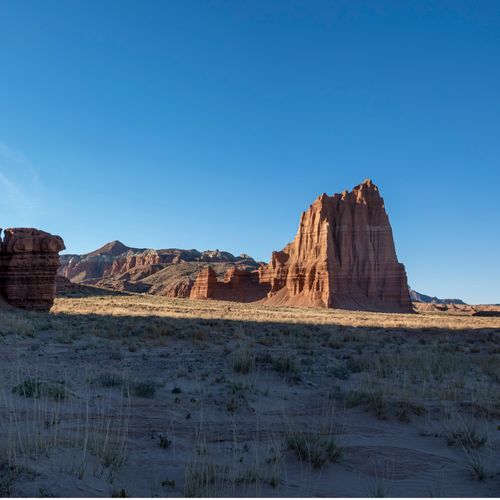
In the drier parts of the park, sagebrush is one of the plants you are most likely to notice.
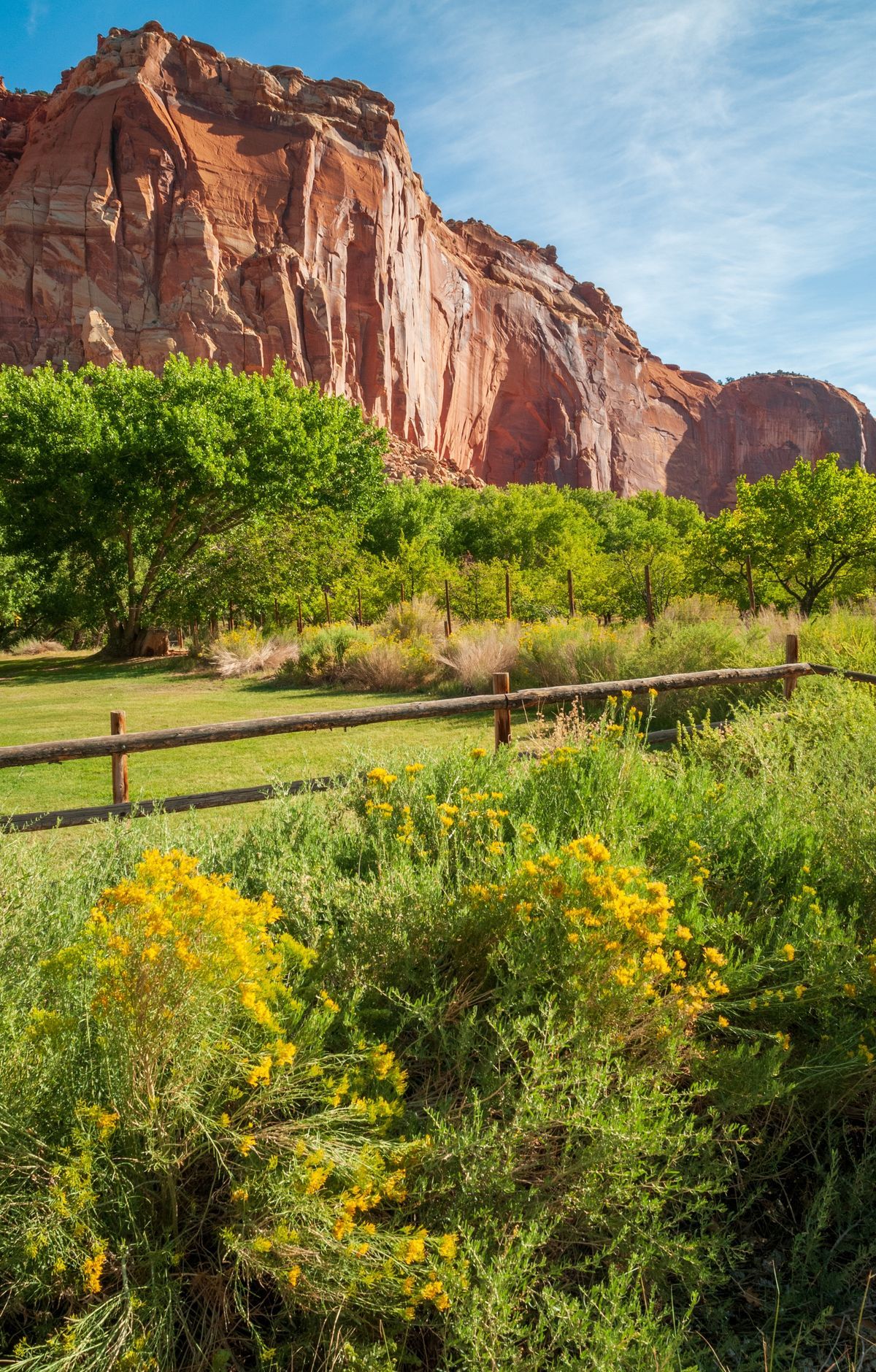
Utah juniper grows in the same dry country, while pinyon pine appears at higher elevations. Noticing where each one grows is a simple way to read how the land changes with elevation.
Prickly pear cacti are scattered across the dry ground as well. They bloom only briefly in early spring, and a few desert wildflowers open during that same stretch. That short window is the season to look for color close to the ground.
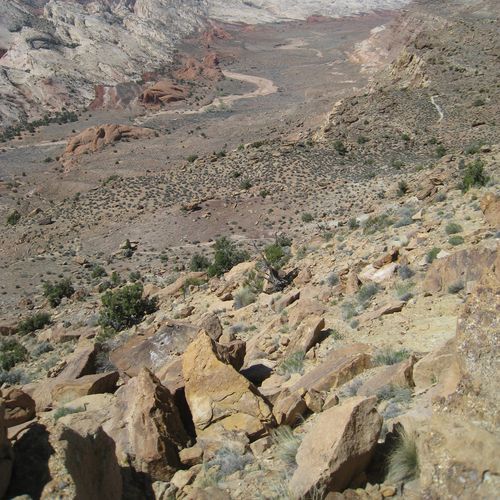
Much of the bare-looking ground is actually a living crust of bacteria, moss, and lichen, often called cryptobiotic soil. The crust binds loose grains together and helps the soil hold moisture. Because it is so fragile and can take centuries to recover from damage, keep to established trails. If you must leave the trail, washes and exposed rock are the places to step.
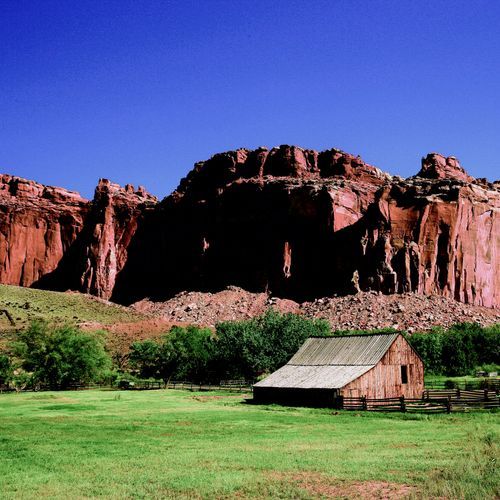
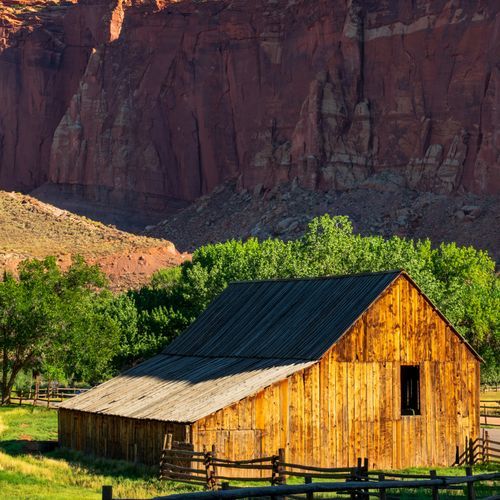
The riparian corridors near Fruita hold the park's most visible plant life, including cottonwoods, willows, and the invasive tamarisk. Early settlers planted orchards beside the Fremont River, and the trees there bear apples, apricots, pears, peaches, and cherries.
Along desert trails, a few habits protect both plants and water. Potholes, tanks, tinajas, and waterpockets hold water that wildlife depends on, so swimming in them is not allowed. Sunscreen, lotion, and oils from your skin can pollute that water. Leave archaeological sites alone, and remember that collecting any plant, animal, mineral, or artifact is illegal within the park.