Capitol Reef National Park guide · 1 min read
Fruita's Orchards and Historic District
Many people consider Fruita the center of Capitol Reef National Park. For thousands of years, people have lived in this green valley along the Fremont River.
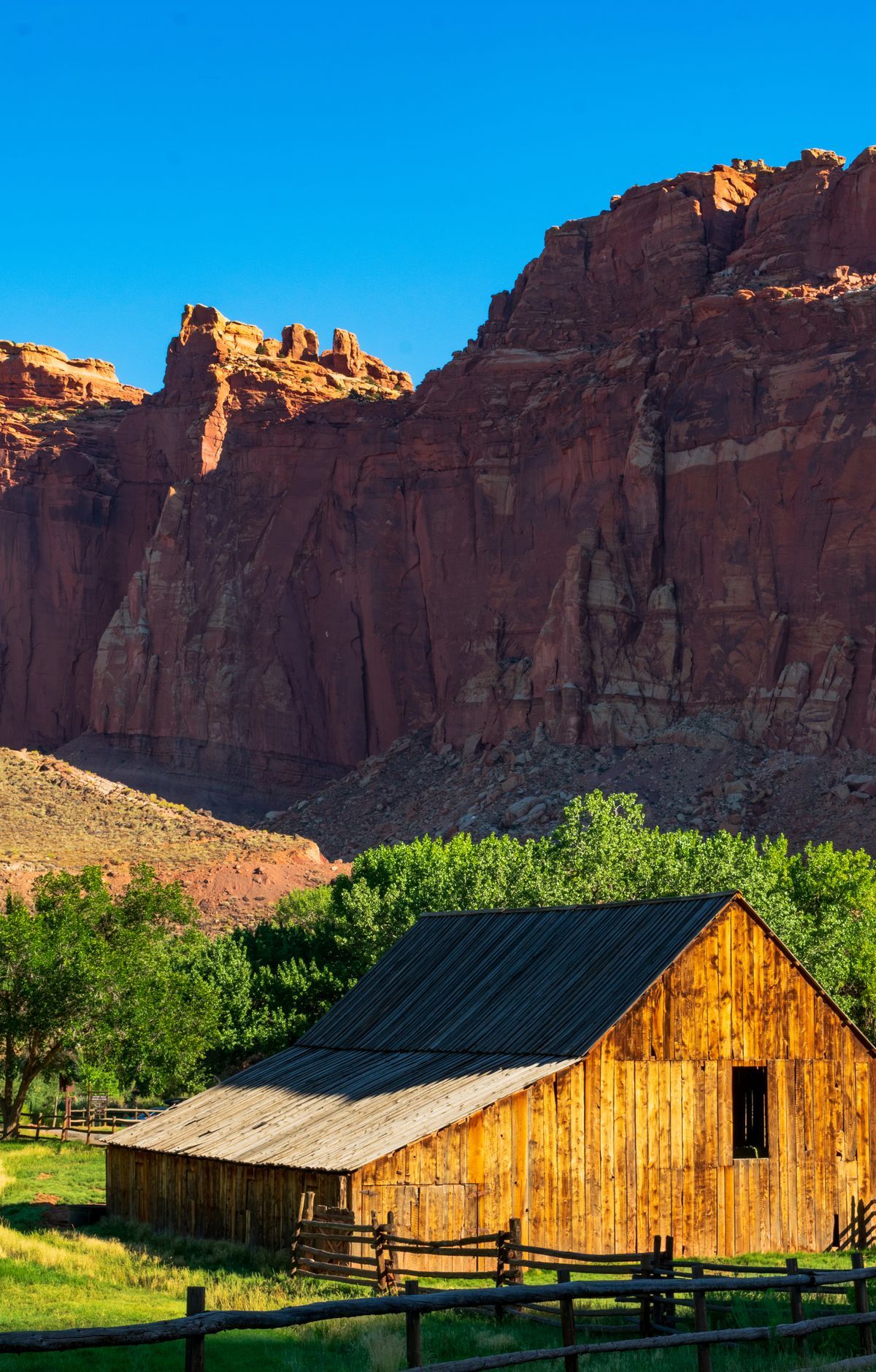
Pioneers began settling here in the late 1800s, and Nels Johnson was the first to hold land in the valley, with other members of the Latter Day Saints following him. Settlers grew sorghum for molasses and syrup. Most of their original buildings have disappeared, but the one-room schoolhouse, the Gifford House and its barn still stand within the Fruita Historic District.
The orchards were planted by those early settlers, and the National Park Service still looks after them. Around 2,000 historic trees are growing today. Walnuts and almonds share the rows with plums, pears and cherries, while apricots, peaches, apples and mulberries also grow there.
Visitors may pick fruit once it ripens and an orchard is posted as open. Climbing the historic trees is not allowed. Visitors are also asked never to approach, feed or harass wildlife in the orchards.
The Gifford House Store is known for its fruit pies, which come in strawberry rhubarb, apple and mixed berry. For a wider view, the Cohab Canyon trail climbs the cliffs toward Fruita and the Waterpocket Fold. Fruita Campground, with 71 sites, is the park's only developed campground.
Along a wooden boardwalk beside a reddish rock wall, the Petroglyph Panel shows images made by Fremont people about 1000 years ago, long before the pioneers arrived.