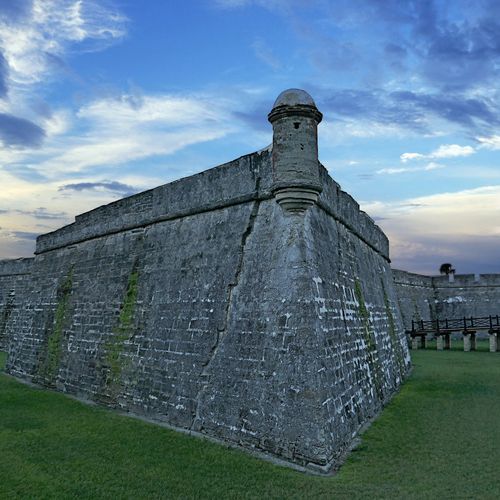
Two Spanish strongholds anchor this stretch of Florida's northeast coast, and together they tell the story of how a colonial empire guarded its foothold in the New World. Castillo de San Marcos rises from the waterfront in the heart of St. Augustine, a massive star-shaped fortress of coquina stone raised between 1672 and 1695 to shield the town from pirates and rival powers. Its roughly 20 acres sit just north of the old central plaza, facing Matanzas Bay behind a seawall and water battery. The grounds roll gently in grass toward the sloping glacis, the moat, and the covered way, while inside the walls you'll find vaulted rooms, a chapel, and a gundeck where costumed rangers fire cannon on demonstration days. This is the urban, walk-in half of the experience: most people spend an hour or two here, and it pairs naturally with a stroll through the historic streets that spill south from its gates.
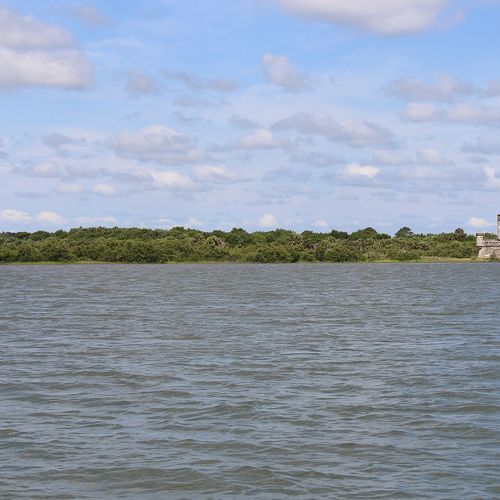
Fourteen miles south, Fort Matanzas offers an entirely different mood. Here roughly 300 acres of barrier island, salt marsh, and tidal inlet surround a compact coquina watchtower finished in 1742 to guard the back door to St. Augustine. The setting carries a darker history too, as the name recalls the 1565 killing of some 250 French colonists by Spanish forces nearby. Reaching the fort itself is part of the adventure: a short, free ranger-led ferry crosses the Matanzas River, and once there you can scramble up a cramped ladder to the tower's top for sweeping views over water and wetland that look much as Spanish soldiers would have seen them. Keep watch for dolphins, ospreys, and wading birds, and leave time for the trails and beach near the visitor center along scenic A1A.
Think of the two sites as complementary chapters rather than competing attractions. Many seasoned visitors start at Fort Matanzas, where the intimate scale and wild surroundings set the stage, then finish at the Castillo, where the sheer bulk of the fortress drives home how much Spain invested in holding this coast. Plan around the Matanzas ferry, which runs a limited number of first-come trips, skips Tuesdays and Wednesdays, and pauses for storms or high wind; arrive early, since passes are often gone by late morning, and save the Castillo for the afternoon when its downtown setting invites you to linger.