Crater Lake National Park guide · 2 min read
The Pumice Desert and Volcanic Ash Landscapes
Just past the North Entrance, a forest of mountain hemlock and Shasta red fir gives way to lodgepole pines and stands burned by wildfire.
Then the trees stop abruptly at the Pumice Desert, a fragile meadow of 3,055 acres spreading out on either side of the road. Estimates put the pumice in this basin at around 200 feet deep, and the deposit runs northward, away from Mount Mazama.
Very little grows on this ground. Water passes rapidly through the porous pumice, and the soil, made mostly of regolith, is poor. After thousands of years, the surface remains mostly bare, with only a handful of plants gradually finding a foothold.
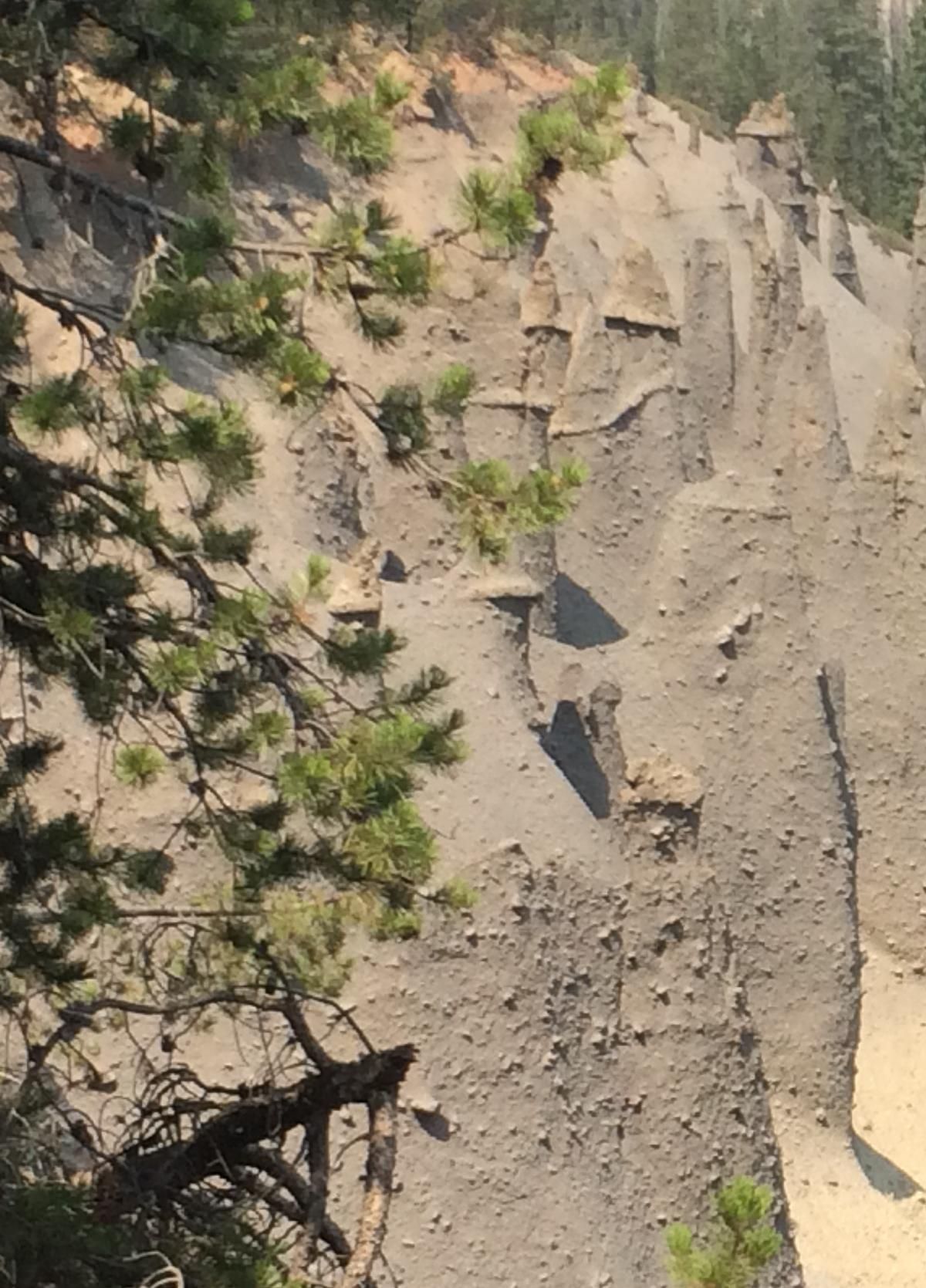
The Pinnacles grew out of the same kind of material. Once hot ash and pumice settled near the volcano, they formed gas-charged layers 200 to 300 feet thick. As hot gas rose through them, it cemented the ash and pumice into solid columns, and erosion later stripped away the loose material around them, leaving slender spires standing. To reach the spires, drive along Pinnacles Road, which branches off East Rim Drive near the Phantom Ship Overlook and runs six miles to its end. The Pinnacles Trail runs 0.8 miles through the trees, giving views over a gorge packed with these spires.
Looking south and uphill from the pullouts near the North Entrance, you can pick out Timber Crater, Grouse Hill, Red Cone, and other volcanic features linked to Mount Mazama. A stretch of the Pacific Crest Trail, the 2,550 mile route that links Canada and Mexico, lies only 2.5 miles south of the Pumice Desert pullout. Parking is roomy at that pullout, and an exhibit there is worth a look.
Autumn brings a distinct quality of light to the Pumice Desert. Light spreads over the ground's gentle rises, and autumn's shades settle across the wide, open expanse. Cooler temperatures and light crowds make the season feel especially calm.