Dry Tortugas National Park guide · 2 min read
Limestone Islands at the End of the Keys
The Dry Tortugas lie at the western end of the Florida Keys, about 70 miles west of Key West.
Their bedrock is limestone, part of a thick carbonate platform across southern Florida that has been gathering sediment since the Early Cretaceous. Two layers of this limestone reach the surface here. The Key Largo Limestone is made of old reefs. In general, the Miami Limestone lies behind those reefs, but in this western stretch it overlies them.
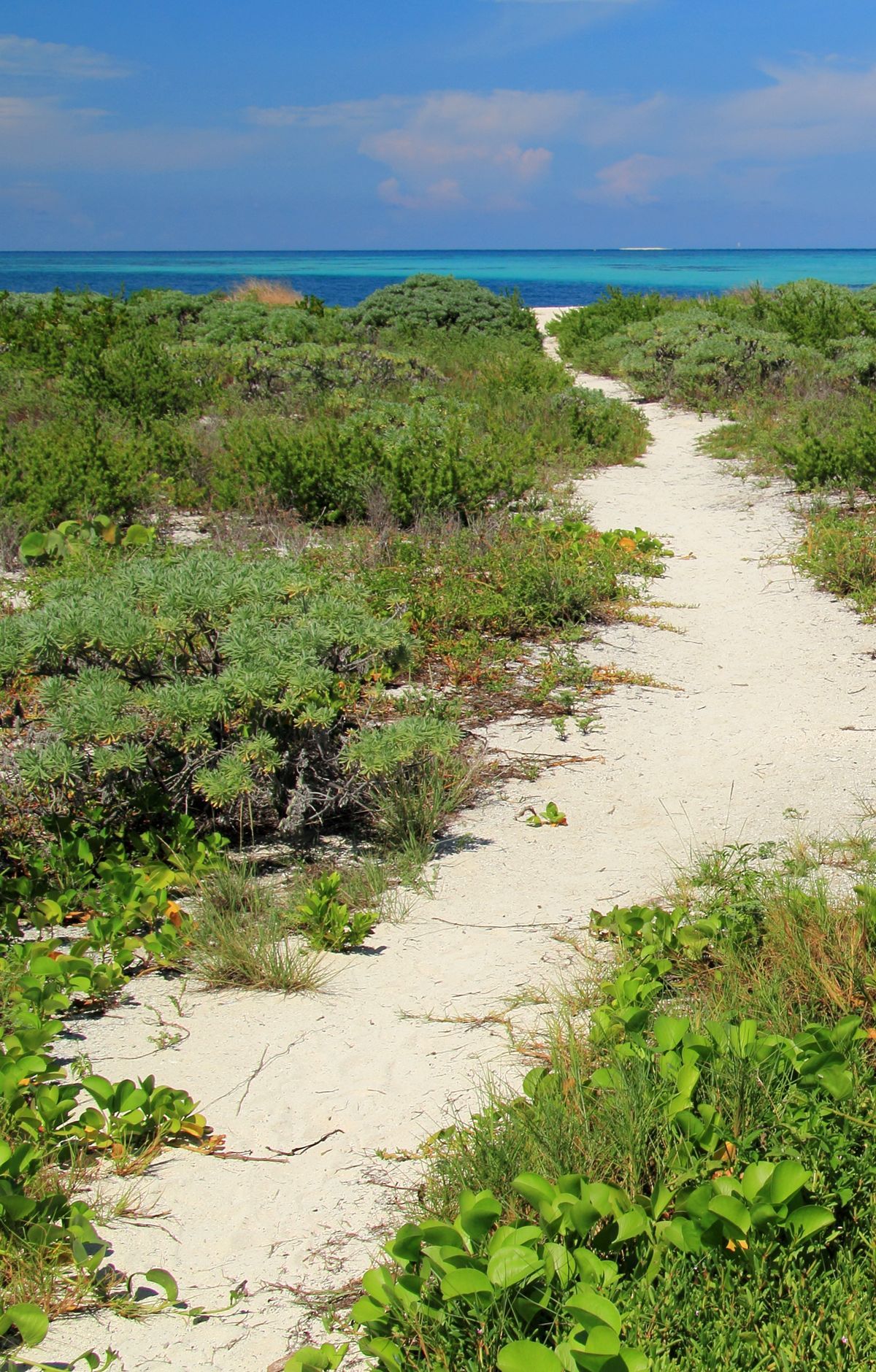
The park's seven islands are Garden Key, Loggerhead Key, Bush Key, Long Key, Hospital Key, Middle Key and East Key. They are coral reef and sand, low and irregular, and some carry thin mangrove growth. Their outlines never stay fixed, and over the past two centuries the count has risen as high as eleven. Water makes up more than 99 percent of the park's area.
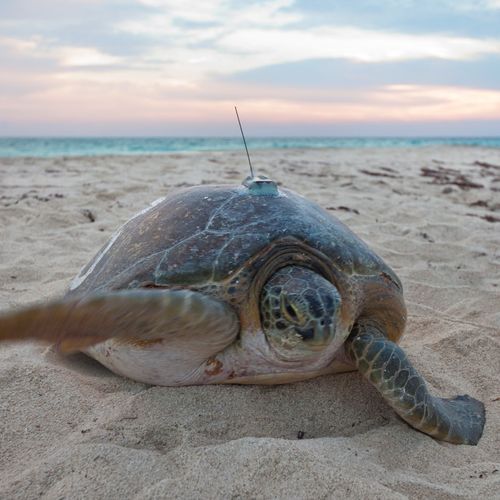
Beneath the surface, coral reefs shelter tropical fish and nurse sharks. The park lies at the southwestern edge of the Florida Keys reef system, which ranks third largest globally. Because the park is remote and a gulf current flows nearby, animals here are often more plentiful and larger than across the Keys. White sand beaches are where sea turtles come ashore to lay their eggs.
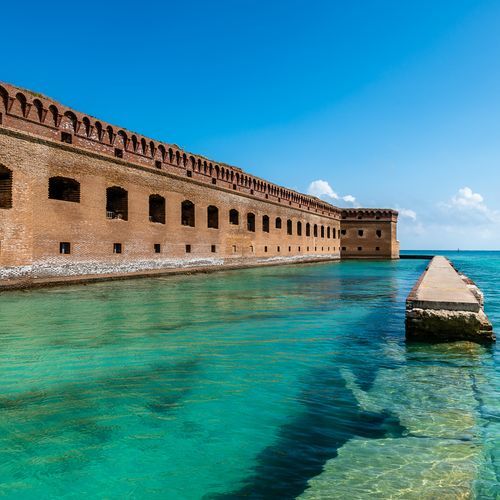
Garden Key is home to Fort Jefferson, whose brick walls make it the biggest structure of its kind in the Western Hemisphere. Building began in the nineteenth century, but the fort was never finished and later held prisoners. Boats and seaplanes land at Garden Key, where most visitors spend their time exploring the fort and its old walls.
Snorkeling or swimming is how many visitors enjoy the water here. Several beaches open onto the ocean, but lifeguards are not stationed at them, so keep an eye out for marine creatures that could be hazardous. A boat is needed to reach Loggerhead Key, the biggest of the seven, which sits about three miles from Garden Key.