Great Smoky Mountains National Park guide · 1 min read
Ocoee Supergroup: Rocks of the Ancient Smokies
Most of the bedrock under Great Smoky Mountains National Park belongs to the Ocoee Supergroup, a vast set of late Precambrian layers.
The group is made up of metamorphosed sandstone, along with schist, phyllite and slate. These are the rocks you are most likely to see along trails and streams across the park.
Older still is the Precambrian gneiss, along with schist. These are the most ancient rocks in the Smokies, formed more than a billion years ago from marine sediments and igneous rock. They take over in places like the Raven Fork valley near Oconaluftee and along the upper Tuckasegee River between Cherokee and Bryson City. There, the ground is made mostly of gneiss, granite and schist.
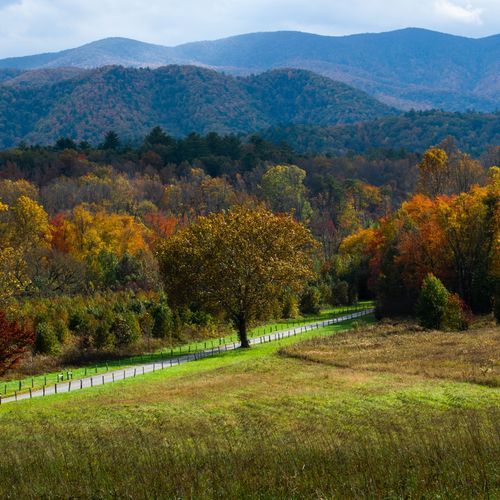
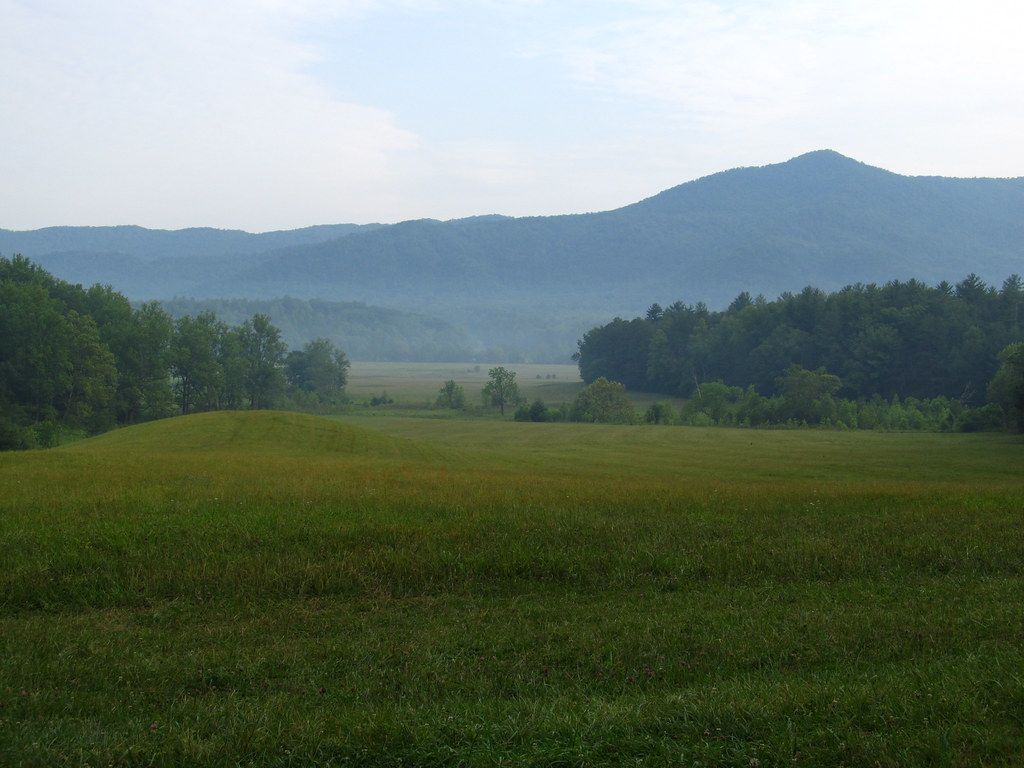
Cambrian sedimentary rocks also turn up in the park. Look for them in the limestone coves and low along the northwestern foothills. Cades Cove is the best-known of these coves. Geologists call it a window, an area where younger limestone forms the valley floor while older sandstone rings it on every side.
You can take in this setting from the eleven-mile one-way loop road around Cades Cove. Drive it or ride it by bike on a self-guided tour, with views from the cleared valley floor up to the surrounding mountains. Historic log cabins, barns and churches stand along the way.
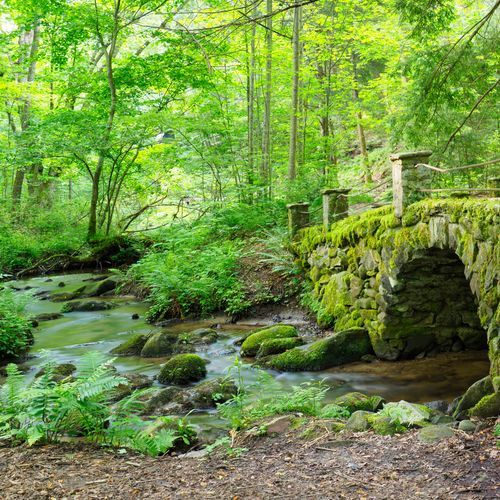
For a closer look at bare rock, hike to Lynn Camp Prong Cascades. The trail is 1.4 miles round trip and follows an old railroad bed beside a mountain stream. It is mostly wide and flat, climbing gently past rhododendron and cliff-like outcrops on the way to the cascade.