Great Smoky Mountains National Park guide · 2 min read
Rockefeller's Gift and the Fight for the Park
By the early twentieth century, timber companies were stripping the Smokies with cut-and-run clearcutting, and local people began pooling money to save what remained.
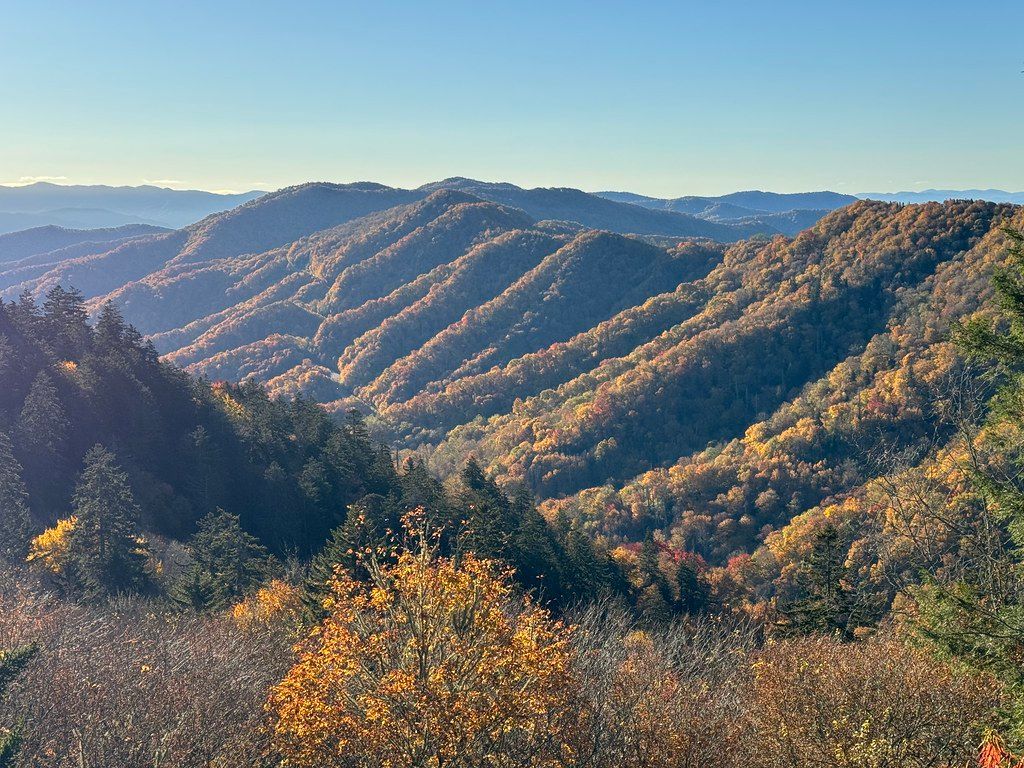
Large-scale logging had arrived in the 1880s, when outfits floated logs downriver using splash dams and booms. Elkmont shows how closely lumber and leisure were tied. Wilson B. Townsend, head of Little River Lumber, began promoting it to tourists in 1909, and the Wonderland Hotel and the Appalachian Club soon drew well-off Knoxville families for summers in the mountains.
The western parks were carved mostly from land the federal government already owned. This one had to be bought, parcel by parcel. Tennessee and North Carolina purchased the land with state money, and ordinary people pitched in, from schoolchildren saving pennies to wealthy donors. Even so, private citizens struggled to raise their share of a total cost that ran past eleven million dollars.
The turning point came in March 1928, when businessman and philanthropist John D. Rockefeller Jr. gave five million dollars to the effort. His gift arrived as the country slid toward the Great Depression and kept the purchases moving. A memorial at Newfound Gap honors the donation.
About 85 percent of the park came from 18 logging companies, which had to be persuaded to give up valuable timber rights. The rest came from roughly 1,200 individual landowners. Ben W. Hooper, a former governor of Tennessee, served as the main purchasing agent.
The price was also paid by the people who lived here. Homesteaders, miners and loggers were moved off their land, farms and mills shut down, and entire communities disappeared, with only some residents granted lifetime leases to stay. That loss followed the earlier sacrifice of the Cherokee people on these tribal lands. The park was established on June 15, 1934, and President Franklin D. Roosevelt dedicated it in 1940.