Haleakalā National Park guide · 1 min read
Haleakalā's Dormant Shield Volcano and Crater Floor
Haleakalā is a massive shield volcano that makes up more than three quarters of the island of Maui.
It is dormant, and current thinking places its last eruption sometime between 1480 and 1600. Its broad, gently sloping profile is typical of shield volcanoes, which are built from fluid lava that can travel great distances.
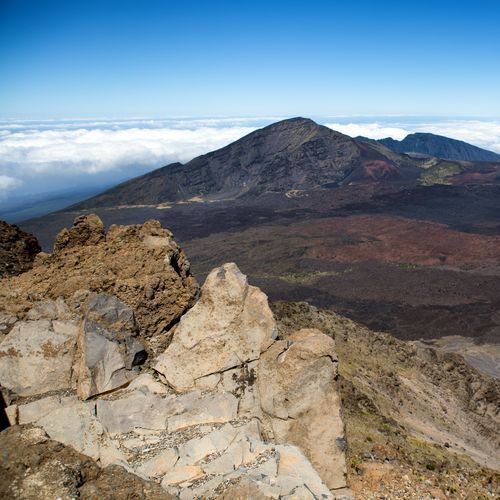
Although it is called Haleakalā Crater, the summit basin was shaped mainly by erosion rather than by eruption. It is about 2,600 feet deep, and its floor holds numerous cinder cones, called puʻu in Hawaiian. Each cone marks a separate eruption site, and the youngest formed only about 1,000 years ago, which is very recent in geologic terms.
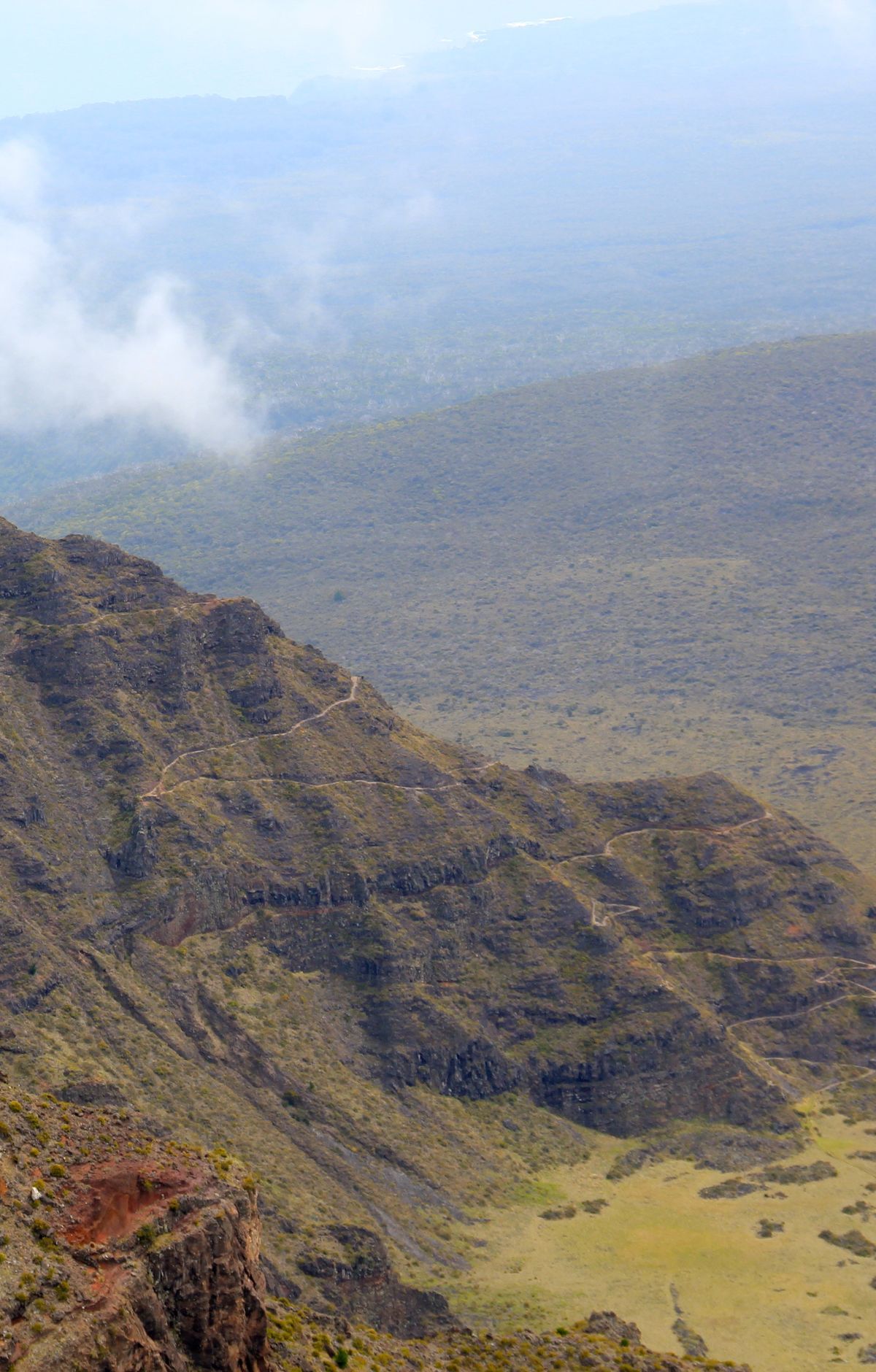
Two main trails descend from the summit into the crater, the Halemauʻu and Keoneheʻeheʻe, also called Sliding Sands, and both are designated National Recreation Trails. For a moderate outing of one to two hours, walk a short way down the sandy Sliding Sands path to a natural overlook. From there the cones look different than they do from the rim. Hikers who wish to spend the night can stay in one of three cabins inside the crater.
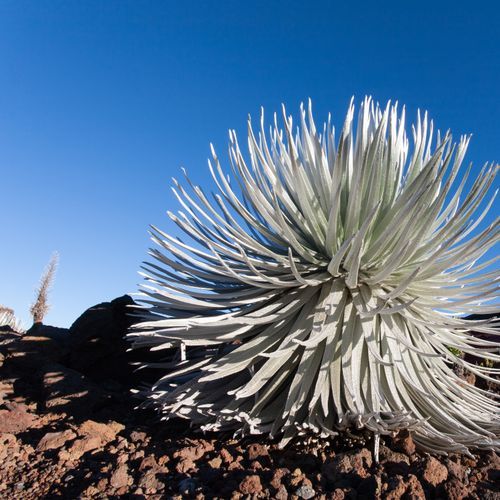
Its built-in traits let the ʻāhinahina, or Haleakalā silversword, cope with the wind and sun up here, where few plants can. It grows only in the summit area. Because it is easily damaged when people get too close, visitors should keep to the trails.
Many people come to the summit to watch the sunrise over the clouds. From the summit area, views stretch across the island. Puʻu ʻUlaʻula, known as Red Hill, is the tallest peak on Haleakalā and on Maui, rising to 10,023 feet.