Hawaiʻi Volcanoes National Park guide · 1 min read
Hawaiian Hotspot and the Emperor Seamount Chain
The Hawaiian-Emperor seamount chain is a line of undersea peaks tied to the wider story of Hawaiian volcanoes.
Its Emperor group includes fifteen named seamounts, among them Abbott, Detroit, Meiji, Nintoku and Yuryaku. Scientists study the chain as part of the broader development of Hawaiian volcanoes, and the park gives them insight into that work.
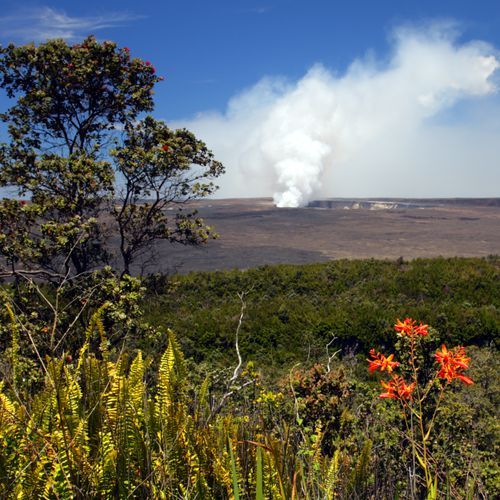
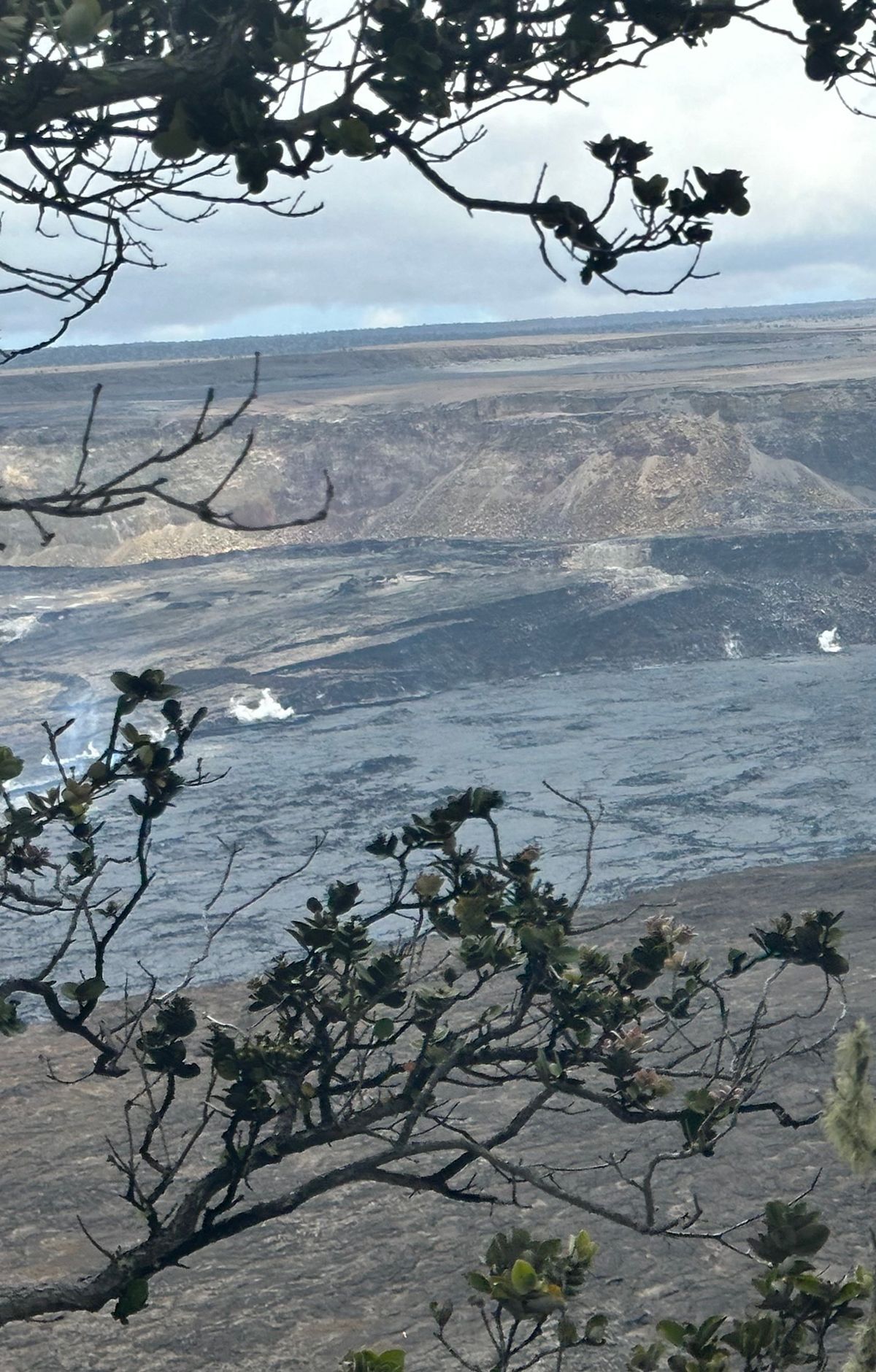
Two of the world's most active volcanoes have their summits inside the park. Kīlauea ranks among the most active volcanoes in the world, and an overlook gives a view down into Halemaʻumaʻu Crater. Mauna Loa is the largest shield volcano in the world, and its summit, Mokuaweoweo, rises to 13,679 feet.
Hawaiʻi Island is built from five volcanoes. Those five are Kohala, Mauna Kea, Hualalai, Mauna Loa and Kīlauea. Kohala is the oldest of the group and is considered extinct, with its last eruption about 60,000 years ago. Mauna Kea is dormant, while Hualalai, Mauna Loa and Kīlauea are active. Across the park, lava flows take the form of pāhoehoe and ʻaʻā, and the terrain also holds calderas, pit craters and lava tubes.
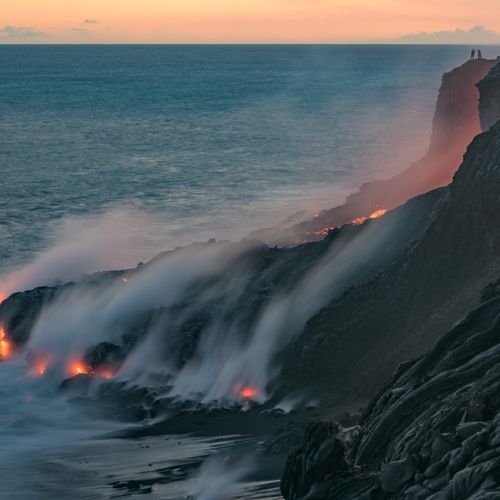
Puʻu ʻŌʻō is a remote vent, yet it has been more active than Kīlauea's main caldera, and lava has poured from it. Chain of Craters Road heads toward the coast and passes several craters left by past eruptions.
About half of the park is set aside as the Hawaii Volcanoes Wilderness, where hikers and campers can find quiet. In the northwest, the wilderness reaches Mokuaweoweo, and in the southwest it stretches to take in several miles of coastline.