Joshua Tree National Park guide · 1 min read
Monzogranite Boulders 100 Million Years in Making
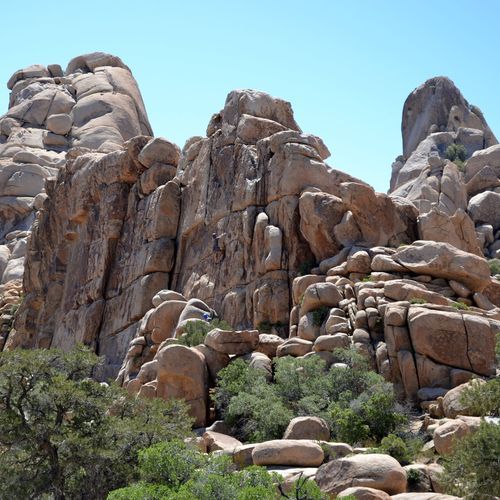
The boulder piles of Joshua Tree began as molten rock deep underground. Between 250 and 75 million years ago, tectonic plate movements pushed volcanic material toward the surface, and the magma cooled into monzogranite.
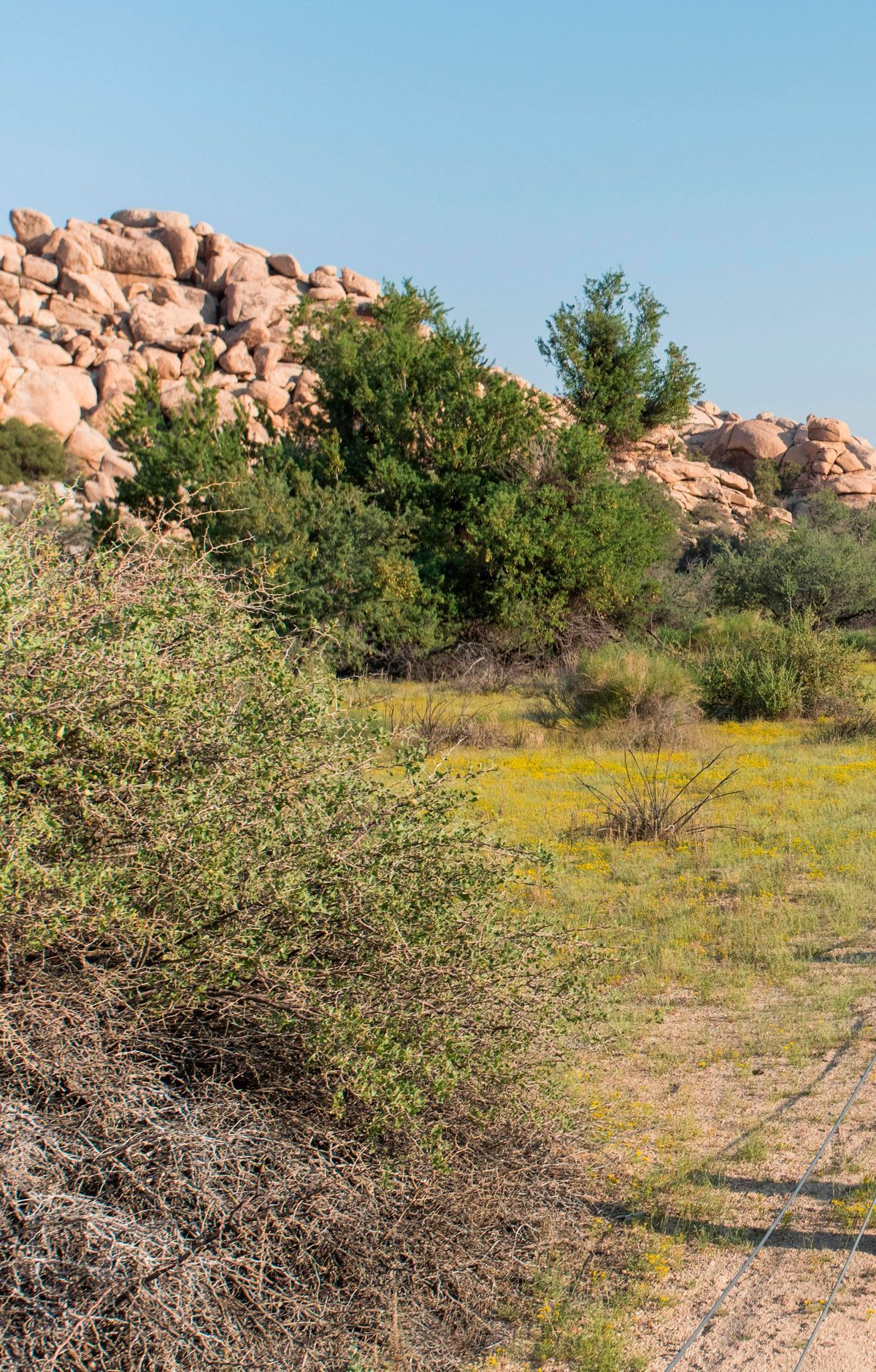
As it cooled, the rock split along horizontal and vertical joints, cracks that later shaped how the blocks broke apart. This granite forms the Wonderland of Rocks and appears in parts of the Pinto, Eagle, and Coxcomb Mountains.
The granite was not the first rock in the area. The Pinto Gneiss is about 1.7 billion years old, which makes it among the park's oldest rocks. It is exposed in the Cottonwood, Pinto, and Eagle Mountains. Magma pushed into this older gneiss as it rose from below.
Erosion did the rest. Groundwater seeped through the joints and wore away the corners and edges of the blocks. Over time, the surface soil washed away, and flash floods carried off loose debris. What remained were rounded heaps of monzogranite spread across the land. Chemical weathering widened the cracks further and rounded the edges even more.
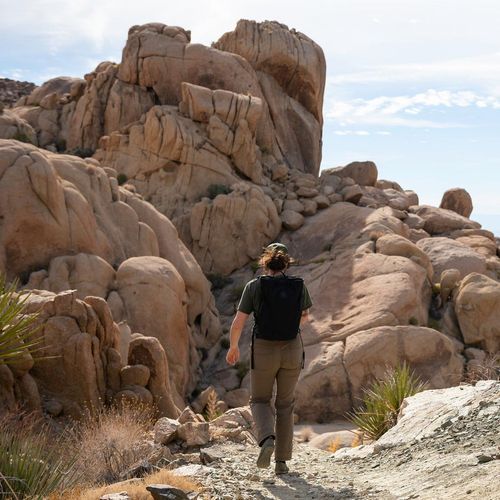
You can walk among these boulders on the Barker Dam Trail, an easy 1.1-mile loop. The route passes Joshua trees, the historic Barker Dam, and a rock art site, and it crosses desert washes. Expect to scramble over boulders along the way, which makes the trail a good choice for novice scramblers. Wear footwear suited to scrambling, since the rocks can be slippery when wet.
Rock climbing and bouldering are popular here. Fifty years ago climbers had little impact on the park, but today hundreds may climb on a busy weekend. Practicing Leave No Trace principles helps protect this delicate desert. From the Quail Springs Picnic Area, visitors can get a view of Giant Marbles.