Montezuma Castle National Monument guide · 2 min read
Montezuma Castle: Five Stories in a Limestone Cliff
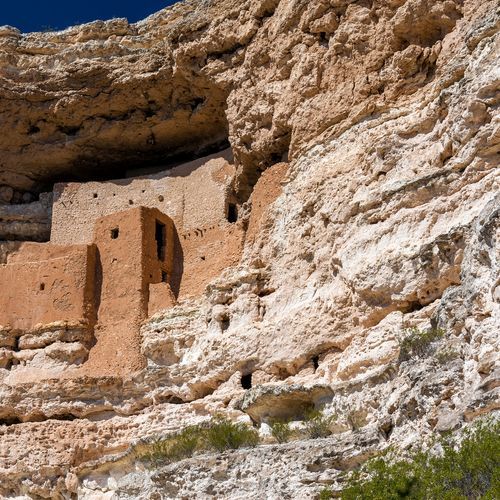
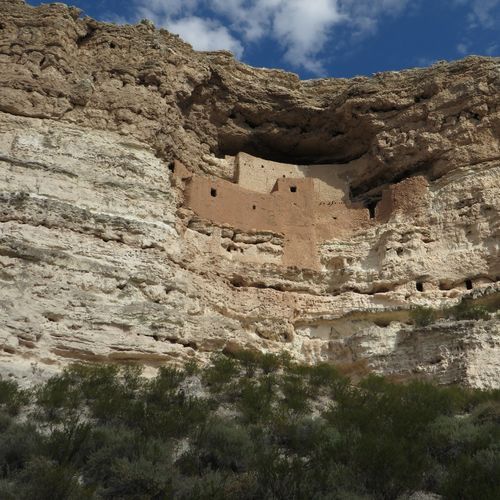
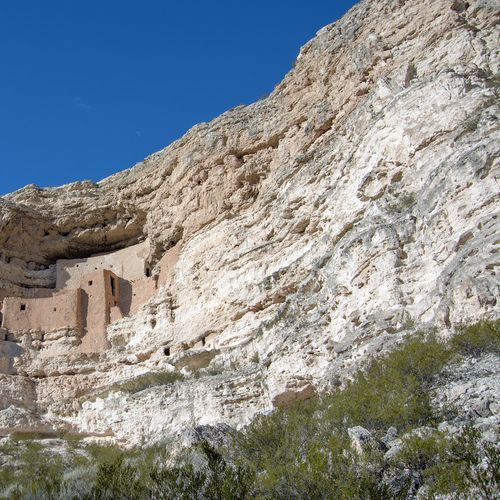
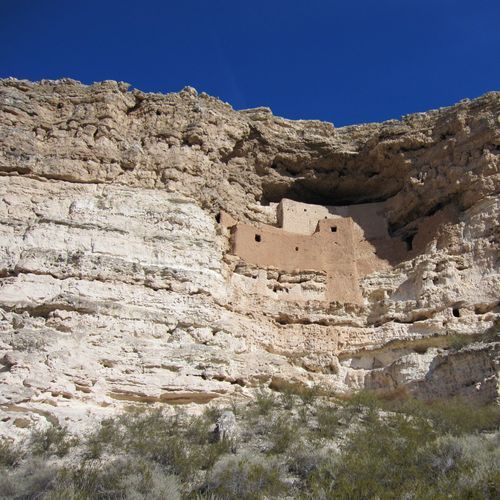
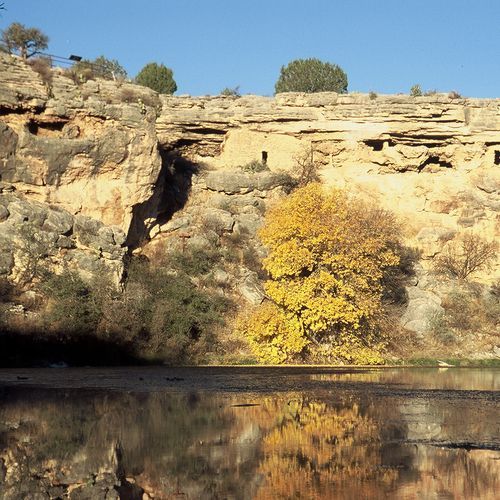
Montezuma Castle rises five levels inside a natural alcove in a pale limestone cliff, about 100 feet above Beaver Creek.
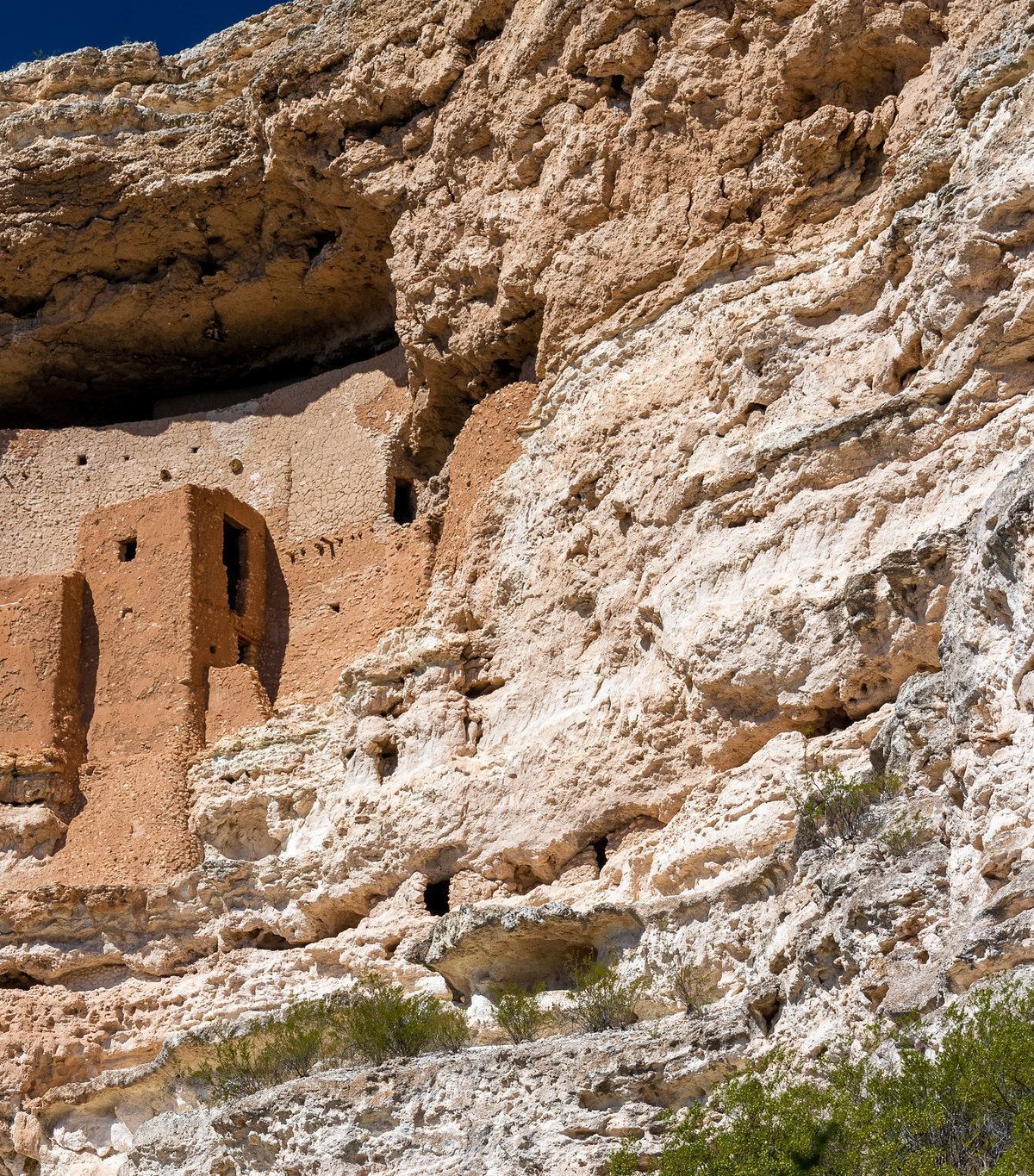
Its 20 rooms sit on the cave's existing ledges, so the building steps back like terraces instead of climbing straight up. The overhang keeps weather off the walls, and that shelter is a big reason so few cliff dwellings anywhere on the continent have held up this well.
The builders were the Southern Sinagua, who lived along this green stretch of Beaver Creek between 1100 and 1425 CE. Building on a sheer face this high took real engineering skill. Residents most likely reached their rooms on portable ladders, and pulling those ladders up left a vertical wall between the community and any intruder. Settlers who arrived in the 1860s wrongly assumed the Aztecs had built it.
Look closely at the walls. They are chunks of limestone gathered at the foot of the cliff, stacked and bonded with local mud mortar much the way bricks are laid today. Builders mixed different mortars for strength, durability and color, then sealed the outside with adobe plaster. The wooden beams poking out of the outer wall mark where floors sit inside.
By the early 1900s, looters had carried off most artifacts, scratched names into walls and beams, and even used dynamite. On December 8, 1906, President Theodore Roosevelt made Montezuma Castle one of the nation's first four national monuments under the new Antiquities Act. Early tourists climbed ladders into the rooms, but since 1951 the structure has been too fragile to enter.
Today you see the Castle from the trails below, looking up at the same walls the Sinagua raised. Sound carries well here, and from the upper windows, voices on the path are easy to pick out. At the Montezuma Castle Visitor Center, exhibits of artifacts show how the Sinagua lived.