Montezuma Castle National Monument guide · 1 min read
Ancient Irrigation Canals at Montezuma Well
Water from Montezuma Well has been put to work on farm fields for well over a thousand years.
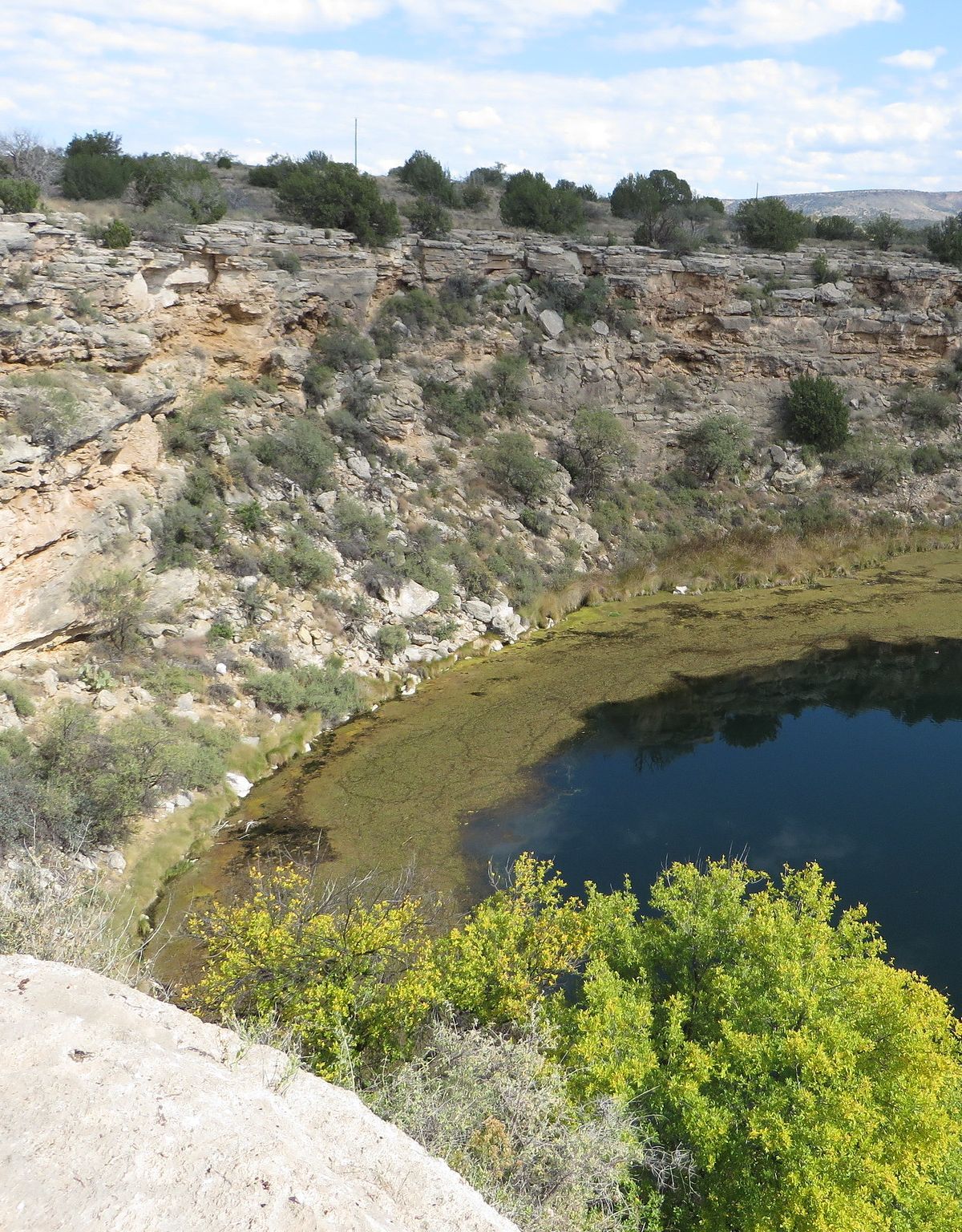
Prehistoric people may have dug the first irrigation canals here as early as the years 600 or 700. Across most of the ancient Southwest, irrigation water was almost unknown, and that makes this canal system stand out from other archeological sites in the region.
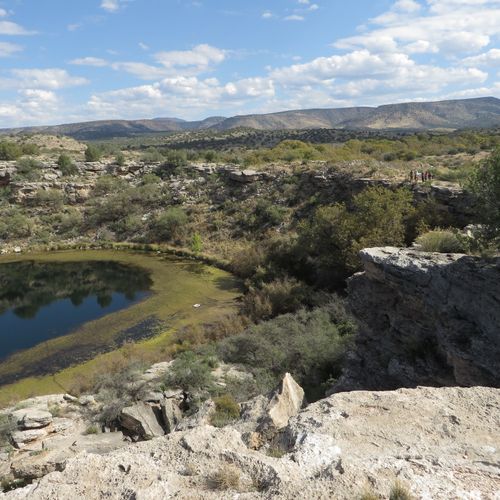
The Well is a spring-fed lake inside a collapsed limestone sinkhole, and its water stays warm and rich in dissolved carbon dioxide. Fresh water flows in every day, and some of it leaves the lake through an outflow tunnel. The old canals left a lasting mark on the land. Look along the north edge of the farmland for fossilized ditches, where a modern irrigation ditch runs right beside the lime-coated bank of an ancient one.
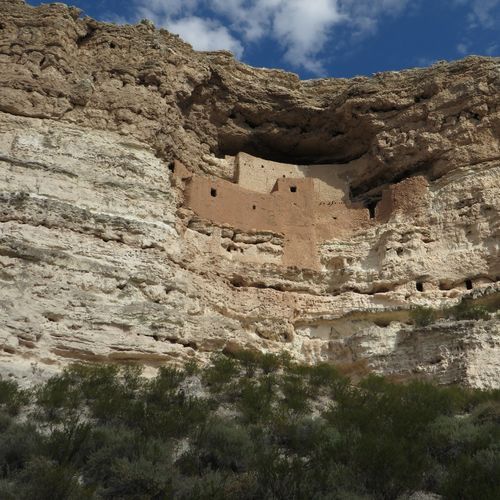
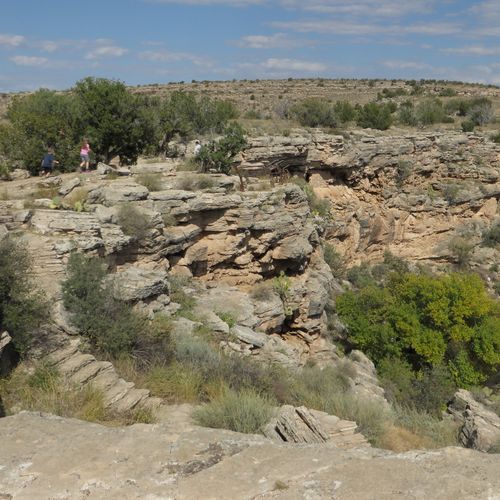
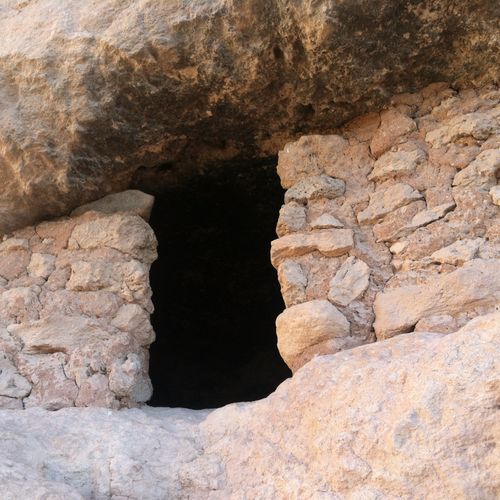
The Sinagua were farmers who lived in this part of the Verde Valley from the 1100s to the 1400s. When they resettled the valley after 1125, they made use of irrigation systems left by earlier people, possibly including the Hohokam. Small stone and adobe cliff dwellings still sit on ledges along the rim of the Well. A paved path with stairs and handrails climbs from the parking lot to an overlook on the rim trail, with safety railings and interpretive signs.
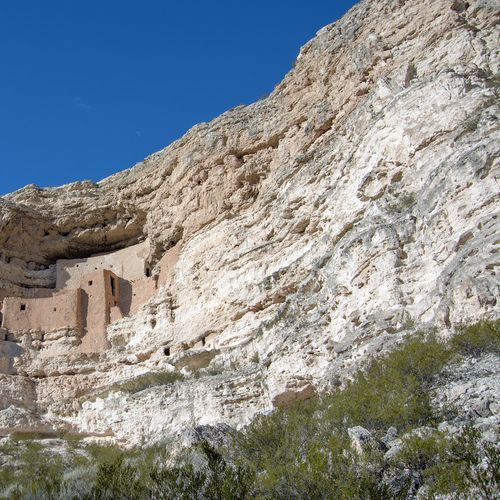
The canals kept working long after the Sinagua left. Wales and Jennie Arnold, the first Anglo-American settlers at the Well, arrived in 1870, ran a mail station, and watered their land with the prehistoric canal. Later, William and Margorie Back ran a ranch, farm, and orchard here, and they were the first to turn Montezuma Well into a tourist attraction. The Well is a separate unit of the monument, 11 miles from Montezuma Castle.