New River Gorge National Park & Preserve guide · 1 min read
An Ancient River Older Than Its Mountains
Geologists count the New among the oldest waterways on this continent, and it may be older than the Appalachian Mountains that rise around it.
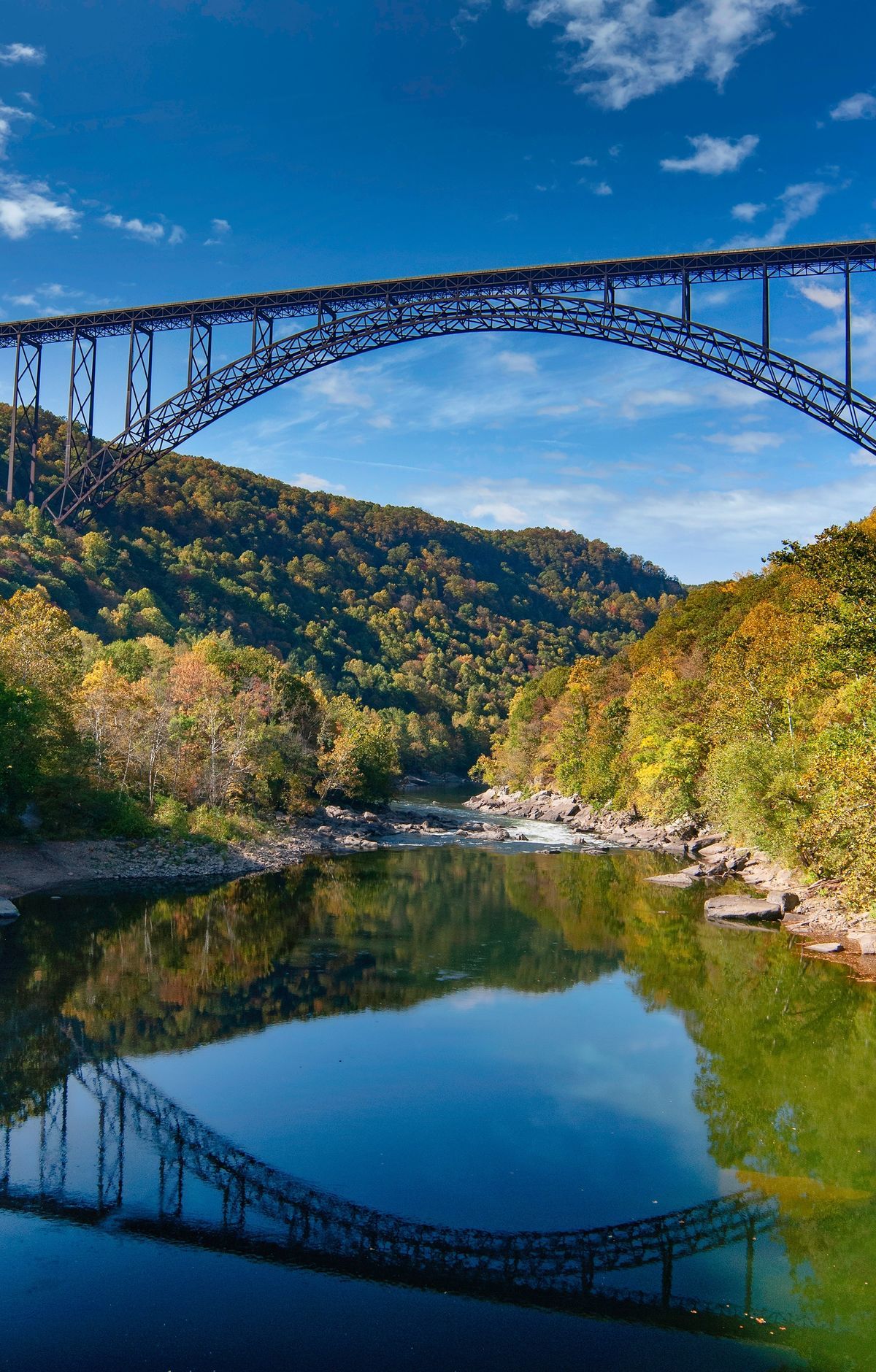
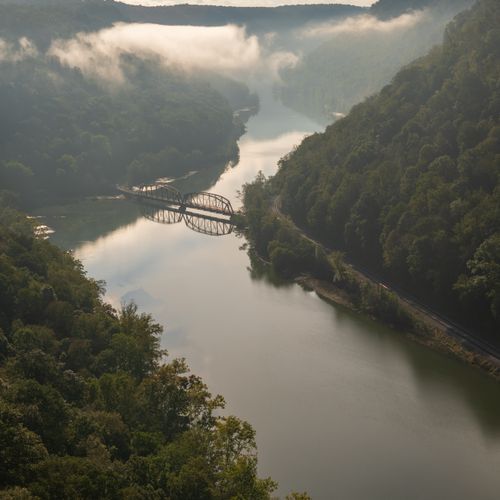
Estimates of its age vary, but some exposed rocks along its banks date back 330 million years. Few rivers in the country flow from south to north, and this one runs northward through the gorge.
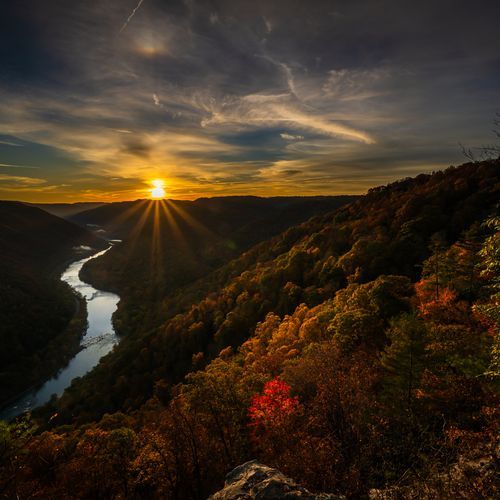
Over time the water has carved deep canyons into the Appalachian Plateau. Cliffs of very hard sandstone line the gorge, and their faces climb anywhere from 30 feet to 120 feet high.
Those sandstone walls have made the gorge a well-known place to climb. Inside the park there are more than 1,400 established routes, and the rock offers plenty of cracks and open faces. Most climbs are aimed at people with advanced or expert skills. A guidebook is the go-to resource for finding a route, and local climbing shops can point you toward specific ones.
The river is also a major whitewater destination. Within the park it drops 750 feet over 50 miles, and 53 miles of free-flowing water run from Bluestone Dam to Hawks Nest Lake. The upper section is mostly long pools with rapids up to Class III, and rapids across the park reach as high as Class V. A single trip might last a few hours or stretch across several days.
Spanning the gorge is the New River Gorge Bridge, whose single arch is the longest in the Western Hemisphere, and it ranks as the third highest bridge in the United States. Visitors can walk the catwalk beneath it. Thurmond, a coal town that grew up beside the mines and tracks, is one of the settlements tucked into the gorge that people can explore.