Yellowstone National Park guide · 2 min read
Mammoth's Travertine Terraces and Their Hidden Heat
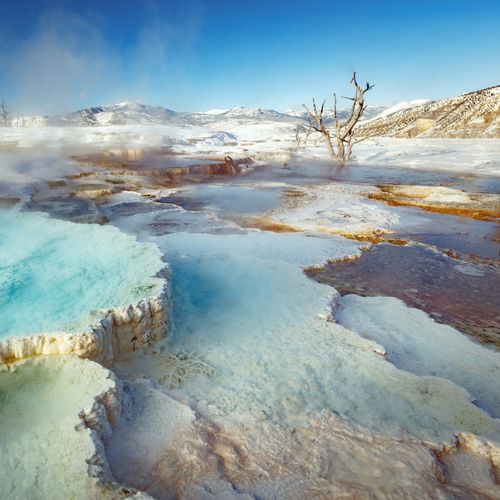
At Mammoth Hot Springs, hot water flowing down a hillside has built tiers of white rock. That rock is travertine, and it grows far faster than the sinter found in the park's other thermal areas.
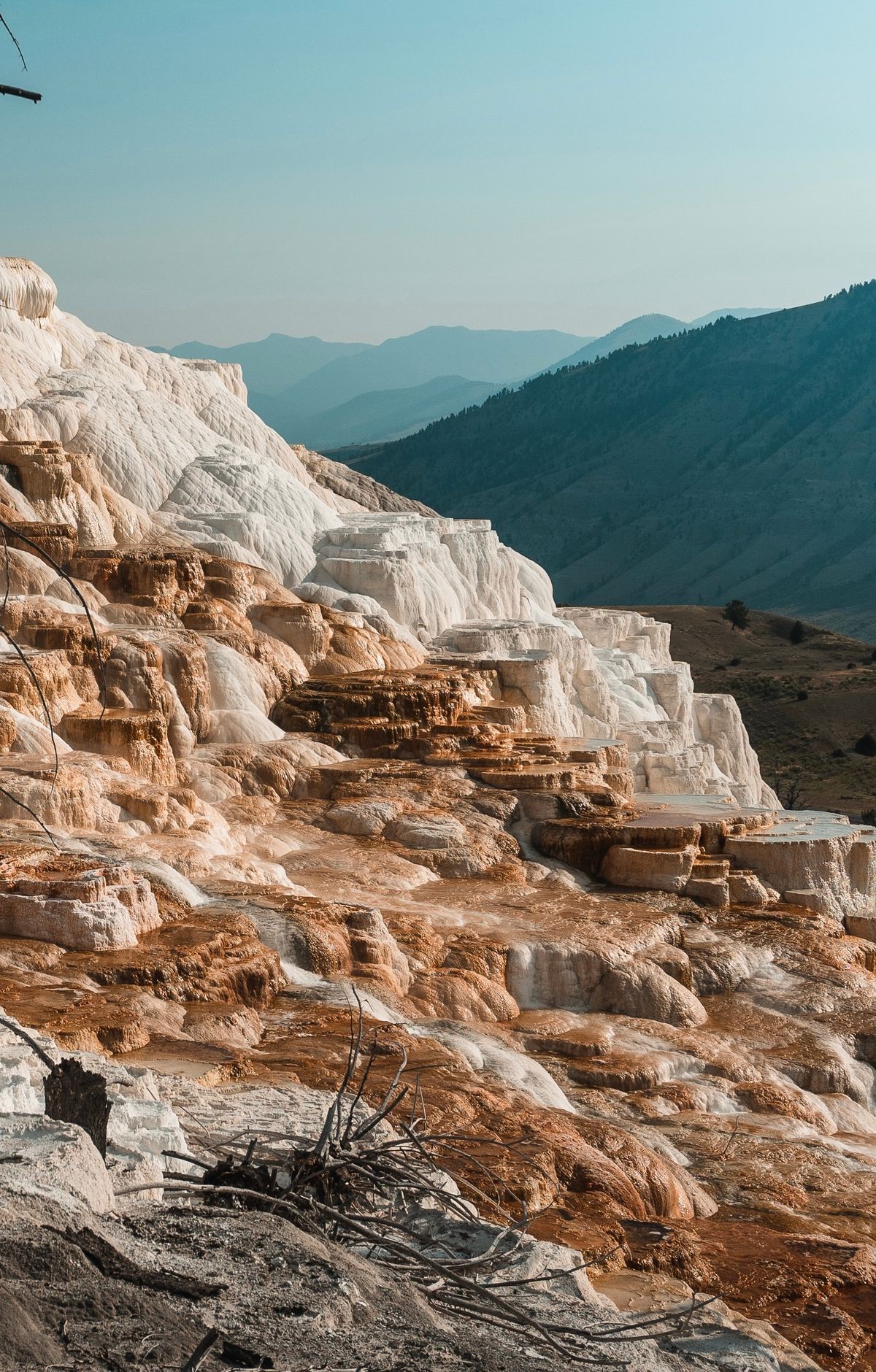
As a result, the Mammoth Terraces rank among the quickest-changing features in Yellowstone. Algae living in the warm pools along the ledges tint the white rock brown, orange, red and green.
The process depends on limestone, laid down millions of years ago when a broad sea covered this region. Snowmelt and rainwater from the nearby mountains sink far into the ground, where they pick up heat. Carbon dioxide dissolved in that water forms a weak carbonic acid. As the water climbs, the acid breaks down calcium carbonate, the main compound in limestone. At the surface, the mineral settles out again as chalky white travertine.
The water travels upward through a web of cracks and fissures that works like natural plumbing. Small earthquakes may help keep those passages from sealing shut. Where the heat itself comes from is still an open question. Scientists have suggested two possibilities: the large magma chamber beneath the Yellowstone Caldera, or a smaller source somewhere nearer to Mammoth.
Because travertine piles up so quickly, the terraces never hold still. Their shape depends on how much water flows, how steeply the ground slopes and what lies in the water's way. Springs can appear and dry up quickly, so a favorite pool that looks lifeless is part of a landscape that keeps rearranging itself.
For hundreds of years, Shoshone and Bannock people gathered minerals here to make white paint. Today, boardwalks let visitors walk over the steaming features, and a drive around the terraces offers another way to see them. In winter, skiers and snowshoers travel the Upper Terraces, where a faint smell of sulfur drifts through the cold air.