Wildlife · Bird · Zion National Park
Gray Vireo in Zion National Park
In Zion National Park, the Gray Vireo is recorded most often in East Rim. Most sightings are recorded from May through July, with the most in May.
Where can you see Gray Vireo in Zion National Park?
Near Watchman Overlook
East Rim · about 0.3 mi away · 81 recorded sightings · Open in Maps
A viewing spot is a place where visitors have photographed and reported the animal many times. Wild animals move: a spot raises your chances, it doesn't promise a sighting. Keep the distance the park asks for.
When is the best time to see Gray Vireo in Zion National Park?
Most sightings are recorded from May through July, with the most in May.
- January: 0 sightings
- February: 0 sightings
- March: 0 sightings
- April: 0 sightings
- May: 11 sightings
- June: 10 sightings
- July: 4 sightings
- August: 0 sightings
- September: 0 sightings
- October: 0 sightings
- November: 0 sightings
- December: 0 sightings
Recorded sightings in Zion National Park by month, 25 in all. The count follows visitors as well as animals: a quiet month can mean few people were there to report.
Key facts
- Type
- Bird
- Scientific name
- Vireo vicinior
- Mapped viewing spots
- 1
- Most sightings
- May through July
- Recorded sightings
- 25
About the Gray Vireo
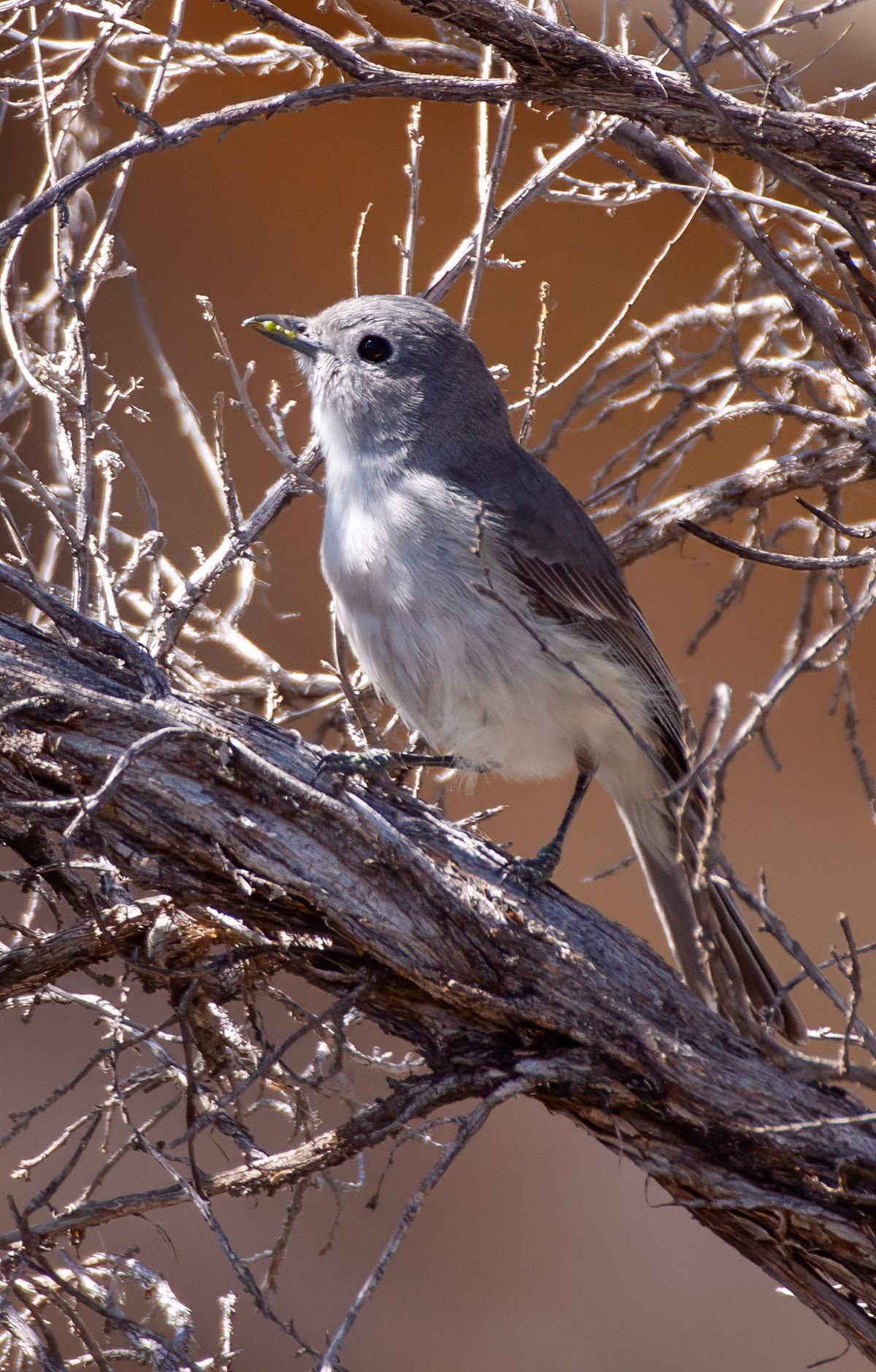
A compact, soft-gray songbird, the gray vireo measures roughly the size of a sparrow and presents a plain, rounded profile that can fool casual observers. Its plumage stays largely even gray with a subtle buff wash on the underparts, a short square tail, faint wing bars, and a thin pale eye ring that gives a slightly spectacled look. The bill is relatively stout for its size, and the overall lack of bright color makes the bird easy to miss until it moves or sings.
You’ll find gray vireos in dry, open woodlands and scrub—pinyon-juniper slopes, chaparral, and thorny brush across the southwestern United States and into northern Mexico. They forage methodically, gleaning insects and spiders from foliage and small branches and occasionally taking berries. Rather than flitting at the canopy edge, a gray vireo often perches quietly and surveys before making short, deliberate sallies; its repetitive, tuneful phrases and hoarse notes more often reveal its presence than sight alone. Nesting occurs low in shrubs or small trees, where the cup nest blends into the surrounding twigs.
Gray vireos are not commonly seen in large numbers, so an individual bird can feel like a special find in parklands. They are generally stable in conservation status but depend on intact dry-woodland habitat, so preserving brushy slopes and limiting disturbance during breeding helps them thrive. For best chances, listen for their persistent song in spring mornings and scan sunlit shrub tops where the muted gray contrasts with the sky.