Badlands National Park guide · 1 min read
Bison, Bighorn Sheep and the Mixed-Grass Prairie
Within the park, a stretch of mixed-grass prairie ranks among the biggest of its kind in the country.
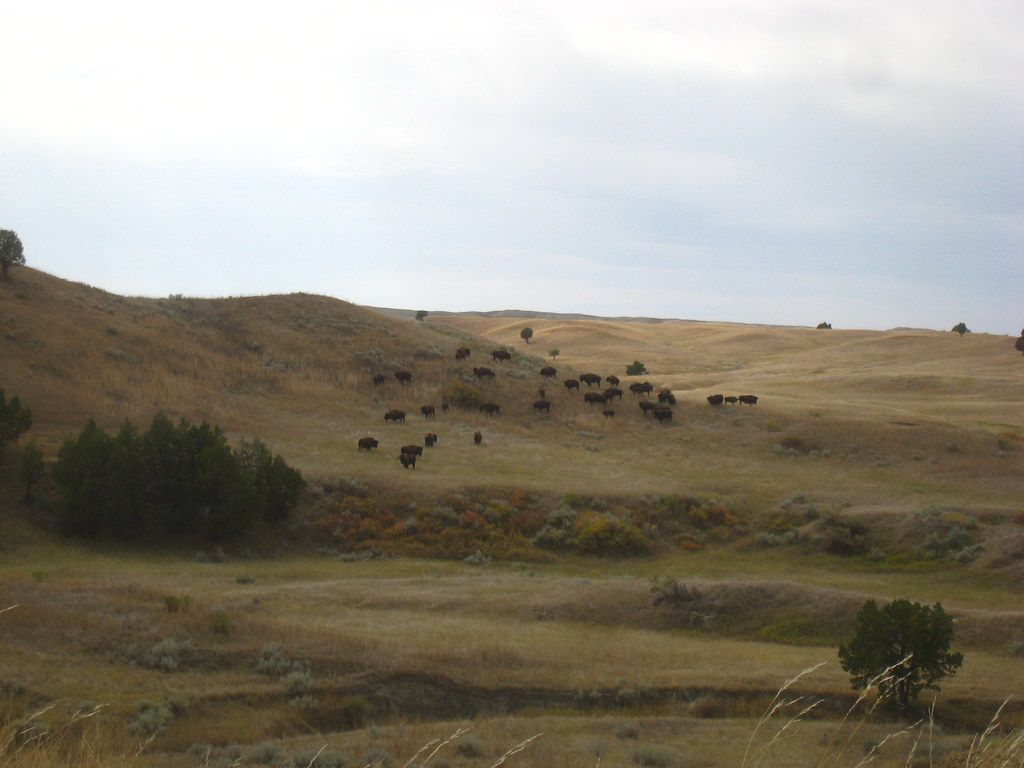
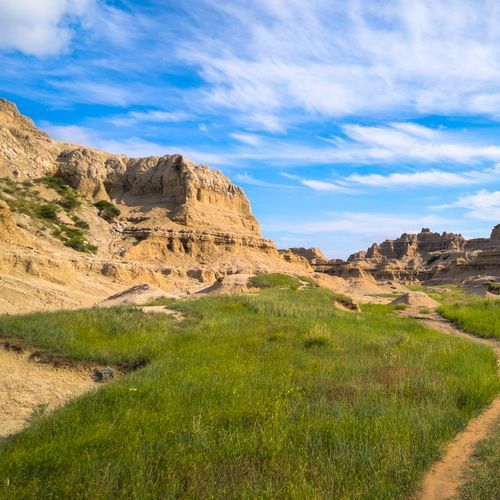
Grasses here vary widely in height, with some barely reaching the ankle and others rising to a person's waist. Close to 60 grass species grow in the park, and hundreds of wildflowers and other plants share the ground with them. Shrubs and trees have a place here, but grass covers most of the scene. Western wheatgrass is the grass you are most likely to see, reaching one to three feet tall, and South Dakota chose it as its state grass.
Bison and bighorn sheep both live on these open grasslands. The bison herd began with 50 animals moved in from Theodore Roosevelt National Park, and it has since grown past 1,200. Bighorn sheep share the same broad country, and their numbers have climbed in recent years.
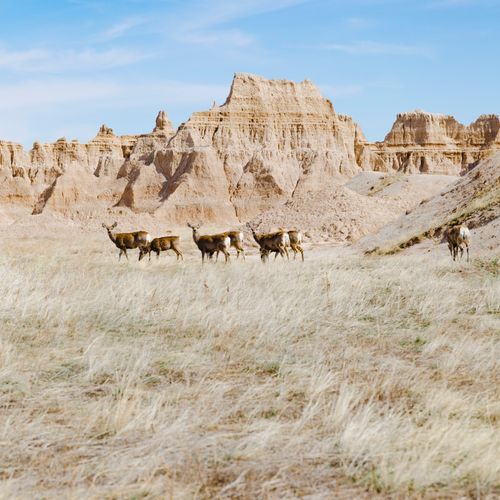
Pronghorn, mule deer, white-tailed deer, coyotes and prairie dogs are also part of the park's wildlife. Nearly 200 bird species are found here, and the list also includes bats, rabbits, frogs, toads and snakes.
Wildlife viewing works best from a distance. Keep 100 yards between yourself and any animal, which keeps both people and wildlife out of harm's way. Sage Creek Rim Road is a practical choice for seeing bison from your car, since they have been spotted along it.
Restoration work has returned the black-footed ferret to the Sage Creek Wilderness Area. The species ranks among the most endangered land mammals on the continent, and the park's grasslands offer it a place to recover.