Badlands National Park guide · 2 min read
Oligocene Fossil Beds: Ancient Horses and Rhinos
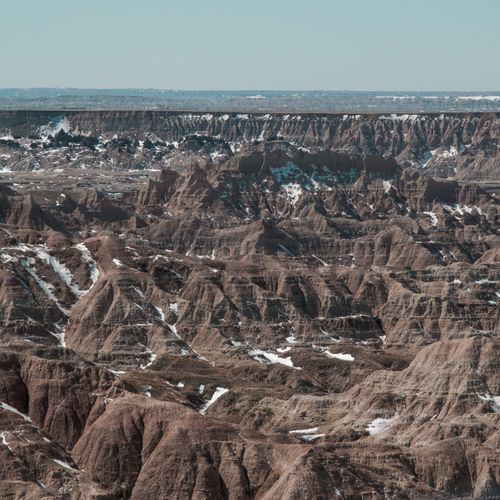
The rock layers of Badlands National Park hold fossils from the Oligocene epoch, a span that ran from 23 to 35 million years ago.
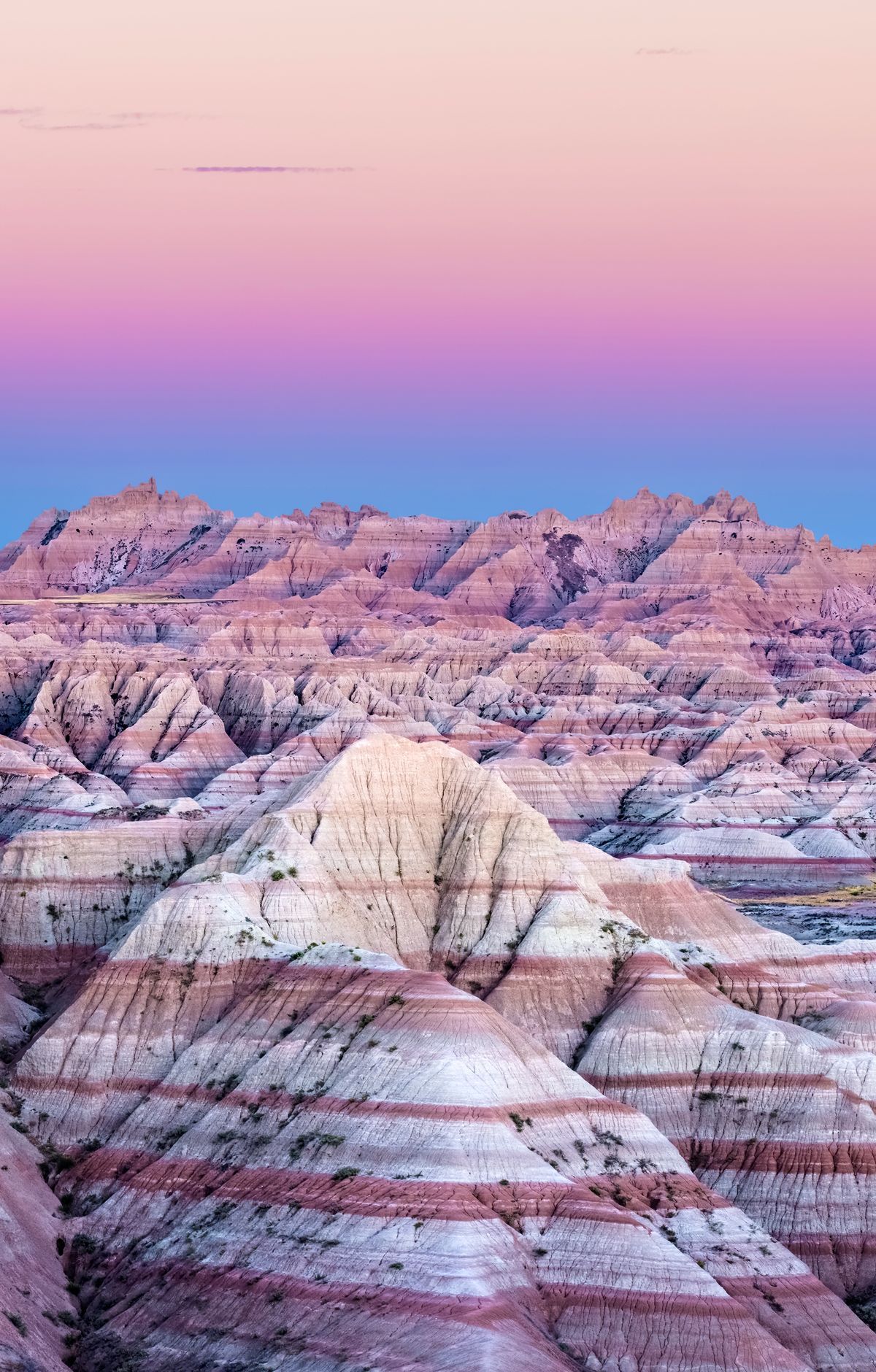
About 30 million years ago, this area was warmer and covered in plant life. Floods swept through and killed many mammals, and sediment buried their remains almost at once. That rapid burial left behind huge numbers of fossil skeletons.
Animals related to today's horses and rhinos roamed here long ago. Mesohippus, an early relative of modern horses, had three toes on each foot where today's horses have one hoof. Subhyracodon was a nimble rhinoceros that fed on vegetation.
Plenty of other extinct creatures shared this land. Hoplophoneus was a leopard-sized hunter and among the earliest mammals ever called a saber-tooth cat. The small, deerlike Leptomeryx nibbled leaves and plant stems. Oreodonts looked a bit like sheep, lived here in great numbers, and carry a name meaning mountain tooth. Archaeotherium, a distant cousin of pigs, used its sharp canines on both plants and carrion.
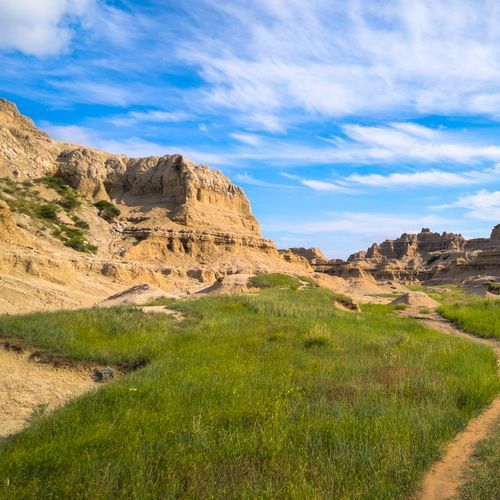
The Fossil Exhibit Trail is a flat boardwalk that passes through rugged badland formations. You'll find it on the Badlands Loop Road, also known as Highway 240, about five miles west of the Ben Reifel Visitor Center. Signs along the way explain what has been discovered in the park, and many displays have replica fossils you are welcome to touch. Rattlesnakes turn up here often, so watch where you step.
Protecting fossils is the reason this land was first set aside as a national monument. Federal law forbids digging fossils out of the ground or moving them from where they lie. Even so, ever since the park was created, some visitors and poachers have carried fossils away, whether as keepsakes or to sell. Anyone caught doing so risks steep fines and even time in jail.