Big Bend National Park guide · 1 min read
Darkest Skies in the Lower 48
Big Bend National Park became an International Dark Sky Park in 2012, a status granted by the International Dark-Sky Association after the park measured and reduced excess lighting.
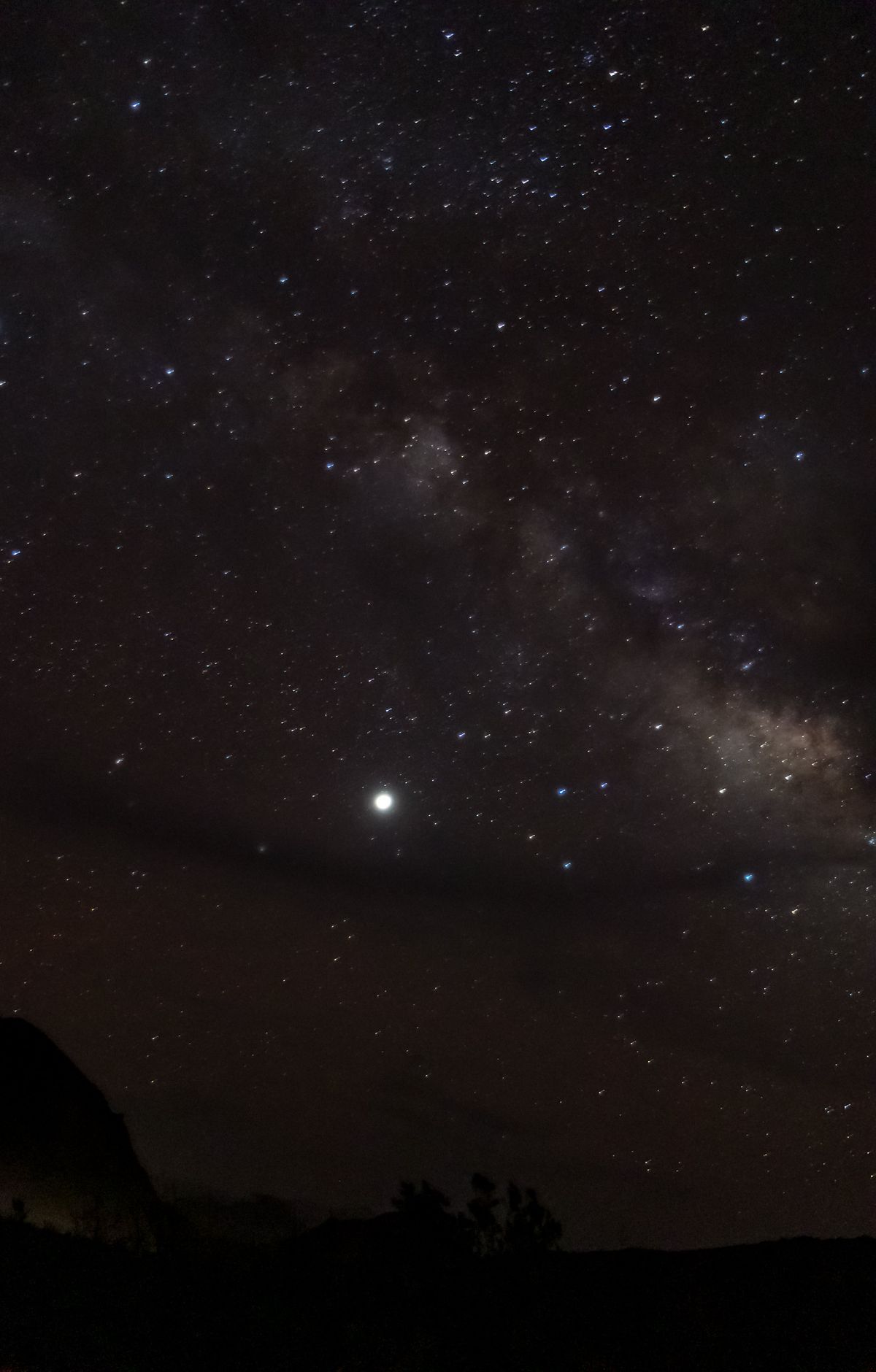
National Park Service measurements rank its night sky darker than that of any other national park in the lower 48 states. Its neighbor, Big Bend Ranch State Park, also holds the designation, and together the two protect 1,112,000 acres of dark skies.
Much of that darkness comes from remoteness. The park lies far from large towns and cities, and its human population is sparse, so there are almost no lights marking a house or a town. In most urban areas, the glow is so strong that very few stars can be seen.
As towns, cities, and industries grow, their light spreads toward the park. The Night Sky Quality Map tracks sky quality around the park and how it changes over the years. It was built by Katy Abbott, an intern in the Geoscientists in the Park program.
Stargazing here does not require a special trip. Getting away from artificial light is enough, and a turnout beside any park road works just as well. Autumn and winter bring the strongest conditions. On a clear night, thousands of stars, bright planets, and the Milky Way are visible, and the Milky Way can be seen with the naked eye.
Binoculars, a blanket, and a star chart are worth bringing. A red flashlight or headlamp keeps your night vision intact. Night Sky Ranger programs add another way to explore the sky, with a ranger setting up a telescope and aiming a laser pointer at the stars overhead.