Big Bend National Park guide · 2 min read
Rock Art, Ranches and Early Settlers
People have lived in this country for more than 10,000 years. The Chisos were among the first groups, though little is known about them.
They were nomadic hunters and gatherers who may have farmed a little in some seasons. Around the start of the 18th century, the Mescalero Apache moved into the region and displaced the Chisos. The Comanche passed through along the Comanche Trail on raids into Mexico, and those raids continued until the mid-1800s.
Rock art and mortar holes are among the marks those earlier groups left on the land, alongside rock shelters. They are a reminder that this country was home to people long before the park was created.
Mexican and Anglo families came later, and their ranches, farms and mines, along with their houses, dotted the land. Some of these operations lasted as late as the 1960s, and many ruins can still be found. Before the park existed, the Homer Wilson Ranch was one of the biggest in the area. Its headquarters is visible from the Homer Wilson Ranch Overlook, which is also called Blue Creek Ranch Overlook, and a short trail leads down to the ranch buildings.
The Sam Nail Ranch Trail is an easy half-mile loop starting at Mile 3 of Ross Maxwell Scenic Drive. It winds through the old homestead of Jim and Sam Nail and Sam's wife, Nena, where adobe walls and two windmills remain. One windmill still runs, and the water draws birds, making this a good place for birding and wildlife viewing. Keep an eye out for javelinas in the brush, plus painted buntings, green-tailed towhees and mockingbirds.
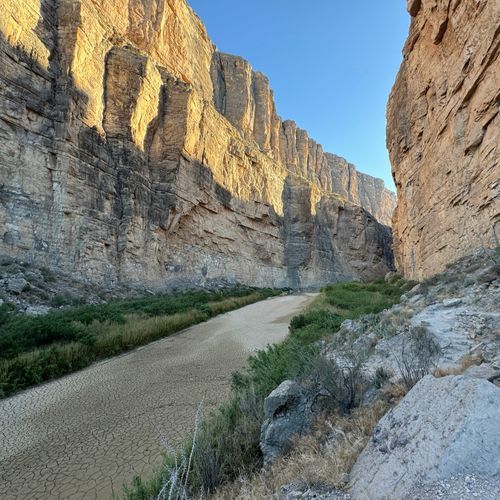
The 30-mile Ross Maxwell Scenic Drive takes in much of this past. Sam Nail Ranch, the Homer Wilson Ranch and the Castolon Historic Compound all sit along it, and Castolon has a visitor center and a camp store. The road continues to Santa Elena Canyon, where the Rio Grande runs between limestone walls 1,500 feet tall.