Congaree National Park guide · 2 min read
Longleaf, Bluff and Backcountry Camping Permits
Backcountry camping at Congaree requires a permit, and there is no charge for one. Send your request by email at least 72 hours before your trip, which gives park staff time to review each application.
Requests sent with less notice are not reviewed. The backcountry can be entered on foot, by canoe or by kayak.
Longleaf and Bluff are the park's two frontcountry campgrounds, and both need a reservation made ahead of time through Recreation.gov. Longleaf Campground sits beside the park entrance road and has ten individual sites, each allowing up to eight people and three tents. Four group sites hold between nine and 24 campers. Each spot comes with a fire ring and a picnic table, and vehicles stop at the gravel lot, so you walk in from there.
Bluff Campground has six individual sites on the Bluff Trail, about a mile from Longleaf, and no vehicle can reach it, so everything you bring must be carried in on foot. Longleaf has no running water. Fill your containers at the Harry Hampton Visitor Center, at water fountains, or at a spigot suited to large jugs. Free Wi-Fi reaches both inside the visitor center and the area right outside its doors.
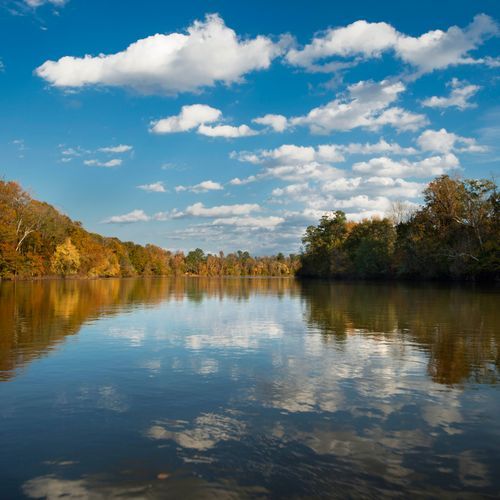
Paddlers on Cedar Creek should know that the left bank, running between Bannister Bridge Canoe Access and Cedar Creek Canoe Access, counts as frontcountry wherever it falls inside the park boundary. Overnight stays along that stretch are allowed only at Longleaf and Bluff. Every other part of the park is backcountry, so a backcountry permit is required to camp there.
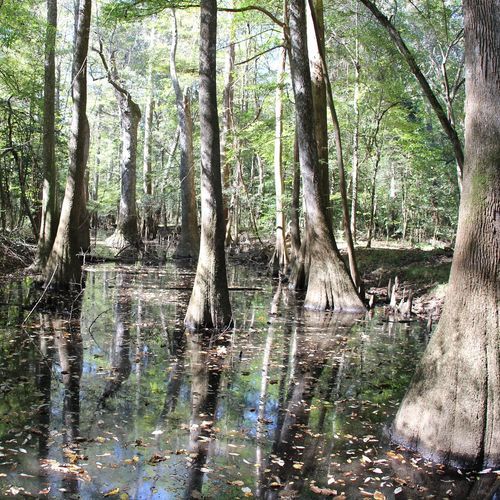
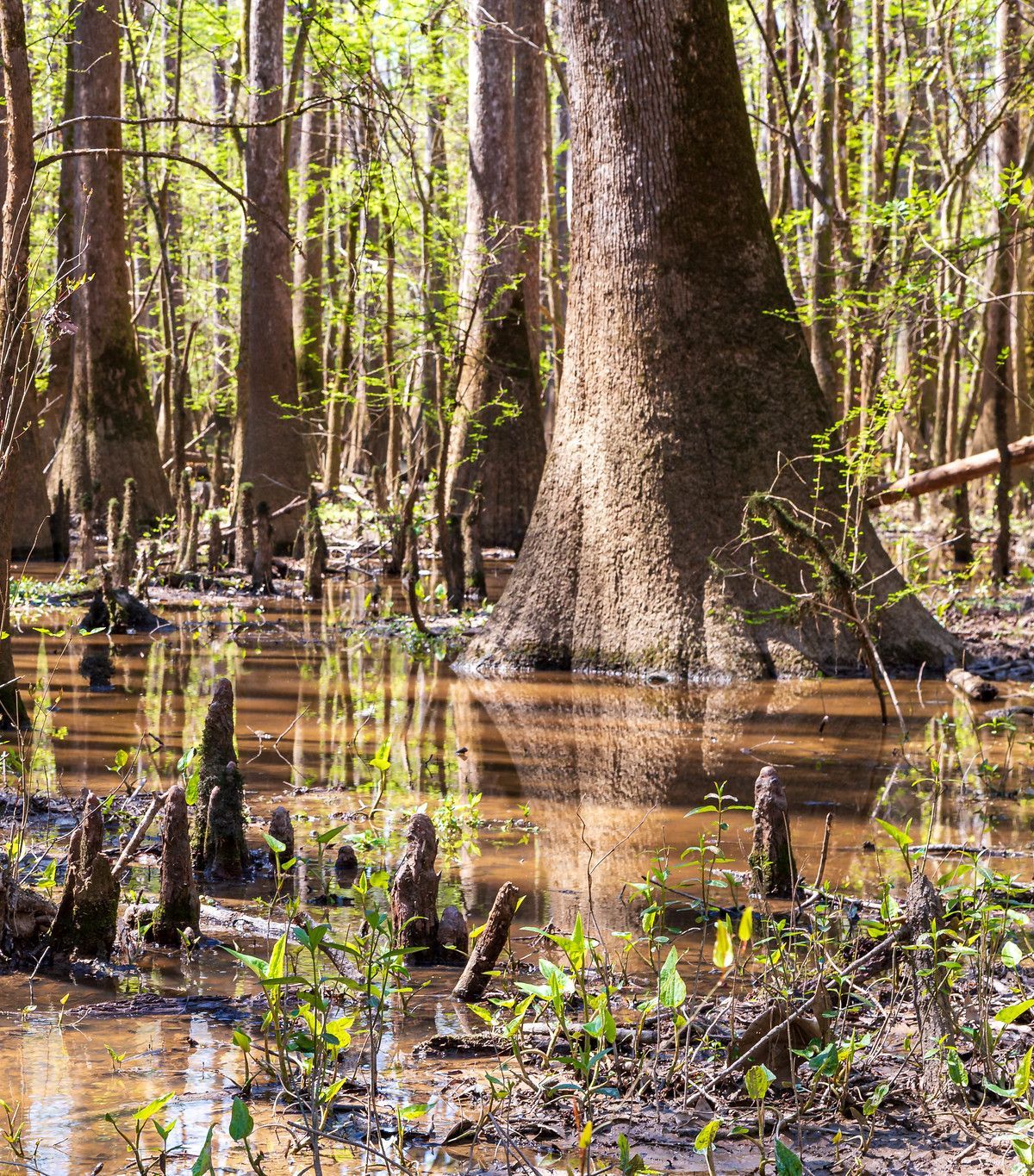
The park sits in the Congaree River floodplain, which floods roughly ten times a year. About 80 percent of the land lies within that floodplain, and high water can block backcountry trails and sections of the boardwalk. Look up current conditions before you set out and again once you arrive. Visitors planning to stay into the evening can use the overnight lot near the entrance.