National Park of American Samoa guide · 2 min read
Hot-Spot Volcanoes: How the Samoan Islands Formed
Beneath the Pacific Plate sits a hot spot, and it built the volcanic islands that make up most of the park's land.
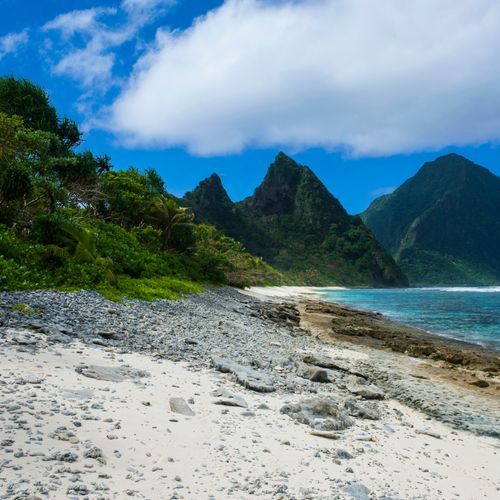
Basalt lava flows erupted again and again, stacking shield volcanoes over and against one another, so each island is really several overlapping volcanoes rather than a single peak.
The islands rose one at a time, moving from west to east, so each island farther east is younger than the one beside it. Tutuila, the largest island, holds the top spot for age; its rock probably formed during the Pliocene, somewhere between 1.4 and 1.24 million years in the past. The smaller islands are far younger, likely dating to the Holocene Epoch, and Ta'ū is the youngest of the three.
Molten rock first reached the surface in the Pliocene, squeezing upward as basaltic dikes along a split in the seafloor. Erosion through the Pliocene and early Pleistocene wore much of that early rock down. What survives includes trachyte plugs and bare outcrops of volcanic tuff scattered around the park. Much of the old lava is now breccia, a rock made of broken, angular pieces.
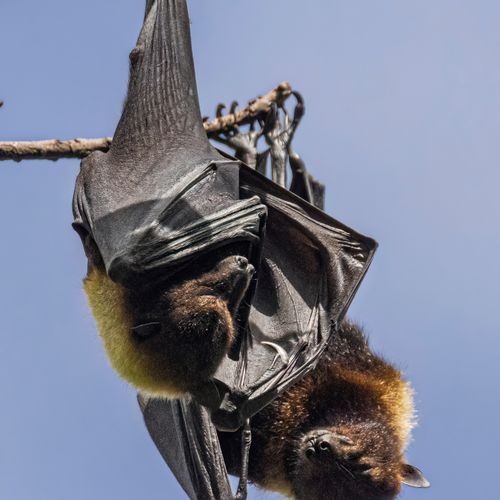
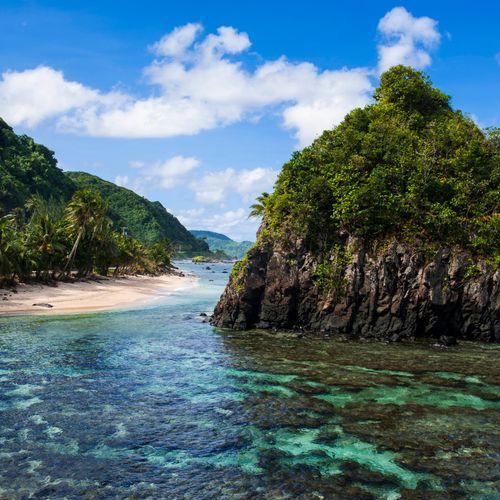
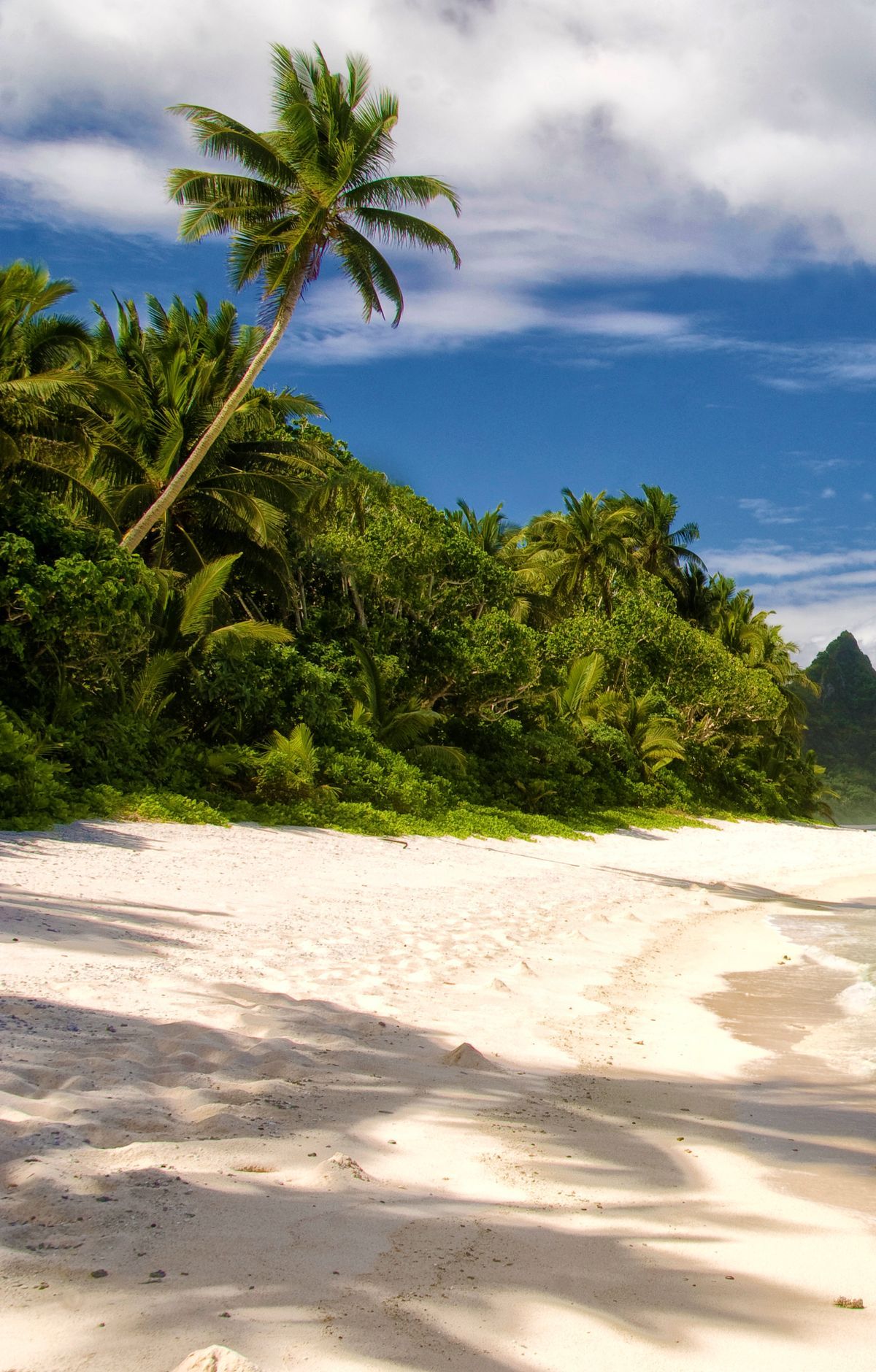
Fringing coral reefs hug each island's shoreline and hold more kinds of marine life than anywhere else in United States waters and territories. Researchers have logged more than 950 types of fish and 250 types of coral here. Tropical rainforest blankets nearly all the land, extending from the upper slopes right down to the waterline. Flying foxes, or fruit bats, play a major role in pollinating these trees, and plants that bear fruit are the dominant type here.
Snorkeling and scuba diving let people explore these reefs up close. Ofu stands out for this, since almost all of the park there is underwater and its reefs are in pristine condition. On Ta'ū, sheer cliffs lead to tough hikes, while ridge routes and coastal trails reveal wide views over the islands and the sea.