Olympic National Park guide · 2 min read
Roosevelt Elk and the Park's 1938 Founding
Olympic National Park was set aside in 1938 to protect three things: Roosevelt elk, primeval forest and a wild coast.
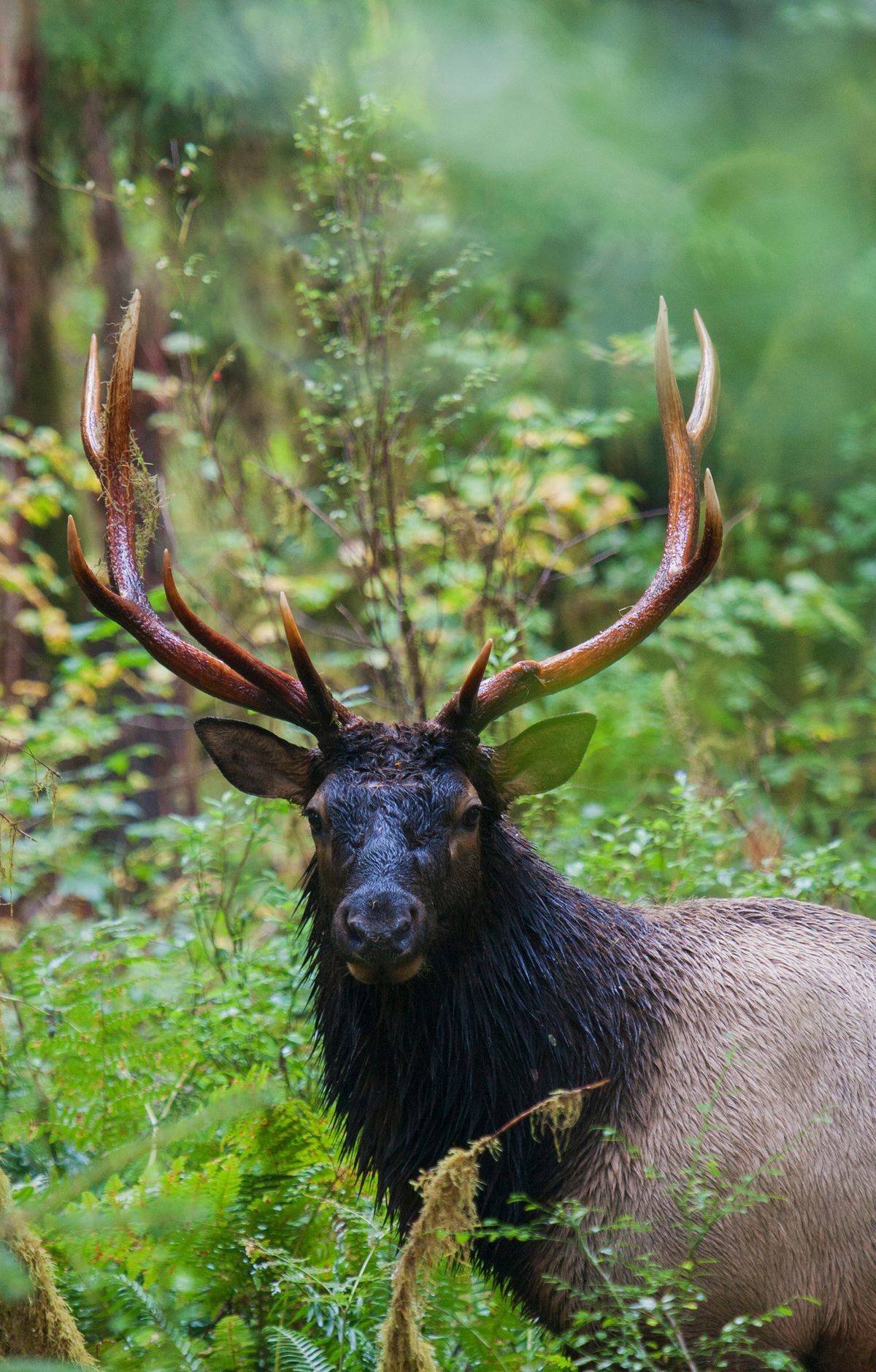
The elk came first in the story. Overhunting had nearly erased them from the peninsula by the late 1800s, so in 1909 President Theodore Roosevelt, their namesake, created Mount Olympus National Monument to shelter them. Herds had recovered by the time the park arrived, and about 3,000 to 4,000 elk now live under its protection.
These are the largest land mammals in the park, darker and bigger than Rocky Mountain elk, with bulls reaching 1,000 pounds. Only bulls carry antlers, which fall off each spring and grow back over summer. Year round, mixed herds of females, their young and juvenile males graze in meadows left by early homesteaders. The fall rut is the loudest season, when a bull may collect up to 30 cows and rivals answer each other with shrill bugling that carries through the valleys.
Wide, flat valley bottoms on the west side suit elk best, and herds there are larger and roam less than those to the east. The Quinault, Queets, Hoh and Bogachiel valleys hold some of the finest temperate rain forest. No other old-growth forest in the Pacific Northwest is as large as this one, where trees that sprouted 200 to 1,000 years ago can stand 300 feet tall. By nibbling back the plants beneath the canopy, elk help give these woods their open, park-like feel.
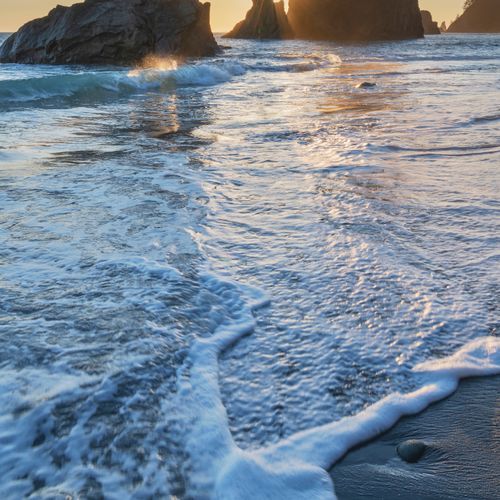
The coast runs for 65 miles, one of the longest wilderness shorelines in the lower forty-eight states. Headlands and sea stacks shelter seals, sea lions, otters, eagles and seabirds, and whales pass offshore. At low tide, a single tidepool can hold hundreds of creatures, including ochre sea stars clinging to the rocks. In 1988, Congress designated much of the park, including most of this coastal strip, as the Olympic Wilderness.