Zion National Park guide · 2 min read
Stargazing from the Pa'rus Trail and Checkerboard Mesa
Zion is an International Dark Sky Park, so the park keeps artificial light to a minimum to protect the night sky.
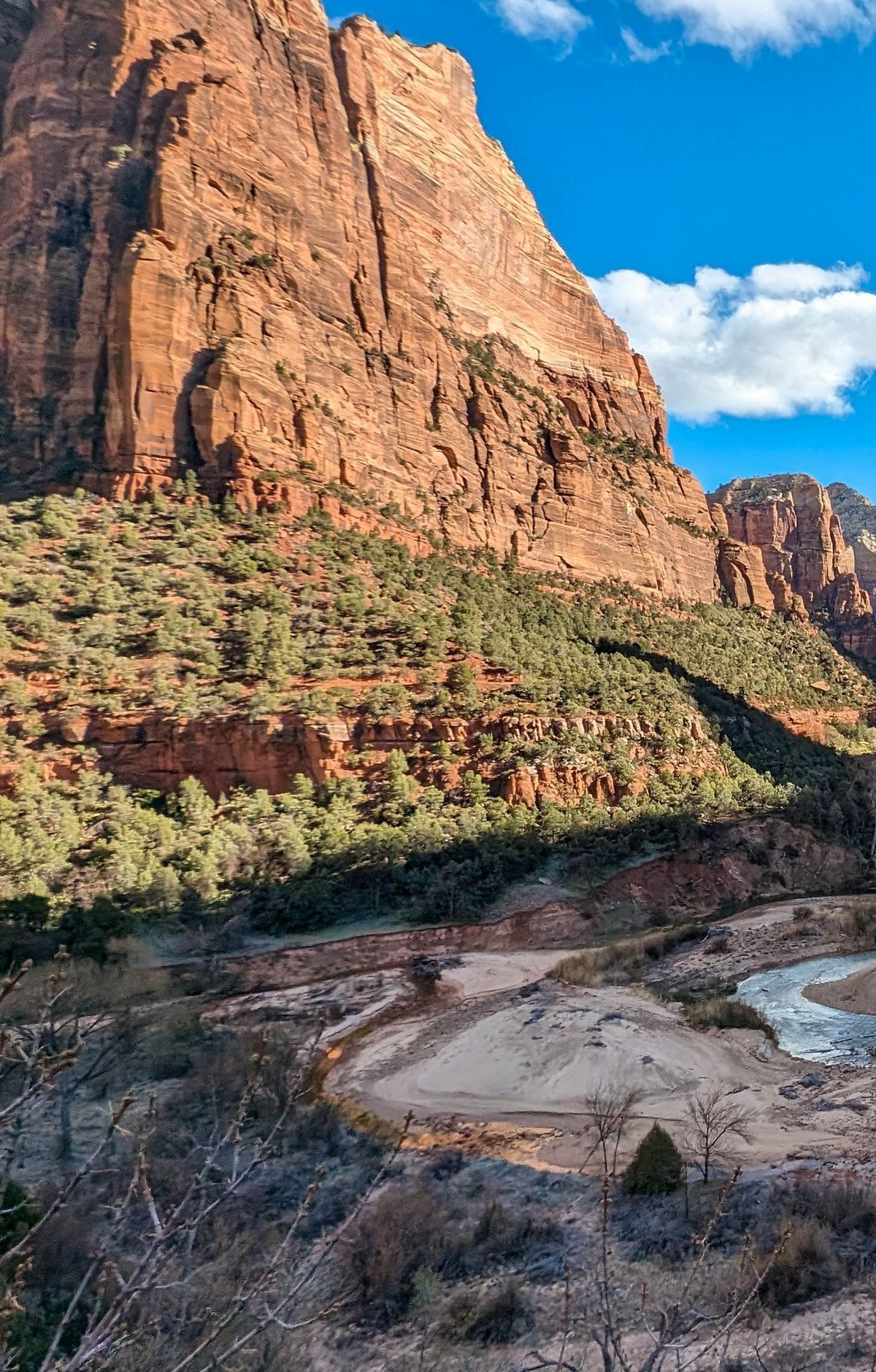
Once the sun goes down, the park gets very dark, and it pays to come prepared. The Milky Way is visible from every part of Zion, but for the deepest darkness, head to the park's eastern section or up Kolob Terrace Road.
A good stargazing night often starts with sunset. Many visitors stay to photograph the cliffs turning bright orange in the evening light, then drive off as darkness settles in. Those who linger watch thousands of stars come out above the outline of the canyon walls. Check the Moon phase before you go, because moonlight hides fainter sights like the Milky Way, and aim for the hours before moonrise or after moonset.
The Pa'rus Trail, whose name is Paiute for bubbling water, is a paved path along the Virgin River between the Zion Canyon Visitor Center and Canyon Junction. The full route is about 3.4 miles round trip with very little climbing, and walkers get wide, open looks at the Watchman along the way. It suits sunset watching, stargazing and astrophotography, and it is open to wheelchairs, bicycles and leashed pets. Nearby, the back patio of the Zion Human History Museum is fully accessible and has seating, an easy spot to settle in and look up.
On the park's east side, the Checkerboard Mesa Pull-off is a recommended night sky stop. Checkerboard Mesa itself is a large rock formation that wind and water have etched with a crisscross pattern. The darker skies on this side of the park make the pull-off a good place to set up a personal telescope. This stop has no restrooms, so plan ahead. Drive slowly on the way, since nocturnal animals cross the roads after dark.