Zion National Park guide · 1 min read
Weeping Rock and Zion's Hanging Gardens
Weeping Rock is a broad rock alcove in Zion Canyon where water seeps straight out of the sandstone and drips from the overhang above.
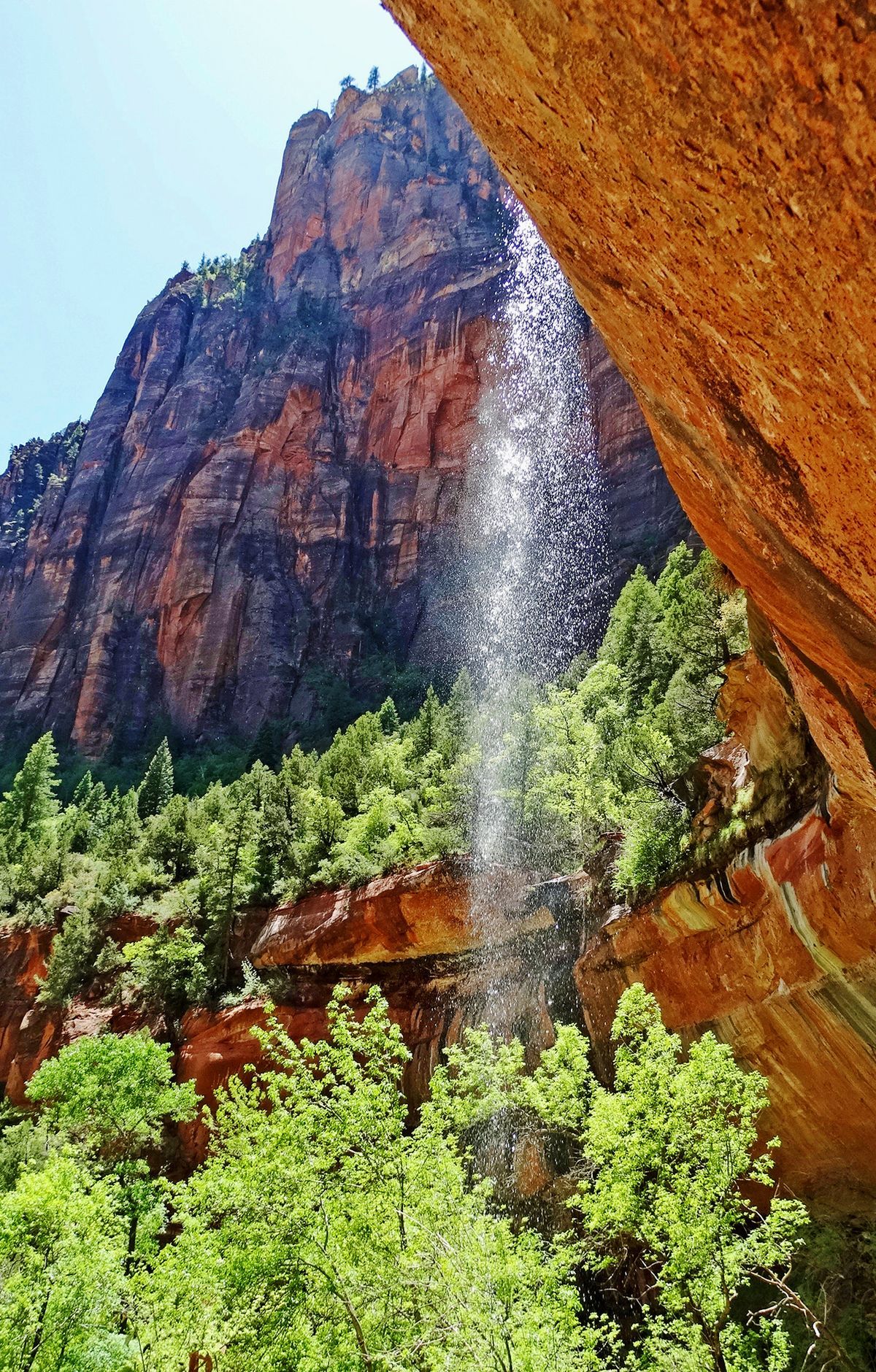
The steady moisture supports a hanging garden, a patch of green life clinging to the cliff face in the middle of a desert park. On a hot day, the shaded, dripping alcove is a cool place to stand for a few minutes.
The Weeping Rock Trail is short but steep, about 0.4 miles round trip, and most visitors spend between fifteen and forty-five minutes on it. From the parking area, cross the bridge and turn left onto the paved path. Small exhibits line the way, and there are a few minor drop-offs to watch for. The trail finishes with a set of steps that climb into the alcove and its dripping springs. The Zion Canyon Shuttle serves the Weeping Rock stop, number seven, and pit toilets sit at the parking area.
The plants here are a lesson in how water shapes life in Zion. Near the visitor center, sun and heat favor cacti, while cottonwoods and box elders crowd the banks of the Virgin River. At wet, shady spots like springs and seeps, you may find maidenhair ferns and watercress, plants that depend on constant moisture and plenty of shade.
The rock itself carries its own history. Navajo Sandstone, the stone that makes up the Three Patriarchs in Zion Canyon, was deposited as sediment in a vast ancient desert. The Kayenta Formation, another of the park's nine exposed layers, formed from sediment left by streams, ponds and lakes. Standing under the dripping overhang, you can see how water still works through the sandstone today.