Capitol Reef National Park guide · 2 min read
From Fremont Petroglyphs to Pioneer Settlers
The Fremont Culture lived in the region for roughly a thousand years. Archaeologists named them after the Fremont River canyon, where they were first identified as a distinct culture.
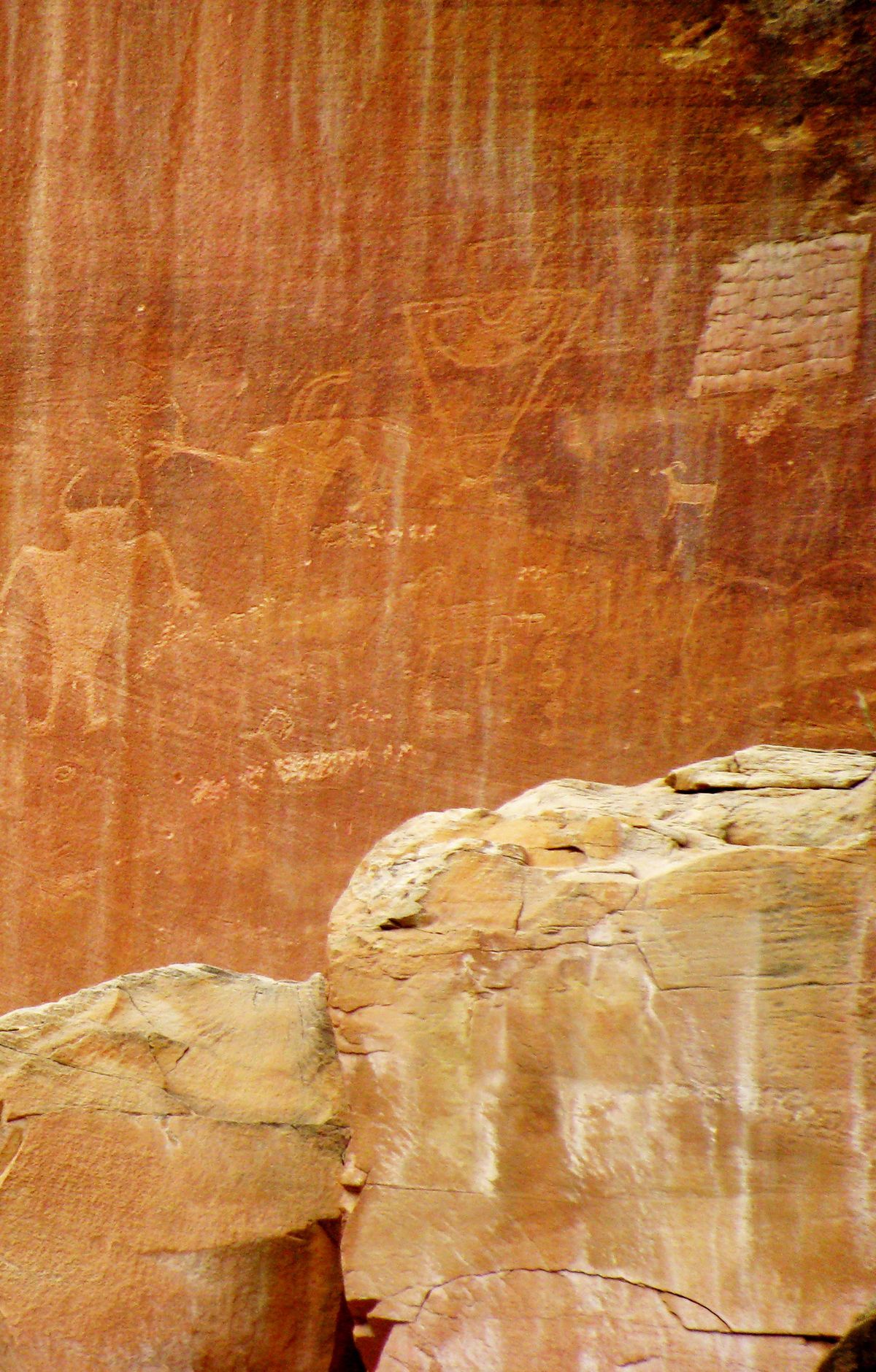
They watered plots of corn and squash and kept harvested grain in granaries built from stone. Around the 13th century, a long drought likely pushed the cultures here into sudden change, and people left the Fremont settlements and fields behind.
Rock art is one of the clearest traces left behind. Petroglyphs are pictures cut or chipped into rock, and the Fremont Culture Petroglyph Panel sits beside Utah Highway 24, reached by two wooden boardwalks. A visit typically takes five to 30 minutes. Walking the boardwalks lets you study the images and consider daily life here roughly a thousand years ago.
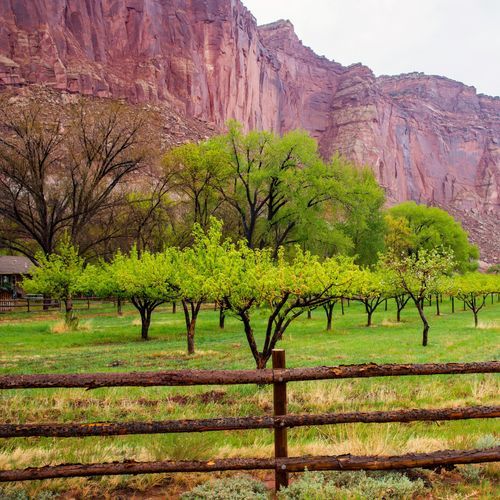
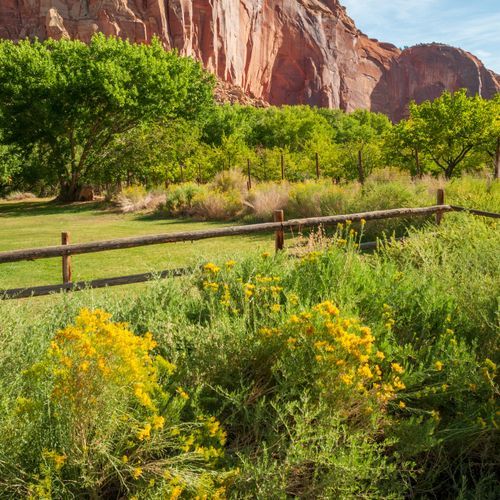
In the 1880s, Mormon pioneers arrived and built a settlement called Fruita beside the Fremont River. At any given moment, ten families at most made their home in Fruita. Today the old groves hold around 2,000 trees, among them walnut, almond, mulberry, plum and apple, along with pear, peach, apricot and cherry.
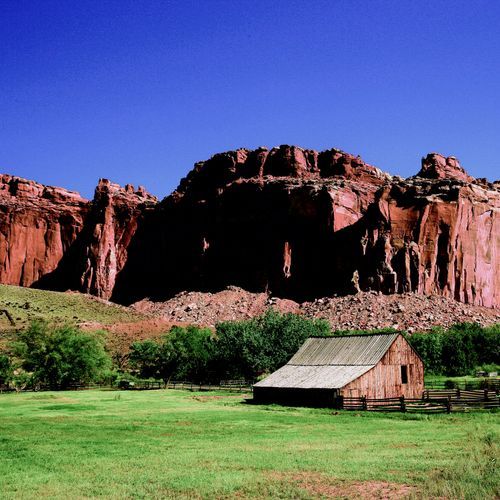
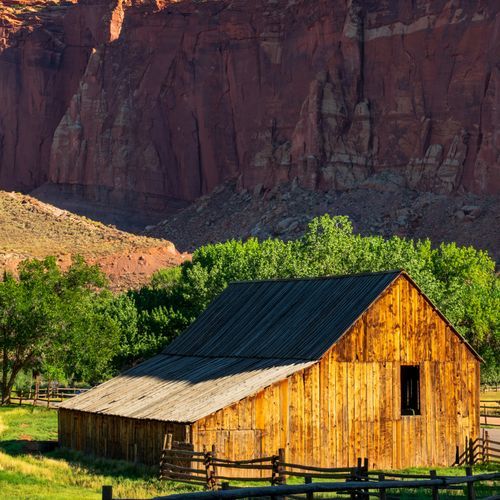
For many, the Fruita Historic District is the core of the park. Audio guides come with the Fruita Schoolhouse and the Merin-Smith Implement Shed, and both buildings are accessible. The Gifford House stands close to the Fremont River Trail, and part of that trail can be used by wheelchair users.
Capitol Gorge shows another part of the story. The road into it is longer and more winding than the Grand Wash route, but it now ends a few miles in. Walls of Wingate Sandstone close in around the narrows, and the Navajo Formation above rises in pale, rounded domes resembling the United States Capitol, a likeness that helped inspire part of the park's name. Petroglyphs also appear along the gorge walls.