Castillo de San Marcos and Fort Matanzas National Monuments guide · 2 min read
Coquina: The Shell Stone Behind Two Forts
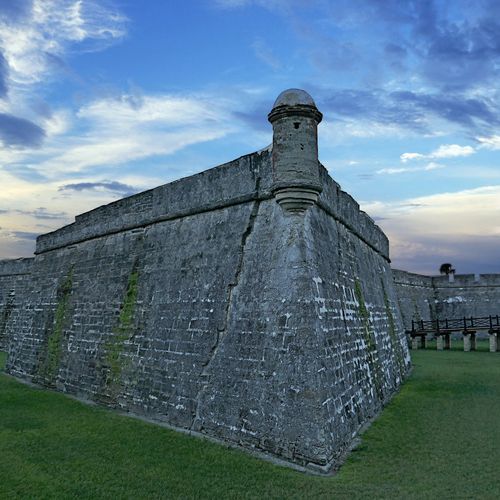
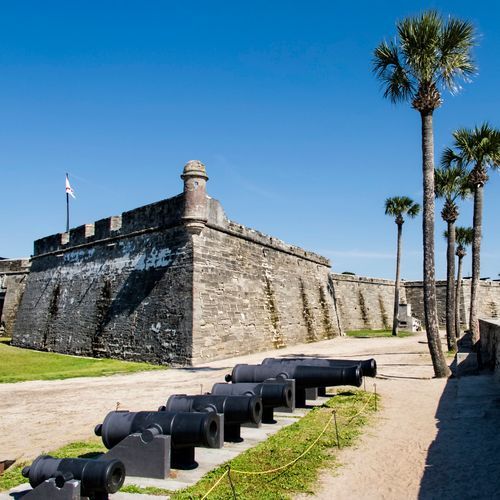
Both Castillo de San Marcos and Fort Matanzas are built from coquina, a stone made almost entirely of seashells.
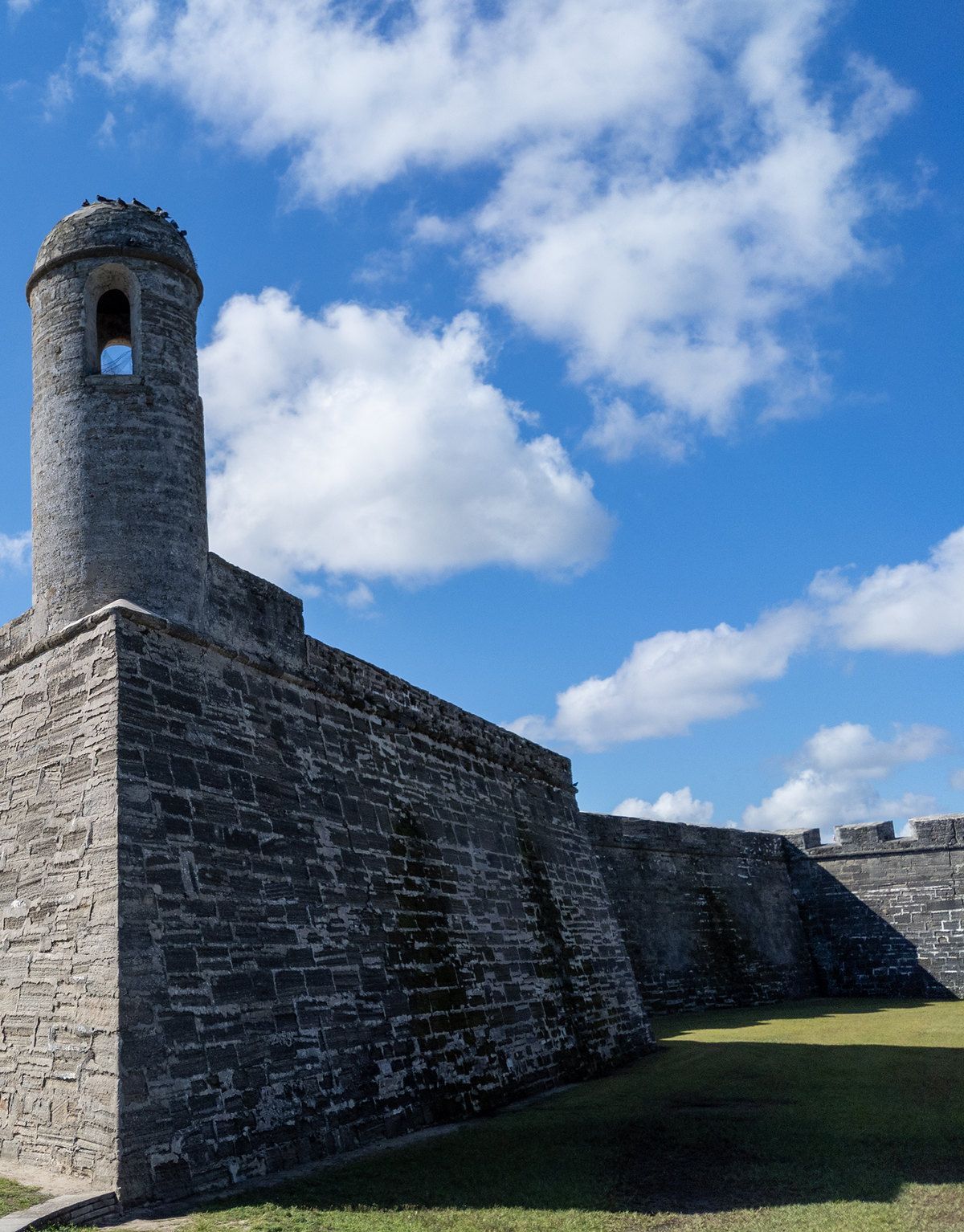
The Spanish chose it because nothing else suitable for building could be found along the northeast shore of colonial Florida. It looked like a weak option, yet it proved one of the best materials they could have used.
The stone began with the tiny coquina clam, whose shells in shades of pink, lavender, yellow and white still wash up along Florida beaches. Over thousands of years, as the clams died, their shells settled layer upon layer into underwater beds that grew to a depth of several feet. Later, when the sea retreated in the last ice age, rain and air reached the beds, and in time soil and plants grew over them. In Florida this rock is called the Anastasia Formation, named for Anastasia Island, where the Spanish quarried blocks for the Castillo.
Coquina is light and full of millions of microscopic air pockets, so it gives a little under impact. Cannonballs that would shatter granite or brick into flying shards instead sank into the thick walls of Castillo de San Marcos and lodged there, the way a BB pellet buries itself in foam. The fortress, built between 1672 and 1695, has stood for more than 300 years.
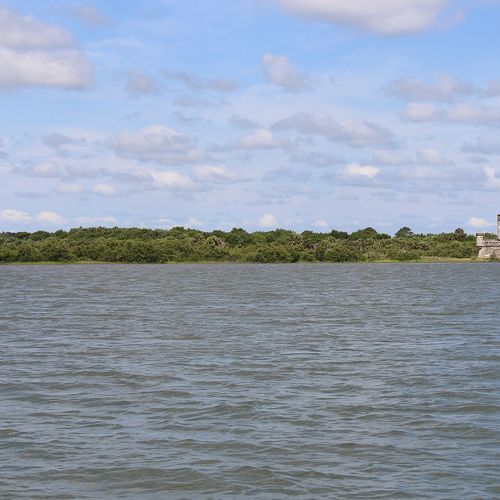
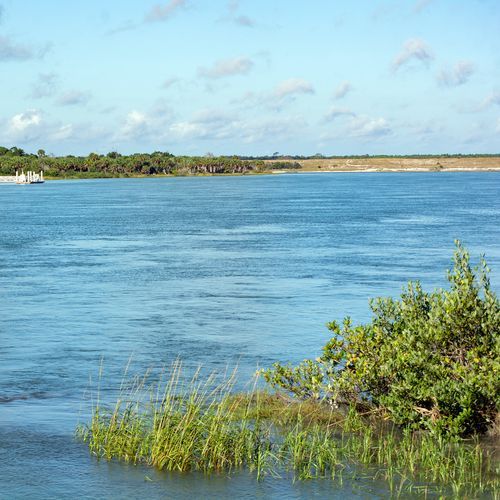
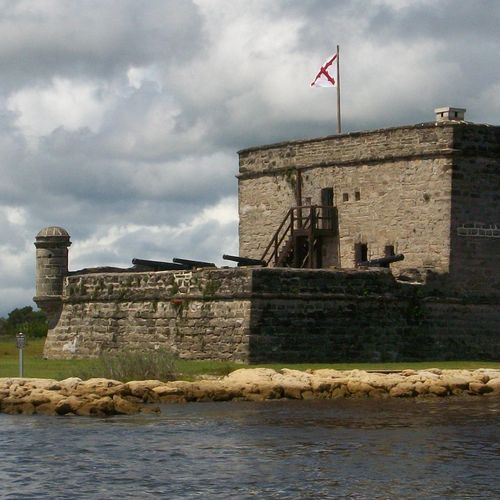
At Fort Matanzas, completed in 1742, workers cut coquina south of the inlet and floated it by boat to the site. The walls measure 50 feet on each side and rise 30 feet. Masons bound the blocks with mortar of sand, fresh water and lime made by burning oyster shells, and the same lime coated the walls as waterproof plaster.
Soldiers once climbed a wooden ladder through the west wall opening to reach the gun deck. Today sturdy stairs make it easy for visitors to enter the fort, where the tower served the garrison as both living quarters and dining space.