Castillo de San Marcos and Fort Matanzas National Monuments guide · 2 min read
Inside the Castillo's Bastions and Casemates
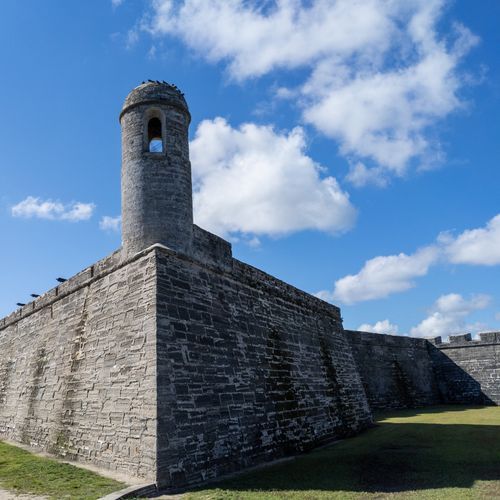
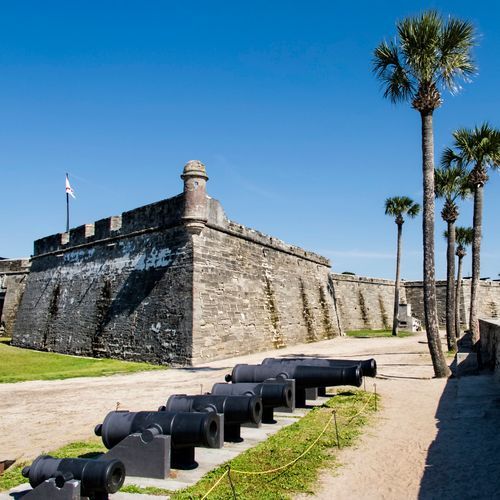
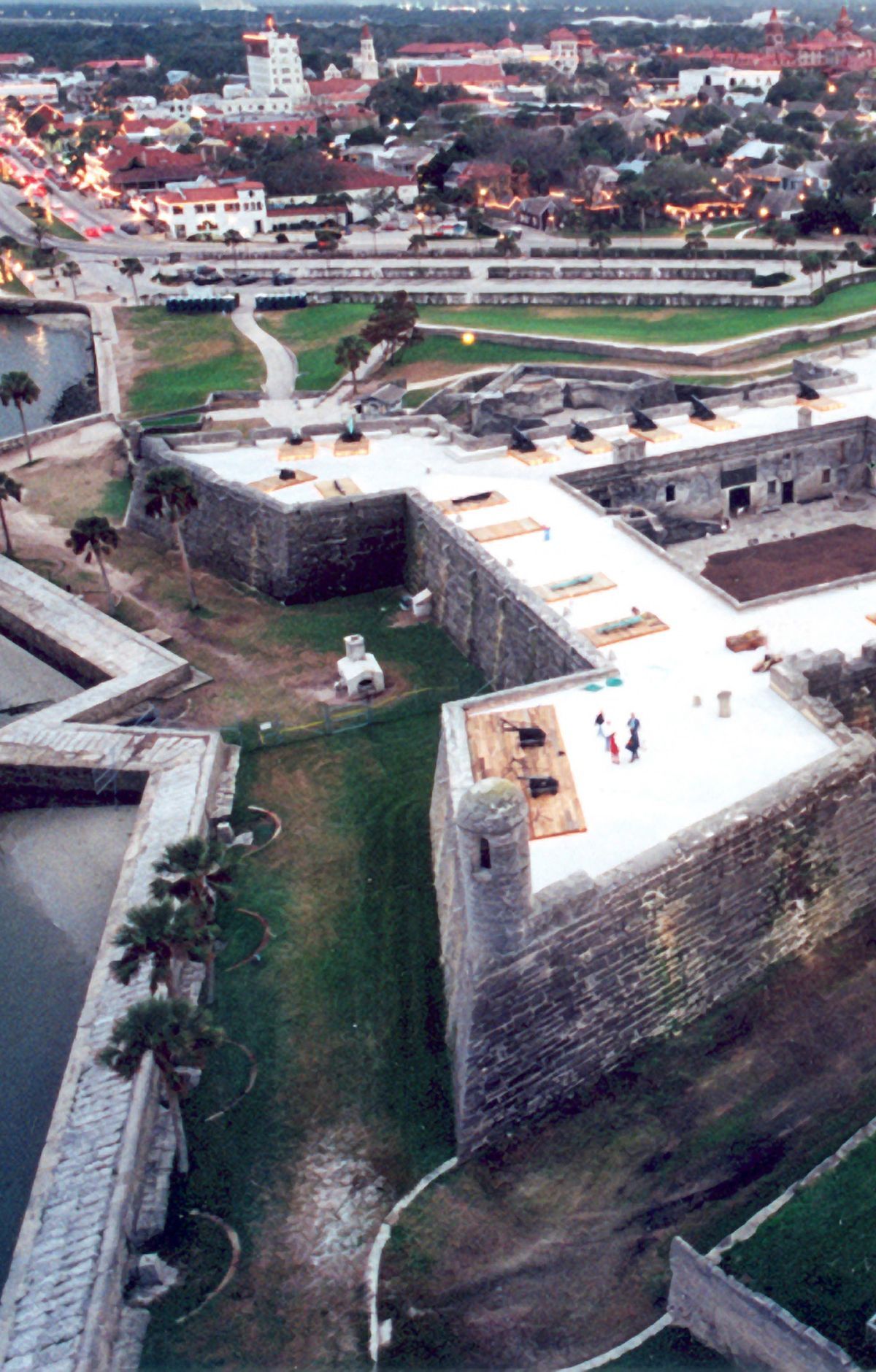
Four diamond-shaped bastions jut from the corners of the Castillo, pointing outward from a square plaza whose sides each run 320 feet.
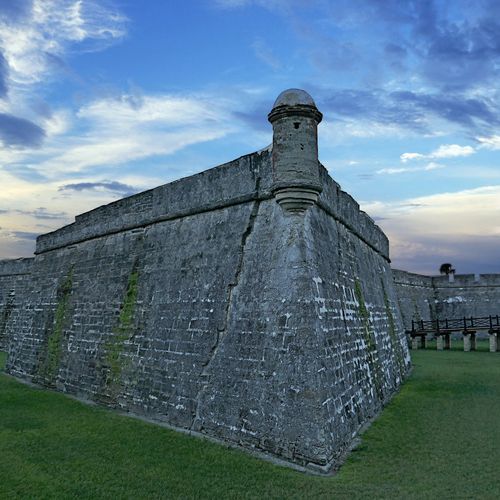
The coquina walls stand thirty feet tall and taper from ten to fourteen feet thick at the bottom to five feet at the top. Only two forts in the world were built from this shell limestone: this one and Fort Matanzas, 14 miles to the south.
The rooms around the plaza are the casemates, stone chambers with arched ceilings added between 1738 and 1756, years when Spain and England were fighting almost without pause over their American colonies. Each vault spreads its load into the walls and foundation, so it bears far more weight than a flat roof could. That made the rooms bombproof and let the Spanish crowd more cannon onto the deck above.
A self-guided walking tour leads through several of these rooms. The Supply Room shows how the western casemates looked when stocked with food. Other rooms were packed with military stores, from powder and hardware to ship repair gear, along with up to 20,000 cannonballs. In one storage room, a raised platform is believed to be a mortar mixing pit, and a ledge near the window marks the walls' first height of about 28 feet in 1695.
The casemates hold up the terreplein, the wide gun deck on top. Embrasures along the wall gave cannon openings to fire through, and sixteen, eighteen and twenty-four pounder guns could reach three and a half miles, covering the fort, the city and every approach.
Water still fills a coquina-framed moat about forty-two feet across that wraps the fort everywhere except the bay side. That eastern stretch was filled in 1842 to make room for a water battery. Past the moat lies the covered way, a flat strip of grass, and beyond a five-foot masonry wall the glacis slopes up toward the fort.