Wildlife · Bird · Chiricahua National Park
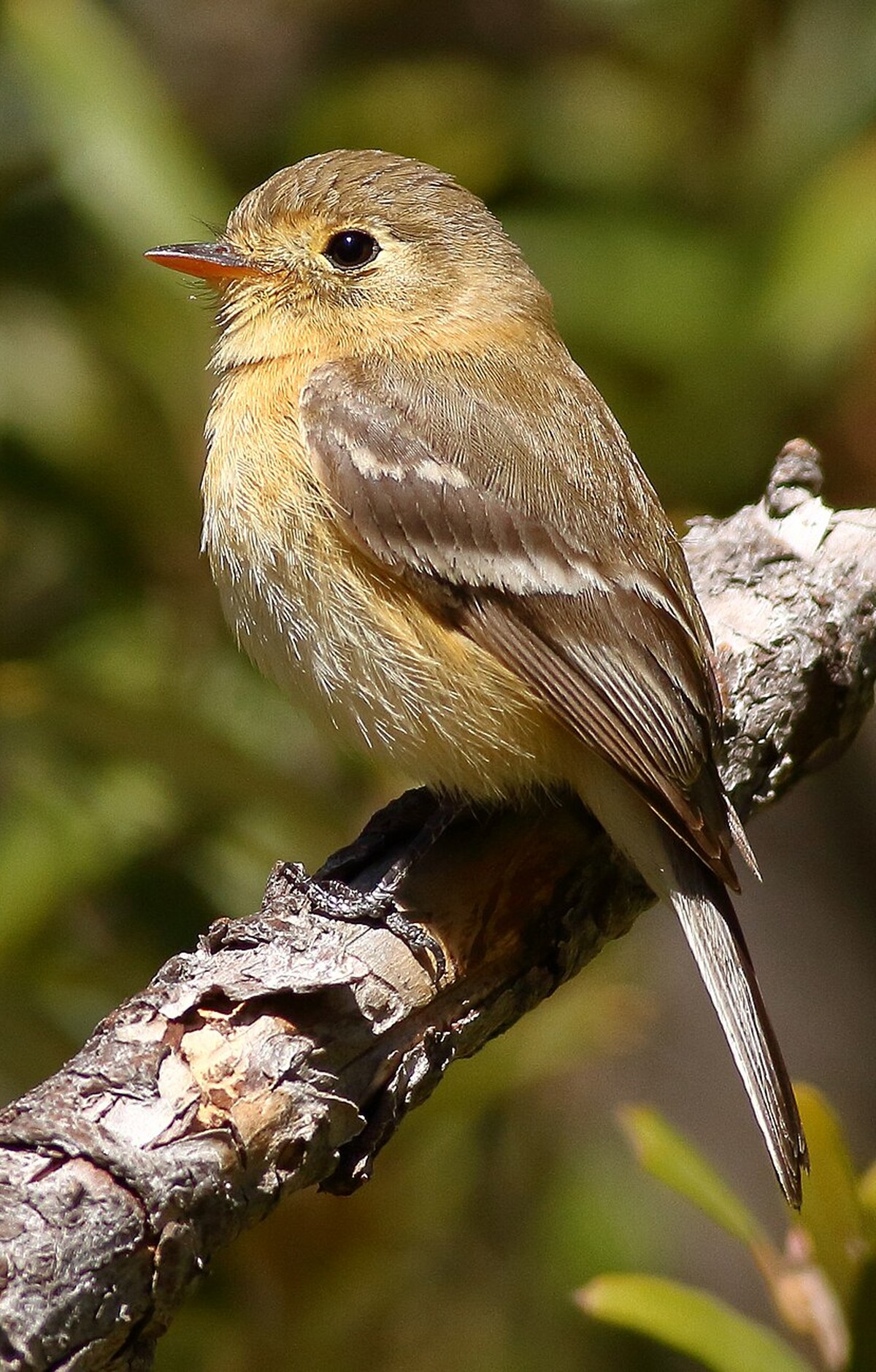
Buff-breasted Flycatcher in Chiricahua National Park
In Chiricahua National Park, the Buff-breasted Flycatcher is recorded most often in Heart of Rocks & Backcountry.
Where can you see Buff-breasted Flycatcher in Chiricahua National Park?
Heart of Rocks & Backcountry
About Heart of Rocks & Backcountry · 3 recorded sightings · Open in Maps
A viewing spot is a place where visitors have photographed and reported the animal many times. Wild animals move: a spot raises your chances, it doesn't promise a sighting. Keep the distance the park asks for.
Key facts
- Type
- Bird
- Scientific name
- Empidonax fulvifrons
- Mapped viewing spots
- 1
About the Buff-breasted Flycatcher
The Buff-breasted Flycatcher is the smallest *Empidonax* flycatcher in the United States, measuring just under 5 inches long and weighing about as much as two nickels. Many birders find this genus notoriously hard to identify, but this species is an exception. Its warm cinnamon-buff breast fades to a paler belly and sets it apart from its drab, grayish relatives. Look for brownish upperparts, a crisp white eye-ring, two pale wingbars, and a small bill with a pale lower half. It often flicks its tail and wings while perched, a common habit among these small flycatchers.
In the U.S., this bird breeds mainly in the mountains of southeastern Arizona, and its range extends south through Mexico into Central America. It favors open pine and pine-oak forests, especially canyons and slopes with scattered trees and little undergrowth. It hunts by "sallying," darting out from a low perch to snatch flying insects in midair before returning to the same spot or a nearby branch. Listen for its sharp "pit" call and its short, cheerful "chee-lick" song. Pairs often nest near one another in loose clusters. Each pair builds a small cup nest saddled on a horizontal branch and decorates it with lichens and spider silk for camouflage.
Although the species is not considered globally threatened, its U.S. range has shrunk dramatically since the early 1900s. Researchers suspect fire suppression plays a role, since dense undergrowth makes forests less suitable. The birds often return to areas opened up by wildfire. Visitors to Coronado National Memorial, Chiricahua National Park, and nearby sky island ranges have a chance to spot this rare and charming summer resident from April through August.