Wildlife · Bird · Chiricahua National Park
Gould's Wild Turkey in Chiricahua National Park
In Chiricahua National Park, Gould's Wild Turkey is recorded most often in Faraway Ranch and Bonita Canyon & Visitor Center.
Where can you see Gould's Wild Turkey in Chiricahua National Park?
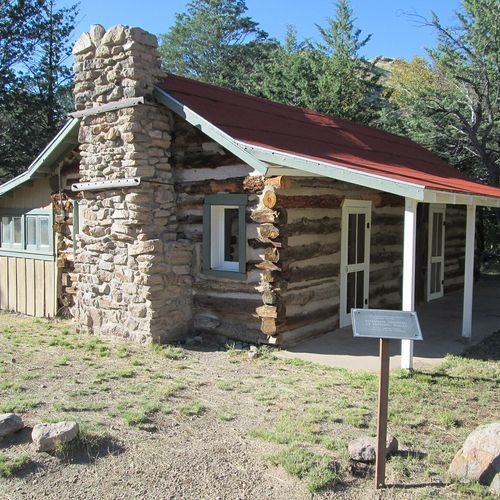
Near Stafford Cabin
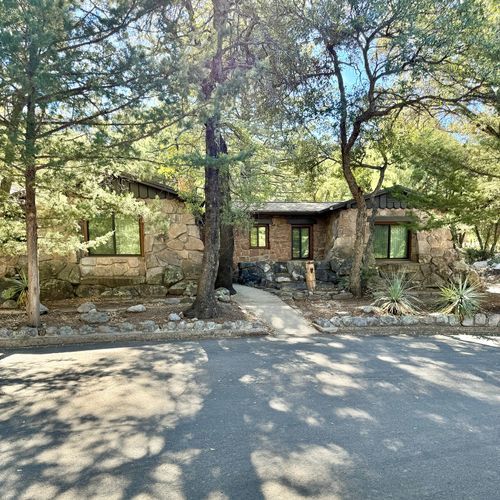
Faraway Ranch · about 0.2 mi away · 4 recorded sightings · Open in Maps
Near Stafford Cabin
Bonita Canyon & Visitor Center · about 0.4 mi away · 3 recorded sightings · Open in Maps
A viewing spot is a place where visitors have photographed and reported the animal many times. Wild animals move: a spot raises your chances, it doesn't promise a sighting. Keep the distance the park asks for.
Key facts
- Type
- Bird
- Scientific name
- Meleagris gallopavo mexicana
- Mapped viewing spots
- 2
About the Gould's Wild Turkey
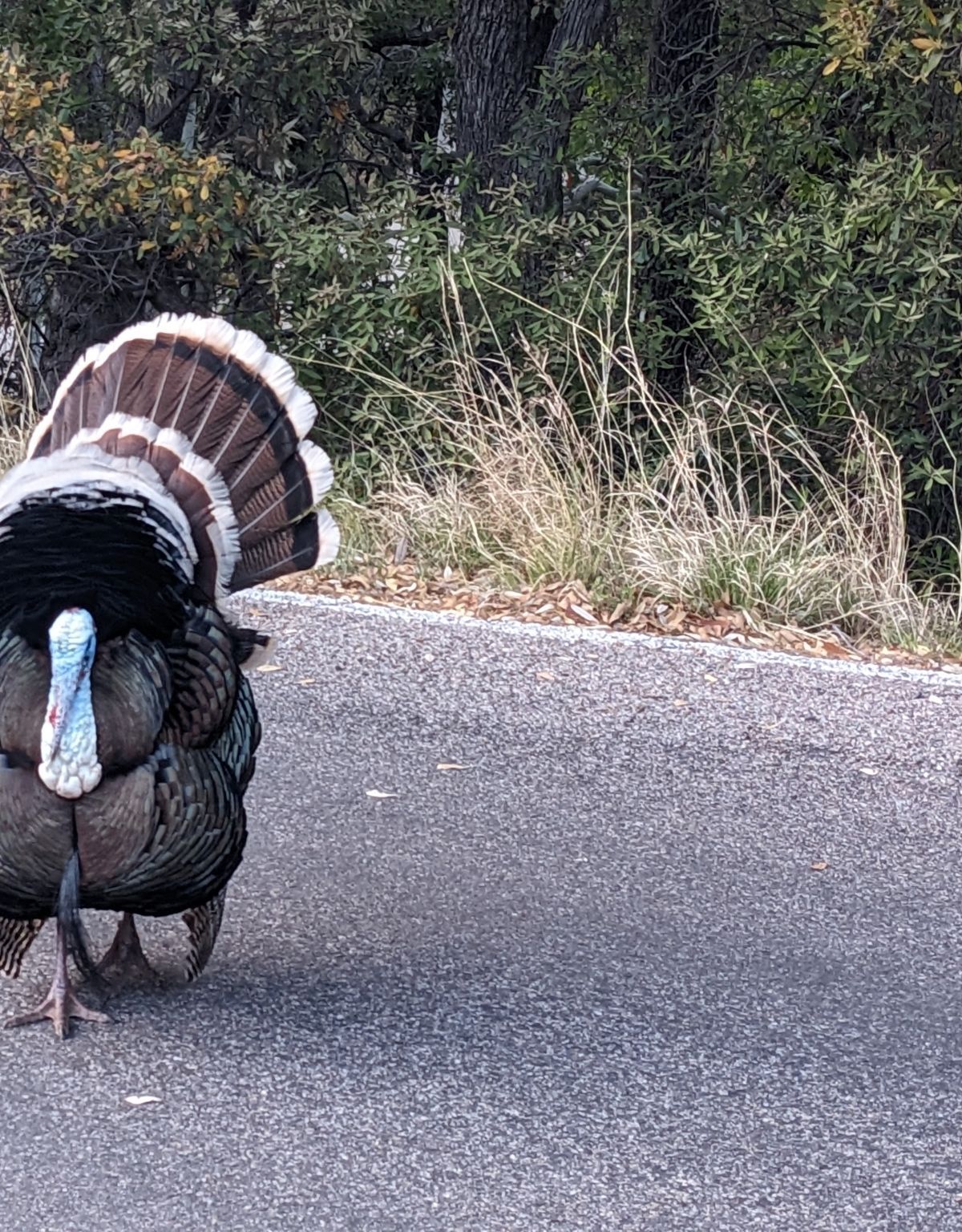
Gould's Wild Turkey is the largest of the wild turkey subspecies, with adult males (toms) reaching about four feet long and often weighing more than 20 pounds. Females (hens) are noticeably smaller and duller. Its most distinctive feature is the bright, creamy-white tips on its tail feathers and rump, which stand out boldly when a male fans his tail. Its body feathers shimmer with coppery, bronze, and greenish iridescence in sunlight. Compared with other wild turkeys, it has longer legs and larger feet. Males sport a bare, wrinkled head that can flush red, white, and blue during displays, along with a hairlike "beard" hanging from the chest.
This turkey lives in the rugged mountains of northwestern Mexico's Sierra Madre Occidental and reaches its northern limit in the "sky island" ranges of southeastern Arizona and southwestern New Mexico. It favors pine-oak woodlands, juniper stands, and shaded canyons with nearby water. Flocks forage on the ground for acorns, pine seeds, juniper and manzanita berries, grasses, and insects. At dusk, the birds fly up to roost in tall trees for safety. In spring, males gather in open areas to gobble loudly, puff up their feathers, and strut to attract hens.
Gould's Wild Turkeys had nearly vanished from the United States by the early 1900s because of overhunting and habitat loss. Beginning in the 1980s, wildlife agencies reintroduced birds from Mexico, and populations in Arizona have steadily grown. Visitors to places such as Coronado National Memorial, Chiricahua National Park, and nearby forest lands may spot them, especially in early morning. Please watch quietly from a distance and never feed these wild birds.