Wildlife · Bird · Chiricahua National Park
Montezuma Quail in Chiricahua National Park
In Chiricahua National Park, the Montezuma Quail is recorded most often in Bonita Canyon & Visitor Center and Heart of Rocks & Backcountry.
Where can you see Montezuma Quail in Chiricahua National Park?
Bonita Canyon & Visitor Center
About Bonita Canyon & Visitor Center · 6 recorded sightings · Open in Maps
Heart of Rocks & Backcountry
About Heart of Rocks & Backcountry · 3 recorded sightings · Open in Maps
A viewing spot is a place where visitors have photographed and reported the animal many times. Wild animals move: a spot raises your chances, it doesn't promise a sighting. Keep the distance the park asks for.
Key facts
- Type
- Bird
- Scientific name
- Cyrtonyx montezumae
- Mapped viewing spots
- 2
About the Montezuma Quail
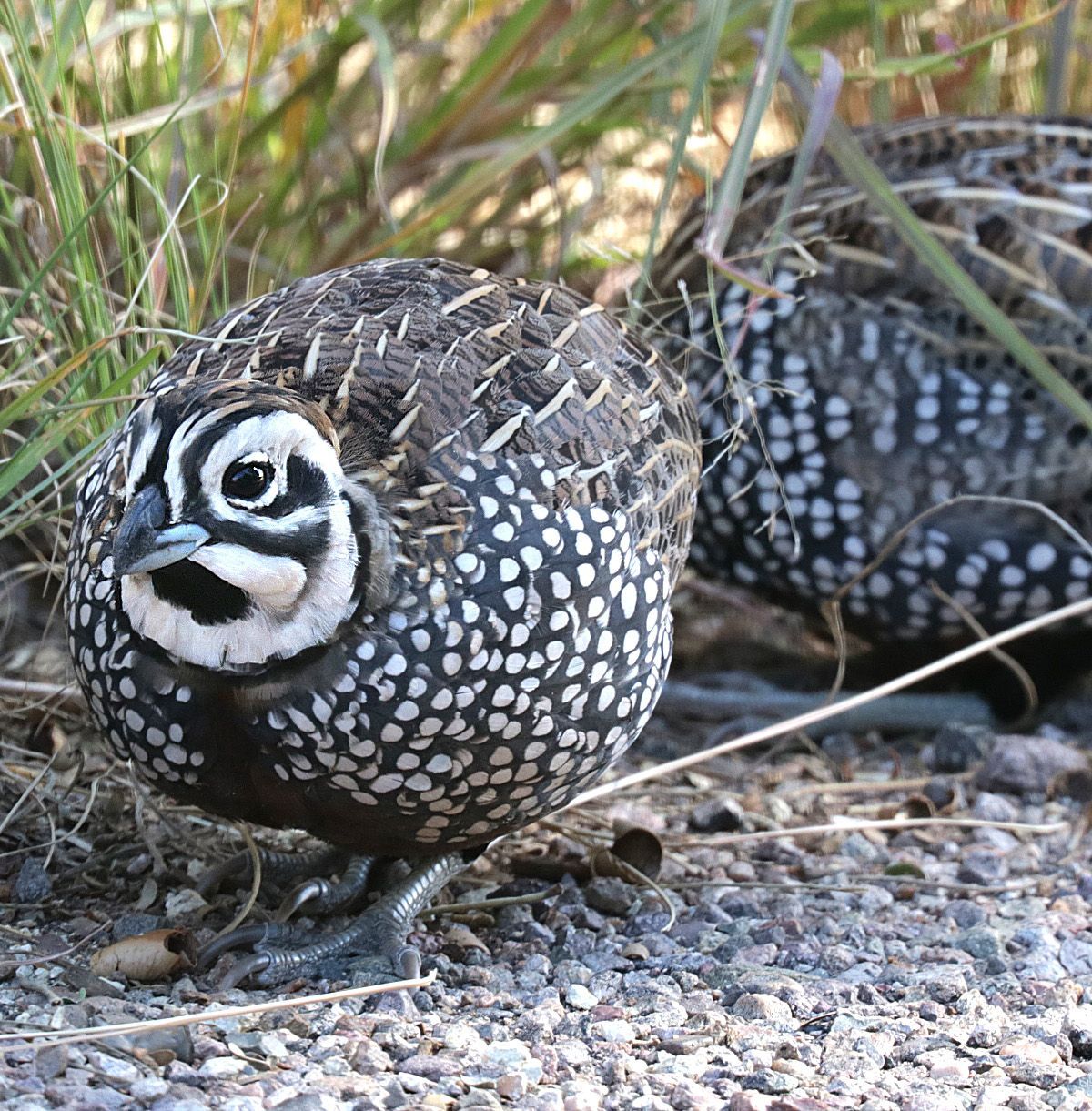
The Montezuma quail is a plump, stubby little bird, about 8 to 9 inches long, with a short tail and a rounded build that makes it look almost football-shaped. Males are unforgettable, which is why they are sometimes called "harlequin quail." Their faces are boldly marked in swirling black-and-white patterns, set off by a soft, tan crest that sweeps back from the head like a helmet. Their dark flanks are dotted with white spots, and a rich chestnut stripe runs down the chest. Females are more subdued, cloaked in mottled browns and buffs that blend almost perfectly with dry grass and leaf litter.
These secretive birds live in the open oak and pine-oak woodlands of mountainous Mexico and parts of Arizona, New Mexico, and western Texas, favoring slopes with plenty of tall grass. Using their long, powerful claws, they dig for underground bulbs and tubers, especially wood sorrel and nutsedge, and also eat acorns, seeds, and insects. When danger approaches, a Montezuma quail rarely runs. Instead, it freezes and trusts its camouflage, often waiting until a hiker nearly steps on it before exploding into flight. This habit earned it the nickname "fool quail," though the strategy works remarkably well.
Spotting one takes patience and a bit of luck, so watch for clues. Small, cone-shaped digging pits in the soil beneath oaks often reveal where a covey has been feeding. Listen, too, for the male's eerie, descending whistle, which some compare to a falling bomb. The species remains widespread, but it depends on healthy grass cover for food and shelter, so protected landscapes like Big Bend National Park and Chiricahua National Park offer some of the best chances to meet this charming, elusive bird.