Wildlife · Bird · Chiricahua National Park
Mexican Jay in Chiricahua National Park
In Chiricahua National Park, the Mexican Jay is recorded most often in Massai Point & Echo Canyon and Faraway Ranch. Most sightings are recorded from January through June, with the most in April.
Where can you see Mexican Jay in Chiricahua National Park?
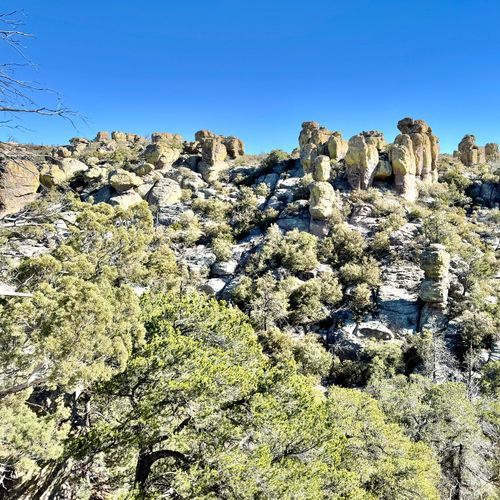
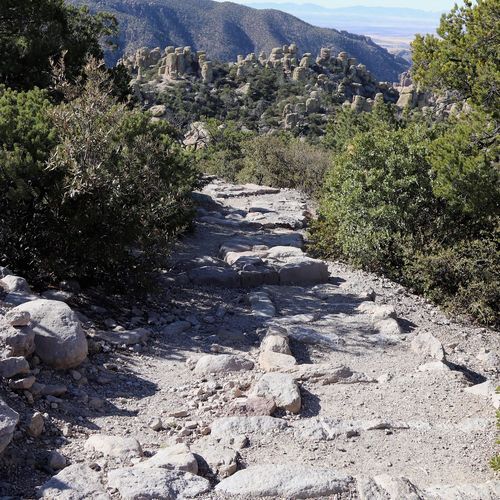
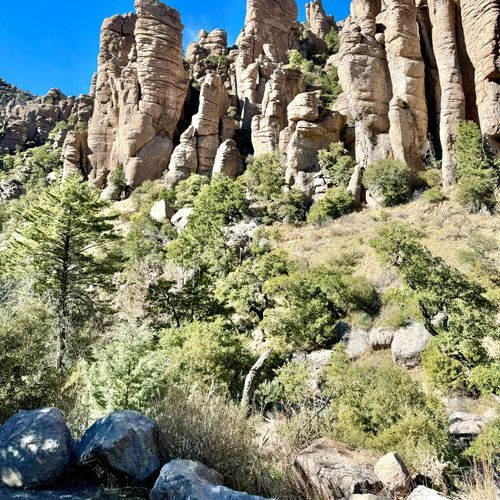
Massai Point & Echo Canyon · 69 recorded sightings · Open in Maps
Near Faraway Ranch House
Faraway Ranch · about 0.2 mi away · 42 recorded sightings · Open in Maps
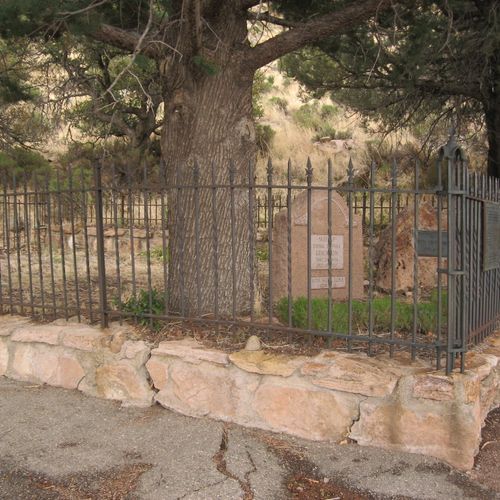
Near Erickson Cemetery
Faraway Ranch · about 0.2 mi away · 31 recorded sightings · Open in Maps
Near Erickson Cemetery
Faraway Ranch · about 0.3 mi away · 18 recorded sightings · Open in Maps
Near Exhibit Building
Massai Point & Echo Canyon · about 0.3 mi away · 15 recorded sightings · Open in Maps
Near Faraway Ranch House
Faraway Ranch · about 0.4 mi away · 8 recorded sightings · Open in Maps
Massai Point & Echo Canyon · 6 recorded sightings · Open in Maps
Massai Point & Echo Canyon · about 0.2 mi away · 5 recorded sightings · Open in Maps
Massai Point & Echo Canyon · about 0.2 mi away · 5 recorded sightings · Open in Maps
Massai Point & Echo Canyon · 5 recorded sightings · Open in Maps
The 10 spots with the most sightings, of 11 on the map.
A viewing spot is a place where visitors have photographed and reported the animal many times. Wild animals move: a spot raises your chances, it doesn't promise a sighting. Keep the distance the park asks for.
When is the best time to see Mexican Jay in Chiricahua National Park?
Most sightings are recorded from January through June, with the most in April.
- January: 5 sightings
- February: 5 sightings
- March: 15 sightings
- April: 17 sightings
- May: 5 sightings
- June: 7 sightings
- July: 3 sightings
- August: 7 sightings
- September: 6 sightings
- October: 9 sightings
- November: 9 sightings
- December: 4 sightings
Recorded sightings in Chiricahua National Park by month, 92 in all. The count follows visitors as well as animals: a quiet month can mean few people were there to report.
Key facts
- Type
- Bird
- Scientific name
- Aphelocoma wollweberi
- Mapped viewing spots
- 11
- Most sightings
- January through June
- Recorded sightings
- 92
About the Mexican Jay
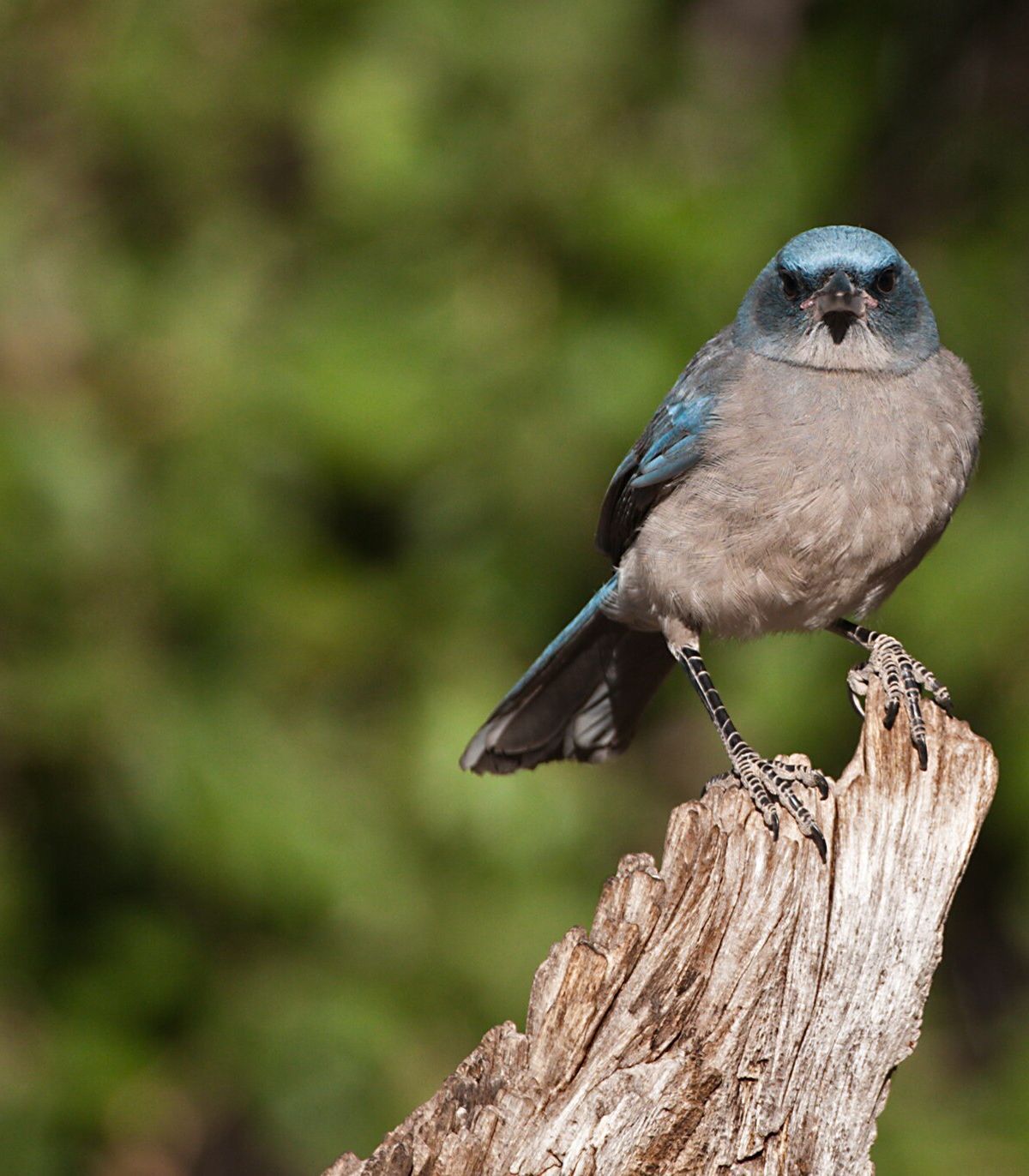
The Mexican jay (Aphelocoma wollweberi) is a medium-sized, long-tailed bird with bright blue upperparts and soft gray underparts. Its vivid blue head and wings contrast with an unstreaked pale throat and breast, a handy field mark that separates it from similar scrub-jays. It has a sturdy, slightly curved bill and a graceful tail that helps it balance as it hops through branches, making the bird relatively easy to spot against pine and oak foliage.
You find Mexican jays in higher-elevation pine-oak and mixed mountain woodlands across much of Mexico and into parts of the southwestern United States. They feed largely on acorns and pine nuts but also take insects, seeds, fruit, and other small prey. These jays are social and frequently move in noisy family groups, foraging together in trees and along forest edges. They practice cooperative breeding: older offspring or other group members assist the breeding pair in feeding and defending nestlings, so park visitors may notice several adults attending a single nest.
The species remains common and is listed as Least Concern, so sightings are a likely highlight on park trails. Listen for a variety of chatty, rolling calls and watch the canopy for flashes of blue—their striking color, bold behavior, and group dynamics make Mexican jays one of the most engaging birds to observe in mountain woodlands.