Wildlife · Bird · Chiricahua National Park
Mexican Chickadee in Chiricahua National Park
In Chiricahua National Park, the Mexican Chickadee is recorded most often in Faraway Ranch.
Where can you see Mexican Chickadee in Chiricahua National Park?
Faraway Ranch
About Faraway Ranch · 12 recorded sightings · Open in Maps
A viewing spot is a place where visitors have photographed and reported the animal many times. Wild animals move: a spot raises your chances, it doesn't promise a sighting. Keep the distance the park asks for.
Key facts
- Type
- Bird
- Scientific name
- Poecile sclateri
- Mapped viewing spots
- 1
About the Mexican Chickadee
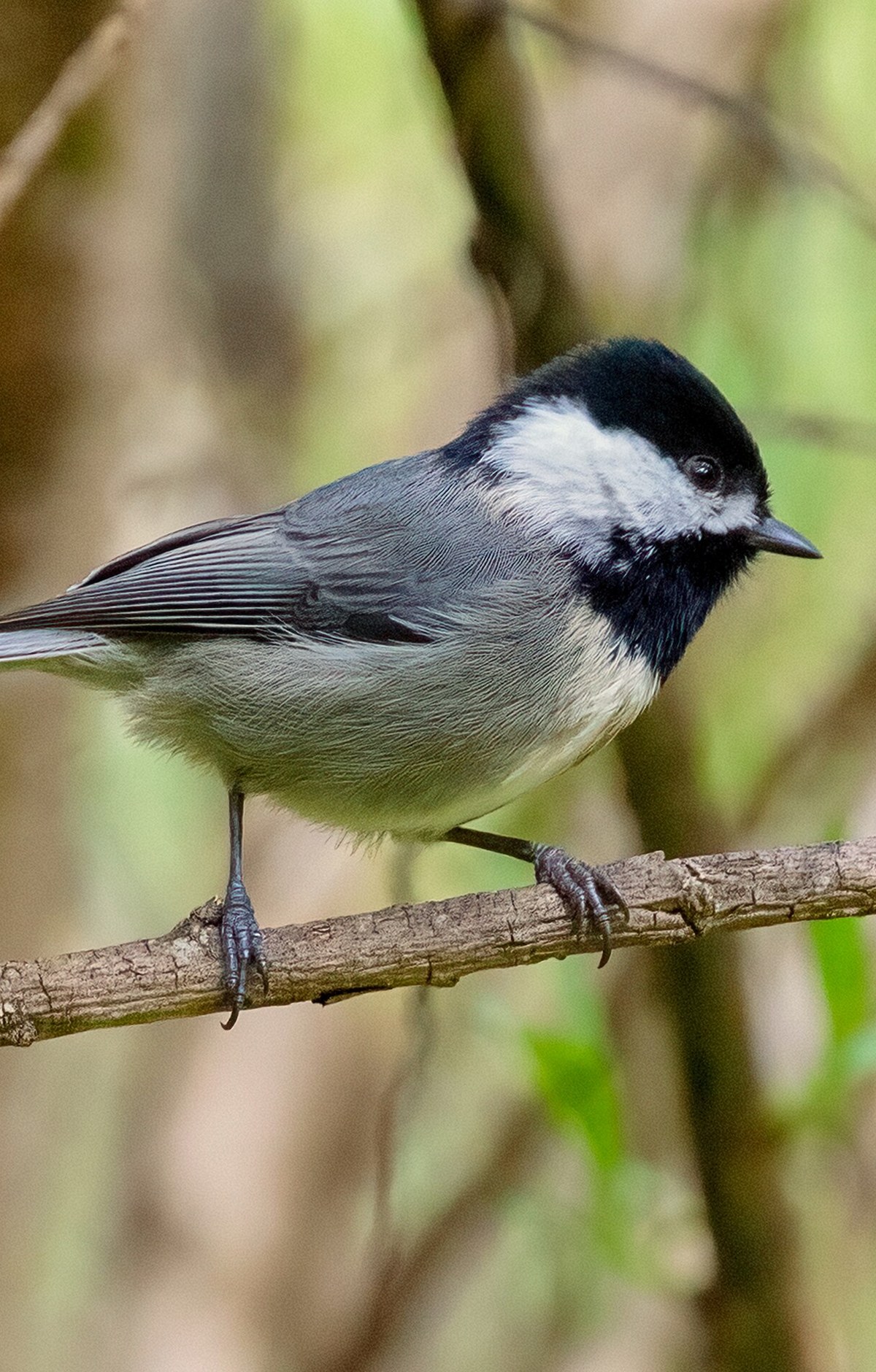
The Mexican Chickadee is a small, round songbird about 5 inches long that weighs less than half an ounce. It wears the classic chickadee pattern of a black cap and crisp white cheeks, but its standout feature is an oversized black bib that spills down onto the upper breast, larger than that of any other North American chickadee. Its back is soft gray, and its flanks are a smoky gray rather than the warm buff of many relatives, giving it a cool, subdued look.
This chickadee lives in the high-elevation pine, pine-oak, and fir forests of Mexico's mountain ranges. In the United States it reaches only the sky islands of southeastern Arizona and southwestern New Mexico, mainly the Chiricahua Mountains, where it lives in cool conifer woods well above the desert floor. It moves constantly through the treetops, hanging upside down from twigs and probing bark and needles for insects, spiders, and seeds. In colder months it often travels in lively mixed flocks with nuthatches, warblers, and other small birds. Listen for its call, a hoarse, buzzy version of the familiar "chick-a-dee" that sounds noticeably raspier than its cousins'. Pairs nest in tree cavities, often reusing old woodpecker holes.
The Mexican Chickadee is considered a species of least concern across its range, but its tiny U.S. foothold makes it a prized find for birders. Your best chance of spotting one is to walk quietly through high mountain forest and follow the buzzing calls. Its genus name, *Poecile*, comes from an ancient Greek word meaning "multicolored," and its species name honors the 19th-century British ornithologist Philip Sclater.