Wildlife · Bird · Chiricahua National Park
Rivoli's Hummingbird in Chiricahua National Park
In Chiricahua National Park, Rivoli's Hummingbird is recorded most often in Heart of Rocks & Backcountry.
Where can you see Rivoli's Hummingbird in Chiricahua National Park?
Heart of Rocks & Backcountry
About Heart of Rocks & Backcountry · 3 recorded sightings · Open in Maps
A viewing spot is a place where visitors have photographed and reported the animal many times. Wild animals move: a spot raises your chances, it doesn't promise a sighting. Keep the distance the park asks for.
Key facts
- Type
- Bird
- Scientific name
- Eugenes fulgens
- Mapped viewing spots
- 1
About the Rivoli's Hummingbird
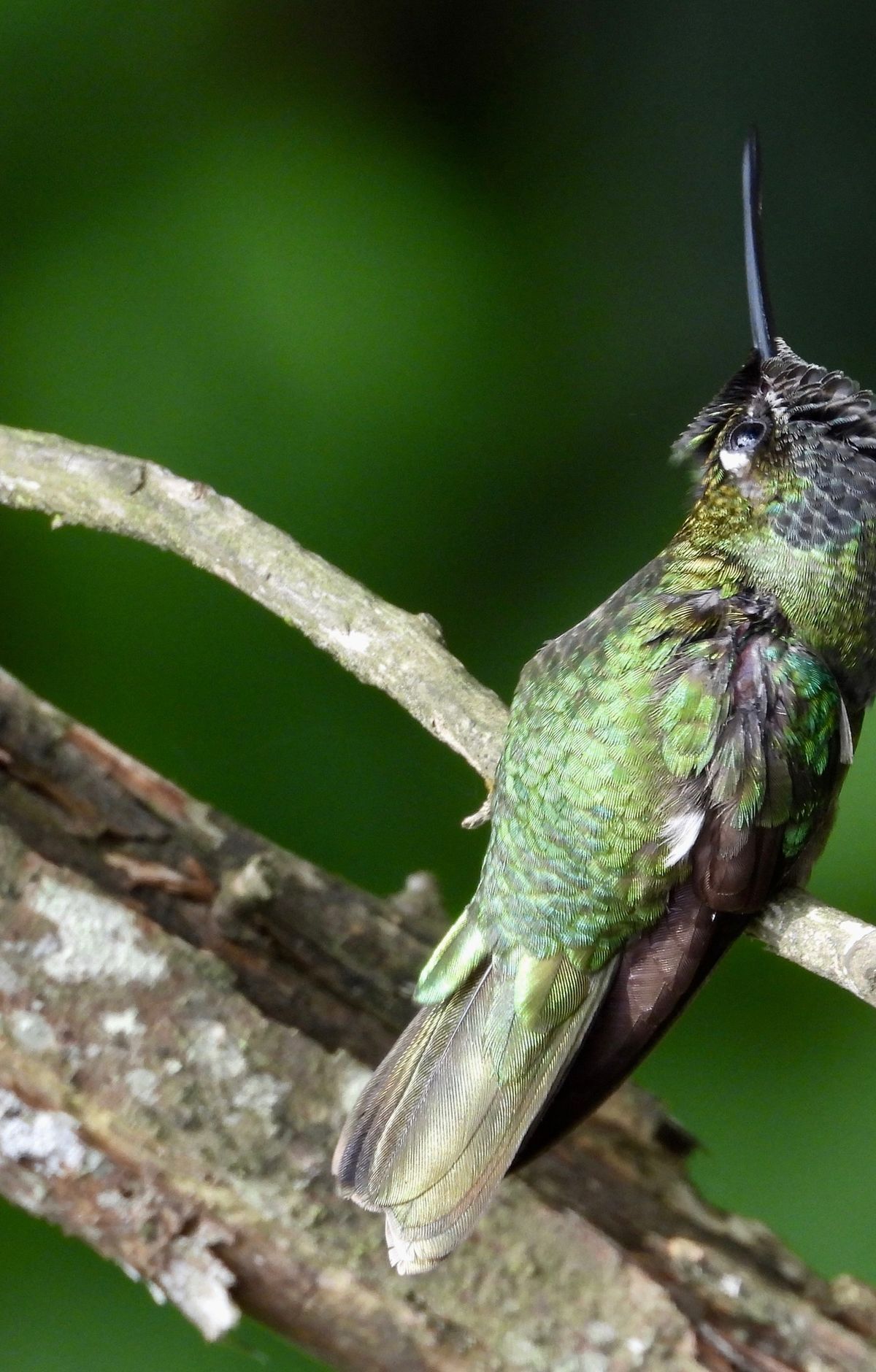
Rivoli’s hummingbird is one of the larger hummingbirds you’ll spot in mountain parks, measuring roughly 11–13 cm (4.5–5 in). Males catch the eye with a glossy, iridescent throat that flashes deep violet-blue in sunlight, a metallic green back, and a stout, slightly curved bill. Females and juveniles look more muted, with greenish upperparts, a paler throat speckled with green, and faintly notched tails — all features that help tell the sexes apart from a distance.
You’ll find Rivoli’s hummingbirds in highland woodlands, pine–oak forests and canyon edges from Mexico into the southern United States. They feed primarily on nectar from tubular flowers and feeders, and supplement their diet with small insects caught in midair or gleaned from leaves. Males often defend rich flowering territories and perform rapid chases and hovering displays; both sexes perch openly on branches between feeding bouts, making them easier to observe than many smaller species. Some populations move to lower elevations in colder months but otherwise remain local to forested slopes.
The species generally remains common where habitat is intact, so you have a good chance of seeing one in suitable parks. Look for sudden flashes of iridescence in shaded canyons and set up feeders or planted native flowers to attract them. Because their dramatic throat colors depend on light angle, try viewing from different perspectives to see the full show.