Zion National Park guide · 1 min read
Walking the Floor Beneath Zion's Walls
In much of the Southwest, you stand on a rim and peer down into a canyon. Zion works the other way around.
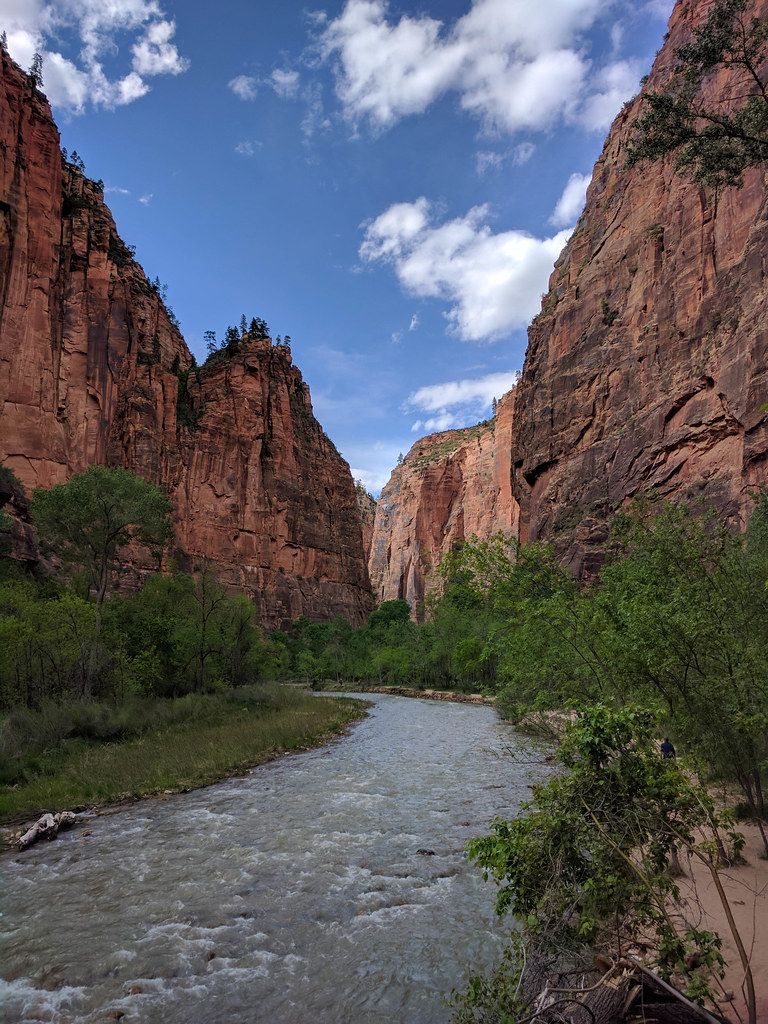
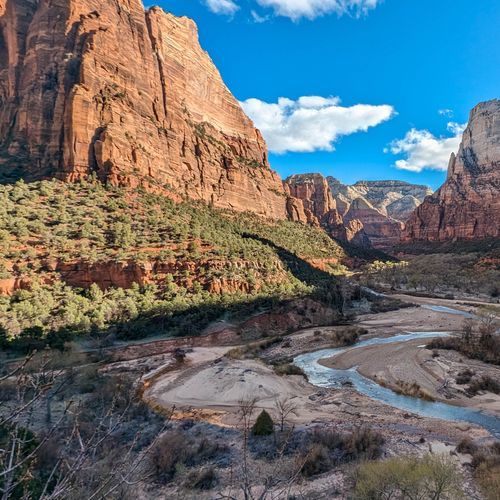
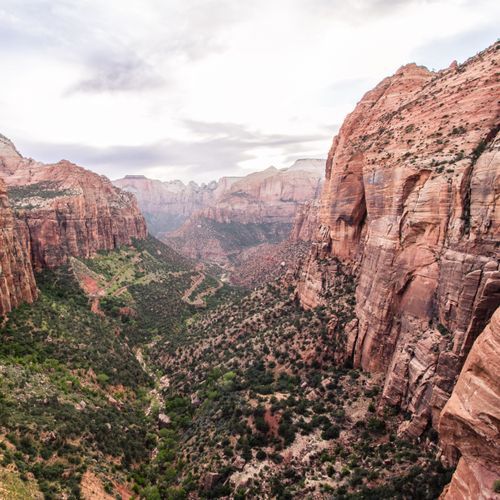
Here you walk along the bottom of Zion Canyon while sandstone cliffs climb 2,000 to 3,000 feet overhead, and nearly every view involves tilting your head back.
The river that did the carving is the North Fork of the Virgin River. It looks gentle most days, yet over roughly 13 million years it cut this canyon, with much of the work done during intense flash floods. The Zion Canyon Scenic Drive follows the river for 6 miles along the canyon floor, passing cliffs in shades of cream, pink and red.
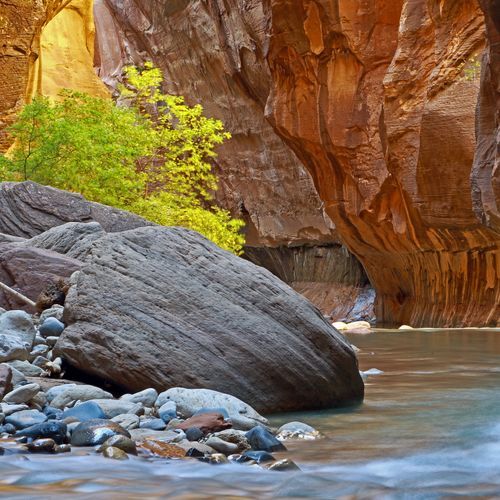
At the top of the drive, the Temple of Sinawava marks the start of a 1-mile trail to the Zion Narrows. Beyond that point the river itself becomes the path. The gorge runs 16 miles, reaches depths of up to 2,000 feet, and in places squeezes to just 30 feet across, with grottos, springs and hanging gardens set into the walls. Hiking it means wading through moving water, so treat it as a serious undertaking.
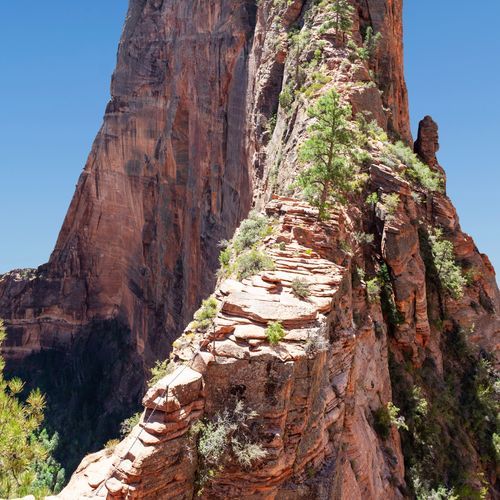
Other trails leave the floor and head upward. Angels Landing is a strenuous 2.5-mile climb and the park's best-known hike, while Weeping Rock and the Emerald Pools offer easier walks. Those same 2,000-foot cliffs also draw big wall climbers, though the soft rock and sparsely protected routes make them suited to experienced climbers only.
Water shapes the plant life too. Cottonwoods and box elders grow close to the riverbanks, and around springs and waterfalls you may find watercress and maidenhair ferns thriving in damp shade. Each plant settles where the water suits it, which is why cacti appear in the sunnier, drier spots nearby.