Zion National Park guide · 2 min read
Zion Seasons: 100°F Summers, Monsoon Flash Floods
Summer temperatures in Zion regularly climb past 100 degrees Fahrenheit. Elevation shapes the heat, and the gap between daytime and nighttime readings can top 30 degrees.
Bring a refillable bottle and keep it full; the park map marks where to top it off. Pace yourself and guard against heat illness all day.
From mid-July into September, the monsoon arrives. Extra moisture in the air meets the summer heat and builds strong afternoon thunderstorms. These storms can send waterfalls pouring off the cliffs, and they bring lightning with them. Watch for building clouds and be ready for quick changes in weather.
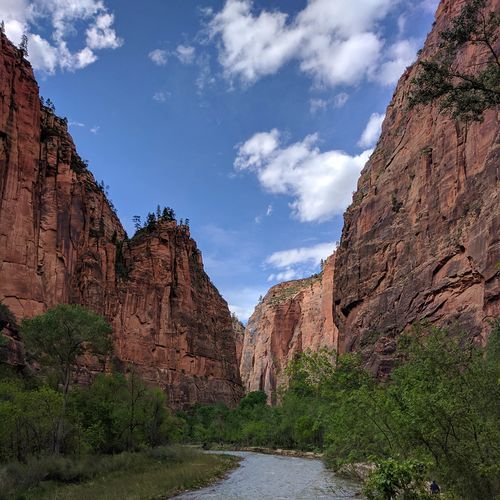
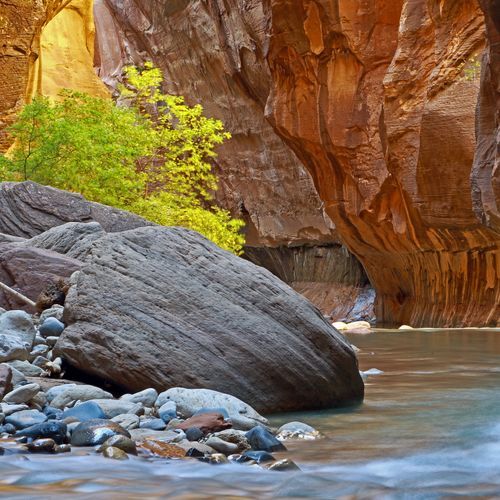
Heavy thunderstorm rain can turn a calm river, stream or wash into fast, deep water within moments, and that surge often carries tree trunks and boulders. Floods can strike at any time of year, even under sunny skies, and no one can outrun one. In the Narrows, bare rock sheds runoff straight into the canyon along the Virgin River, so the water can rise within seconds or minutes. Slot canyons like this are especially dangerous. Before any canyon trip, check the forecast and flash flood potential, ask at the Visitor Center, and leave an itinerary with someone.
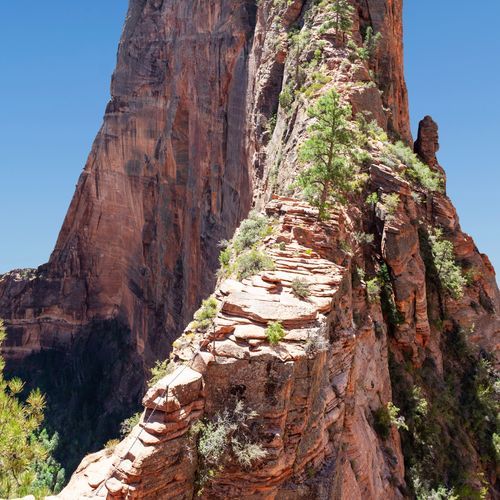
Winters are generally mild, though often cold and wet. Days can reach 50 to 60 degrees while nights drop well below freezing, and Zion Canyon gets close to half its rain and snow for the year from December through March. Snow at lower elevations usually melts within hours. Higher up, on Angels Landing, Observation Point and the West Rim Trail, it builds up and stays icy.
Snow rarely piles up enough for sledding or skiing, so winter is a season for hiking, with fewer people sharing the trails. Strap traction devices onto your boots for icy stretches, especially in the shade. Expect frigid water in the Narrows this time of year; a drysuit is usually what keeps that hike safe.