Wildlife · Bird · Yosemite National Park
Canyon Wren in Yosemite National Park
In Yosemite National Park, the Canyon Wren is recorded most often in Yosemite Valley. Most sightings are recorded in June.
Where can you see Canyon Wren in Yosemite National Park?
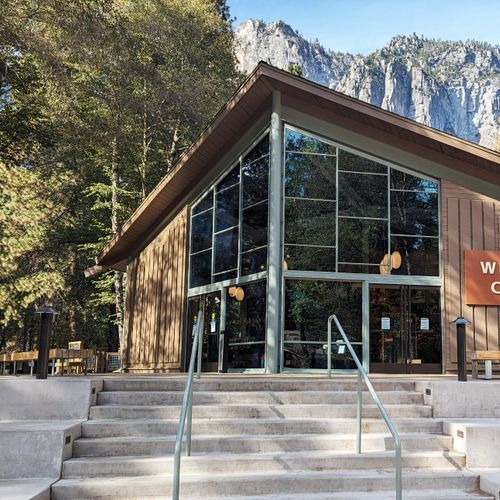
Near Yosemite Valley Welcome Center
Yosemite Valley · about 0.3 mi away · 85 recorded sightings · Open in Maps
A viewing spot is a place where visitors have photographed and reported the animal many times. Wild animals move: a spot raises your chances, it doesn't promise a sighting. Keep the distance the park asks for.
When is the best time to see Canyon Wren in Yosemite National Park?
Most sightings are recorded in June.
- January: 0 sightings
- February: 19 sightings
- March: 1 sighting
- April: 4 sightings
- May: 0 sightings
- June: 26 sightings
- July: 0 sightings
- August: 0 sightings
- September: 11 sightings
- October: 24 sightings
- November: 0 sightings
- December: 0 sightings
Recorded sightings in Yosemite National Park by month, 85 in all. The count follows visitors as well as animals: a quiet month can mean few people were there to report.
Key facts
- Type
- Bird
- Scientific name
- Catherpes mexicanus
- Mapped viewing spots
- 1
- Most sightings
- June
- Recorded sightings
- 85
About the Canyon Wren
The canyon wren is a small, compact songbird about the size of a sparrow with a long, downward-curved bill and a tail it often holds cocked. Its upperparts glow warm rufous to cinnamon while the throat and chest are pale buff, and the wings and tail show darker barring. Its neat, rounded body and habit of flattening against rock make it easy to miss at a glance, but the bird’s rich coloration and slender, curved bill set it apart from other wrens.
You’ll find canyon wrens clinging to cliffs, canyon walls, rocky outcrops, and talus slopes across western parks year-round. They forage by probing crevices and hopping along vertical rock faces, picking out insects, spiders, and other small invertebrates from cracks and ledges. They nest in sheltered cavities and crevices, where their behavior—bold on rock but shy away from open ground—helps them stay hidden. Park visitors most often notice them by sound: a loud, cascading series of clear, descending notes that echo off stone and reveal a bird you can’t always see.
The species is not currently at risk and remains a signature sight and sound of healthy canyon country, but it relies on intact rocky habitat. For best chances of seeing one, stand quietly near canyon walls at dawn or dusk, scan shaded ledges with binoculars, and listen for that distinctive, ringing song that seems to belong to the cliffs themselves.