Wildlife · Bird · Yosemite National Park
Wild Turkey in Yosemite National Park
In Yosemite National Park, the Wild Turkey is recorded most often in Yosemite Valley. Most sightings are recorded from March through September, with the most in May.
Where can you see Wild Turkey in Yosemite National Park?
Yosemite Valley · 132 recorded sightings · Open in Maps
A viewing spot is a place where visitors have photographed and reported the animal many times. Wild animals move: a spot raises your chances, it doesn't promise a sighting. Keep the distance the park asks for.
When is the best time to see Wild Turkey in Yosemite National Park?
Most sightings are recorded from March through September, with the most in May.
- January: 0 sightings
- February: 4 sightings
- March: 18 sightings
- April: 13 sightings
- May: 20 sightings
- June: 20 sightings
- July: 14 sightings
- August: 19 sightings
- September: 16 sightings
- October: 3 sightings
- November: 8 sightings
- December: 2 sightings
Recorded sightings in Yosemite National Park by month, 137 in all. The count follows visitors as well as animals: a quiet month can mean few people were there to report.
Key facts
- Type
- Bird
- Scientific name
- Meleagris gallopavo
- Mapped viewing spots
- 1
- Most sightings
- March through September
- Recorded sightings
- 137
About the Wild Turkey
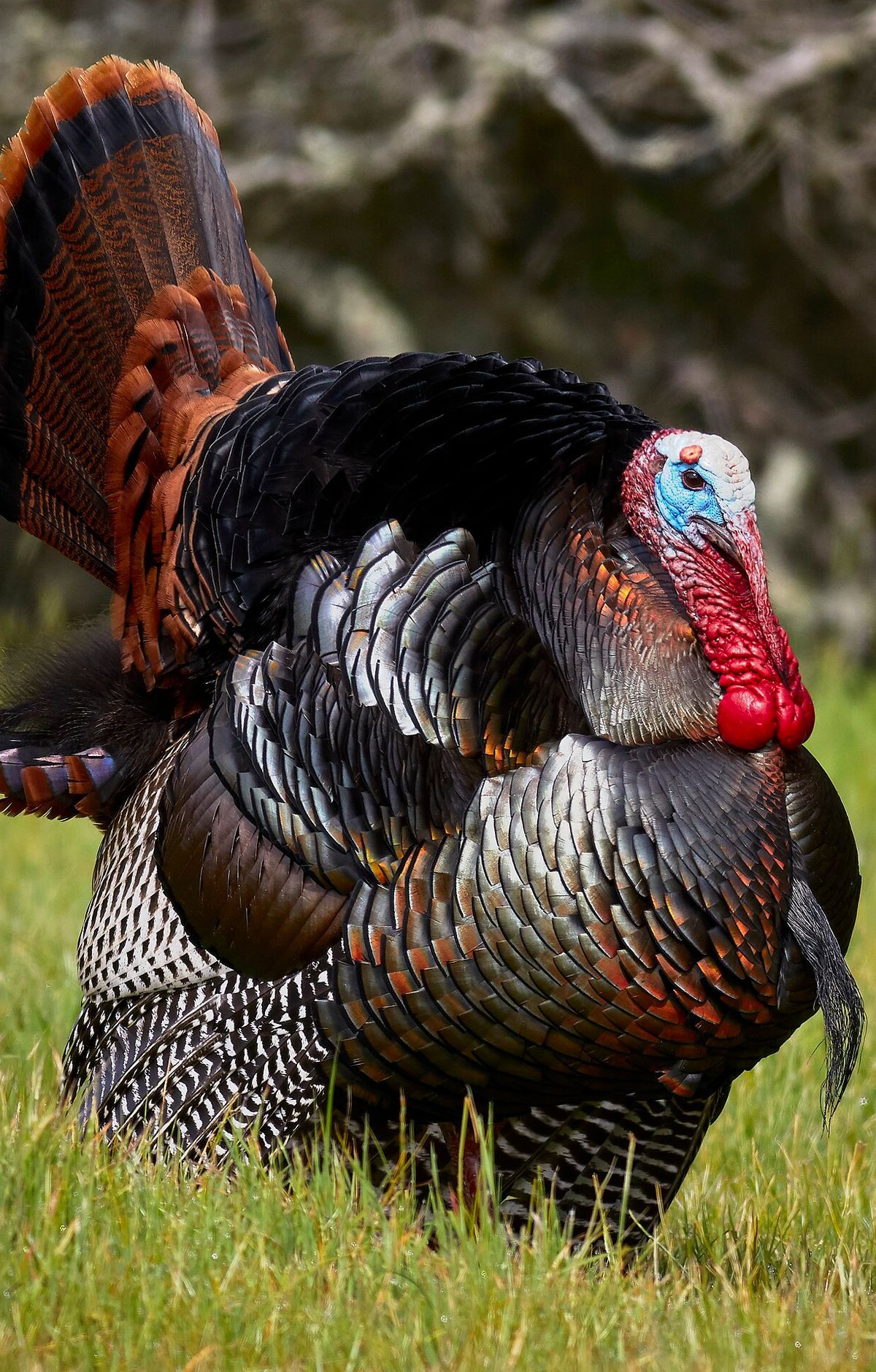
The wild turkey is a large, striking bird with a long neck, broad body, and strong legs. Males (toms) stand taller and heavier than females, sporting iridescent bronze-green feathers that shimmer in sunlight, a fan-shaped tail they flare in display, and a bare head mottled with red and blue skin. Look for a fleshy snood draping over the beak, a wrinkled wattle on the throat, and a coarse tuft of feathers called a “beard” on many males. Females (hens) appear smaller and more mottled brown, which helps them stay camouflaged while nesting.
You’ll find wild turkeys in mixed woodlands, forest edges, and open fields across much of North America, often near water and abundant mast trees like oaks. They forage on the ground, scratching for acorns, seeds, berries, and a wide range of insects and small invertebrates, and they roost in trees at night. Turkeys are social outside the breeding season, moving in flocks; in spring, males perform dramatic strutting displays and loud gobbles to court females. They rely on keen eyesight and hearing, and when startled they usually freeze or run rather than take long flights, though they can launch into quick bursts to reach a high roost.
Once reduced by overhunting and habitat loss, turkey populations have rebounded thanks to conservation and careful management, so sightings are common in many parks. For the best viewing, come early or at dusk, keep a respectful distance, and never feed them—human food can harm their health and change natural behaviors visitors came to enjoy.