
Best Desert National Parks
The places on this page are worth the trip for what grows on the ground and how the land is shaped: Joshua trees, saguaro and organ pipe cactus, salt flats, white gypsum dunes and banded badlands. Spring bloom timing shifts with each winter's rainfall, and summer heat is serious at the lowest elevations. Road and trail access can change, so check current conditions before setting out.
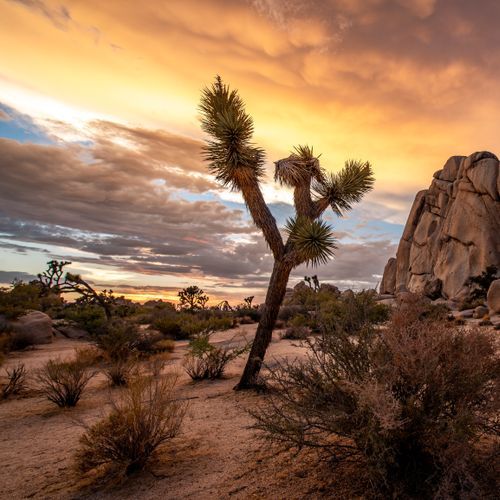
1. Joshua Tree National Park
California
Two deserts overlap here, and elevation decides which one you are standing in. The higher western side is Mojave country, with Joshua tree forests set among boulder piles. The lower eastern Colorado Desert holds creosote, ocotillo and the Cholla Cactus Garden. Five fan palm oases mark where water surfaces naturally. From early March to early May, wildflowers open between 3,000 and 5,000 feet, in spots like Jumbo Rocks and Hidden Valley, depending on October through February rain.
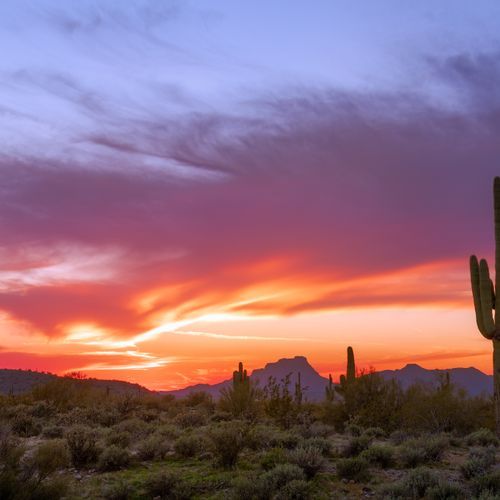
2. Saguaro National Park
Arizona
Tucson sits between this park's two districts, so allow 30 to 60 minutes to drive from one to the other. A single entrance pass covers both for seven days. The western Tucson Mountain District has the thickest saguaro stands. The eastern Rincon Mountain District climbs from cactus flats to forested slopes above 8,000 feet, a sky island where bears and coatis live. Saguaros put out their white flowers from late May through July.
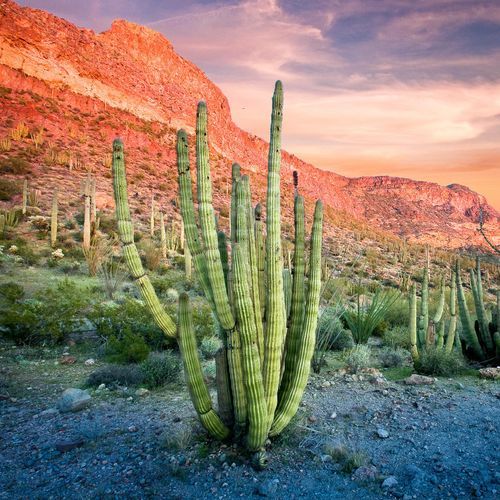
3. Organ Pipe Cactus National Monument
Arizona
Nowhere else in the United States do large wild stands of organ pipe cactus grow. These are the northernmost of the species, clustered on south-facing rocky slopes that protect them from winter frost. Look for wavy pipes, which record past freezes. The monument counts 31 cactus species and more than 650 kinds of plants. Spring and the summer monsoon bring Mexican gold poppies. Overnight backpacking requires a permit from the Kris Eggle Visitor Center.
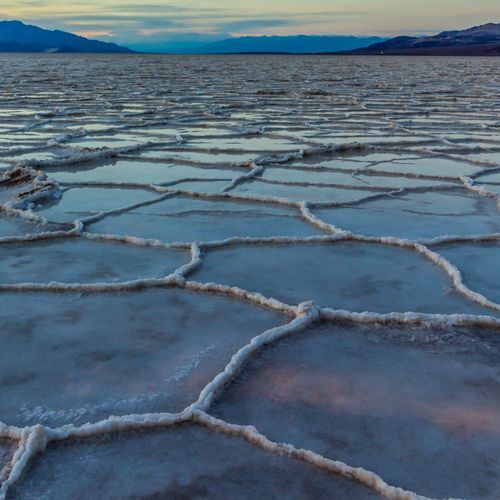
4. Death Valley National Park
California, Nevada
Badwater Basin's salt flat sits 282 feet below sea level, the lowest ground in North America. As it dries, its surface cracks into hexagonal polygons that are visible from Dantes View, about a mile above. Artists Drive loops through hills tinted by volcanic minerals. Plants are scarce on the hot, salty valley floor. Higher up they give way to pinyon, juniper and bristlecone pine, and Lee Flat holds the park's best Joshua tree stand.
5. Big Bend National Park
Texas
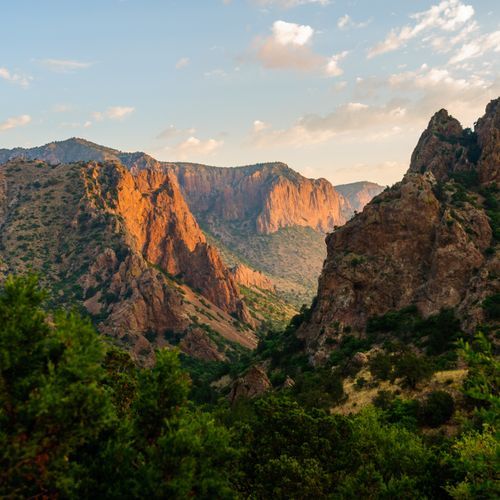
Chihuahuan Desert covers most of this park and wraps around the Chisos Mountains. Its flats grow ocotillo, lechuguilla, sotol, candelilla and giant dagger yuccas. Cactus blooms peak in March and April, when bluebonnets and desert marigold line the roads. For a closer look, hike the Chimneys, Mule Ears or Grapevine Hills trails, or take the improved dirt road to Dagger Flat. Backcountry routes such as Old Ore Road reach Ernst Tinaja but need high clearance.
6. Mojave National Preserve
California
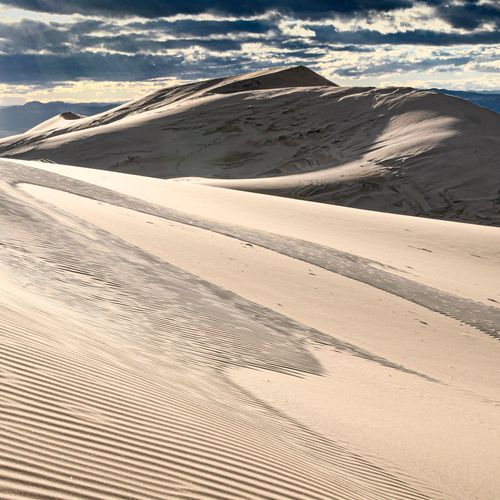
Parts of the Mojave, Great Basin and Sonoran deserts reach into this preserve, which spans the heights between 938 feet at Zzyzx and 7,929 feet on Clark Mountain. Cima Dome, a smooth, nearly symmetrical swell topped by a Joshua tree forest, stands 1,500 feet over the land around it. Its shape reads best from a distance: look northwest from Cedar Canyon Road east of Kelso Cima Road. Carry water for the self-guiding trail. The Kelso Dunes add singing sand.
7. White Sands National Park
New Mexico
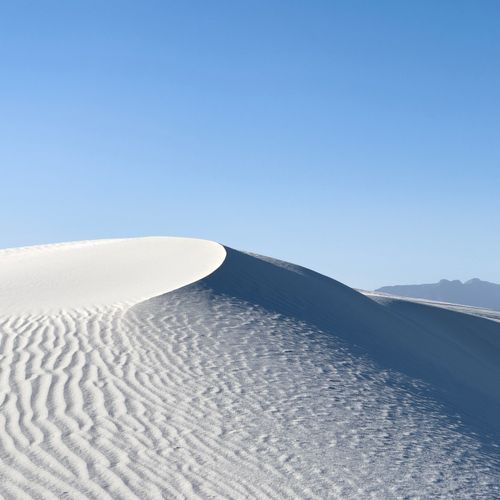
The Tularosa Basin holds a 275-square-mile field of gypsum dunes. Lake Lucero and Alkali Flat feed them, where selenite crystals form and slowly break down into sand. Soaptree yuccas growing on the dunes draw photographers, and sunset is the busiest time of day. Wildflowers bloom from mid-April to mid-June, claret cup cactus from late April to mid-May and cholla from mid-May. Blowing sand can ruin a camera, so keep gear covered.
8. Canyonlands National Park
Utah
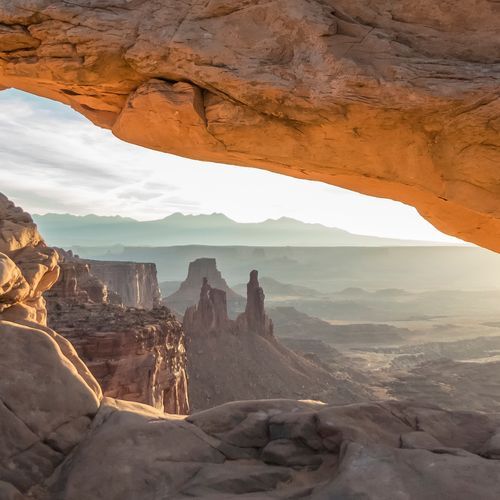
The Green and Colorado rivers divide this park into districts suited to very different trips. Island in the Sky has a paved drive with overlooks down to the White Rim and the rivers. The Needles requires hiking or four-wheel driving among banded pinnacles, and the Maze demands time and self-reliance. Underfoot, cryptobiotic soil supports the junipers, pinyon and 11 cactus species, and a single footprint can erase decades of growth.
9. Arches National Park
Utah
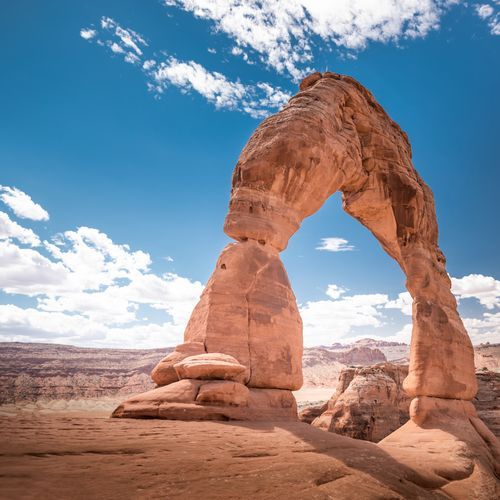
More than 2,000 arches stand among the fins, spires and balanced rocks of this high desert, with pinyon and juniper rooted in red sandstone. Walk to Landscape Arch in Devils Garden in early morning. Save Delicate Arch, Balanced Rock and the Windows for late afternoon light. Wildflowers bloom April through July. Look for potholes, rock basins that hold rainwater life, and for the living cryptobiotic crust that anchors plants here.
10. Petrified Forest National Park
Arizona
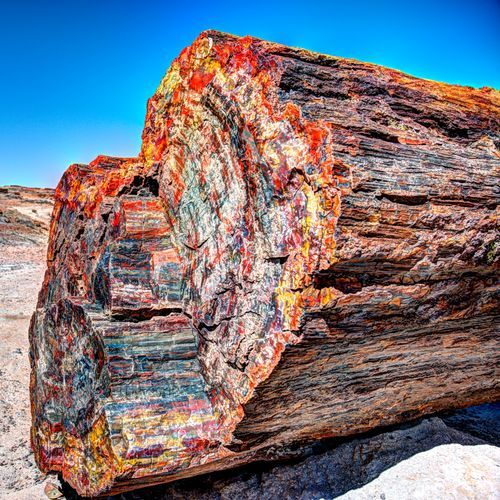
A 28-mile road runs the length of the park and takes about an hour end to end, so pick one section to focus on. The north end has the Painted Desert overlooks, where rims such as Tiponi Point look over colorful Chinle badlands, most vivid at sunrise and sunset. The south end holds most of the petrified wood, including Giant Logs. Blue Mesa Trail crosses the badlands. Overnight wilderness trips need a free permit.
Best parks by month
Best parks by theme
- Big Trees
- Tide Pooling
- Epic Hikes
- Geologic Wonders
- Human History
- Wildlife Watching
- Birding
- Dark Skies
- Waterfalls
- Volcanic Landscapes
- Geysers & Hot Springs
- Caves
- Glaciers
- Sand Dunes
- Canyons
- Mountain Majesty
- Beaches
- Snorkeling & Diving
- Paddling
- Scenic Drives
- Fall Color
- Wildflowers
- Winter Adventures
- Wild & Remote
- Great with Kids
- Fossils