
Best National Parks for Volcanoes
Every park here puts volcanic ground at the center of a trip: summit craters, caldera lakes, ash valleys, steaming vents and cooled lava you can walk across or fly over. Some, like Hawaiʻi Volcanoes, can erupt while you are there, and others, like Crater Lake, show the aftermath of collapse long ago. Activity and access shift on volcanic terrain, so check current park conditions before you go.
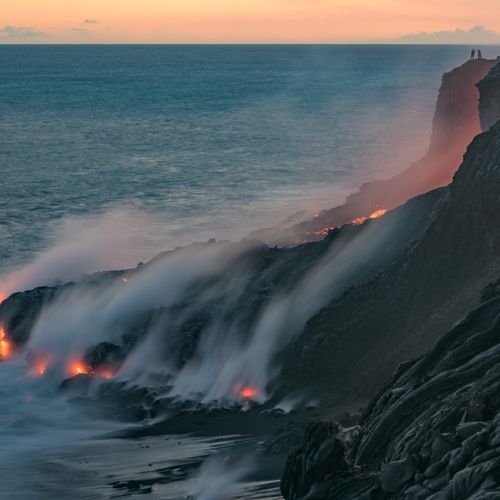
1. Hawaiʻi Volcanoes National Park
Hawaii
Kīlauea erupts in episodes that can last only hours or run for days, so watch the park webcams and the USGS daily update before driving up. Halemaʻumaʻu Crater, the Kīlauea Iki crater and Chain of Craters Road show pit craters and old flows. Nāhuku lava tube lets you walk inside a cave left by flowing lava, where you should keep your hands off the walls and roots. Parking fills during eruptions, so have a second stop in mind.
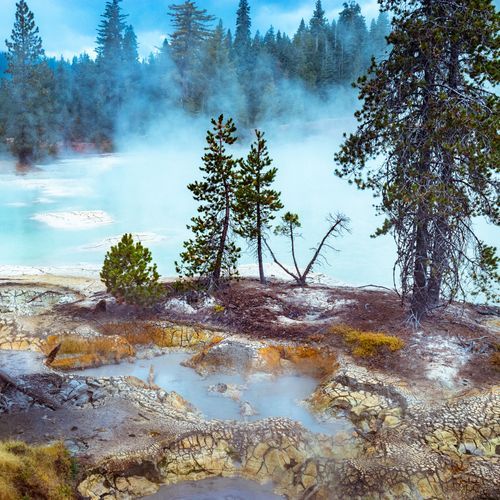
2. Lassen Volcanic National Park
California
All four volcano types occur in this park: shield, composite, cinder cone and plug dome, with Lassen Peak among the largest plug domes anywhere. Highway 89 leads to most major stops, including Sulphur Works and Bumpass Hell, where fumaroles roar and mud pots thump. Stay behind barriers there, since thin crust over boiling ground has broken under people. For quieter trails, head east to Butte Lake, near Cinder Cone, or to Warner Valley.
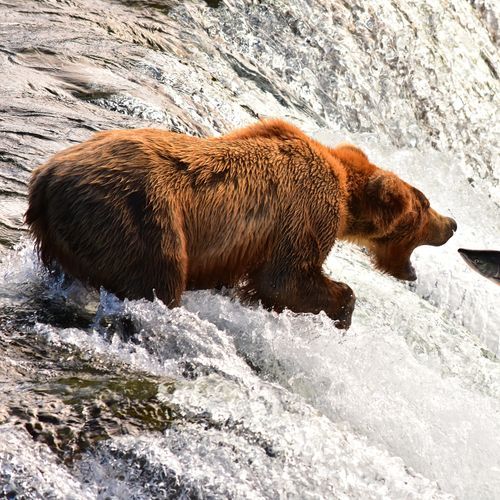
3. Katmai National Park & Preserve
Alaska
The Valley of Ten Thousand Smokes covers about 40 square miles with ash from the largest eruption of the twentieth century. Most hikers follow the Buttress Range along its western edge, camping in sheltered alcoves and watching for bears and caribou. Novarupta, the low dome that marks the vent, sits roughly 14 miles from the Windy Creek trailhead and is ringed by mineral-stained ground. Near Katmai Pass, warm springs seep from the Trident lava flows.
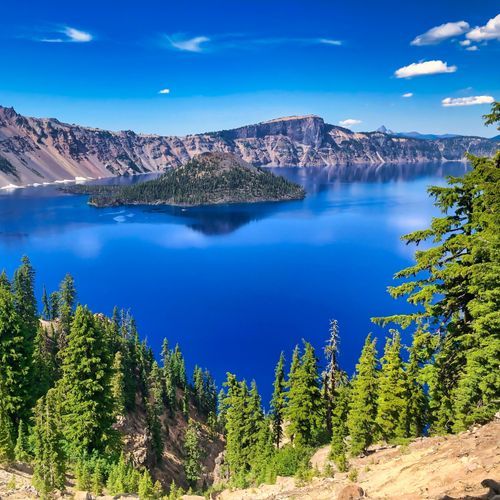
4. Crater Lake National Park
Oregon
Roughly 7,700 years ago, Mount Mazama collapsed and left a caldera that rain and snow filled into the deepest lake in the United States, 1,949 feet at its deepest. Rim Drive, Sinnott Memorial Overlook and the Watchman Lookout look down on the blue water and the cinder cone of Wizard Island. Only one route reaches the water: the Cleetwood Cove Trail. The rest of the inner caldera walls are closed to entry because the slopes are steep and unstable.
5. Haleakalā National Park
Hawaii
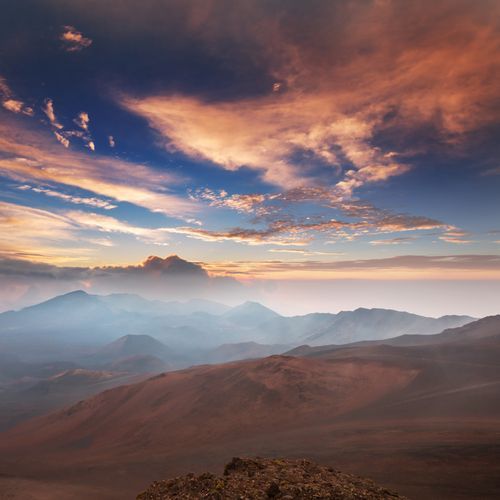
A long, winding road, State Road 378, climbs this dormant shield volcano to a visitor center at 9,740 feet and a summit lot beyond it. From rim lookouts you peer into a crater nearly seven miles across and 2,600 feet deep, its floor scattered with cinder cones, ash and lava. Many people time the drive for sunrise. Plan supplies ahead, since the summit observatory has no facilities. The park also reaches down to the coast at Kīpahulu.
6. Yellowstone National Park
Idaho, Montana, Wyoming
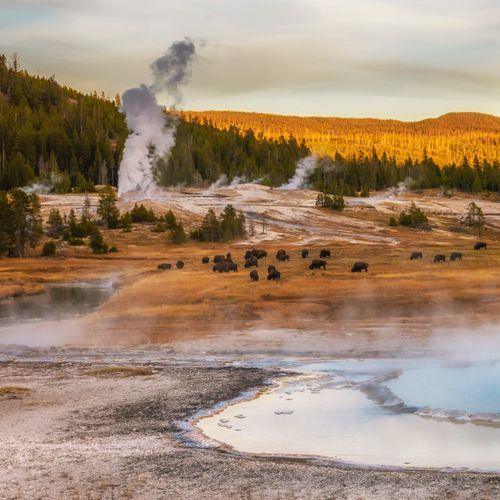
Beneath most of this park lies a supervolcano, and its heat powers more than 300 geysers, Old Faithful among them, along with hot springs, mudpots and fumaroles. Part of the collapsed caldera now holds the basin of Yellowstone Lake, and the caldera rim can be seen on the horizon south of the water. Near Tower Fall, columns of basalt record lava that poured out before the giant eruptions, while the Mud Geyser area bubbles and steams.
7. Mount Rainier National Park
Washington
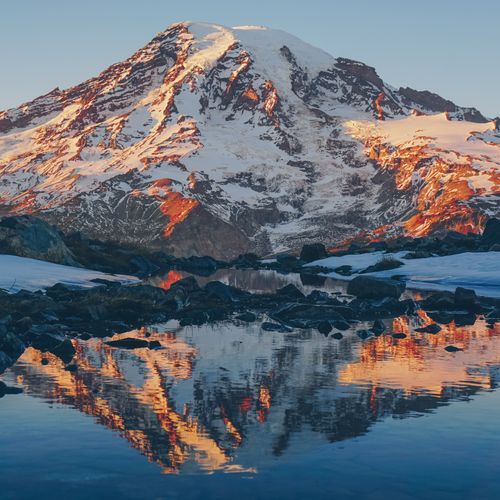
Rising to 14,410 feet, this active stratovolcano carries more glacial ice than any other peak in the lower 48 states. Wildflower meadows circle its slopes, and steam vents near the top show it is still alive. A summit climb gains over 9,000 feet across more than ten miles and requires serious preparation. Debris flows and glacial outburst floods can strike with little warning, so learn the warning signs, and take care at river crossings on the Wonderland Trail.
8. Lake Clark National Park & Preserve
Alaska
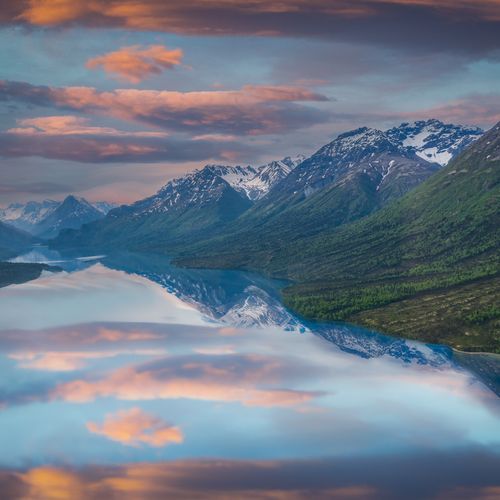
Two glacier-covered stratovolcanoes rise above the Chigmit Mountains here: Redoubt at 10,197 feet and Iliamna at 10,016 feet. Most visitors see them from a small plane, a view that takes in Redoubt's summit crater and the Drift Glacier spilling through a gap in its rim. Flights also pass over glacier-carved valleys and Lake Clark itself. Along the Cook Inlet coast, brown bears feed on clams and sedges early in summer.
Best parks by month
Best parks by theme
- Big Trees
- Tide Pooling
- Epic Hikes
- Geologic Wonders
- Human History
- Wildlife Watching
- Birding
- Dark Skies
- Waterfalls
- Geysers & Hot Springs
- Caves
- Glaciers
- Sand Dunes
- Canyons
- Mountain Majesty
- Desert Landscapes
- Beaches
- Snorkeling & Diving
- Paddling
- Scenic Drives
- Fall Color
- Wildflowers
- Winter Adventures
- Wild & Remote
- Great with Kids
- Fossils