
Best National Parks for Geology
Every park on this list earns its place through rock you can stand in front of and read: layers stacked over hundreds of millions of years, arches and hoodoos shaped by water and buried salt, granite domes, young lava and caves dissolved by acid. Utah supplies several, from Arches to Capitol Reef, while Hawaiʻi Volcanoes and Carlsbad Caverns show very different processes at work. Roads, trails and facilities change, so check current conditions before you go.
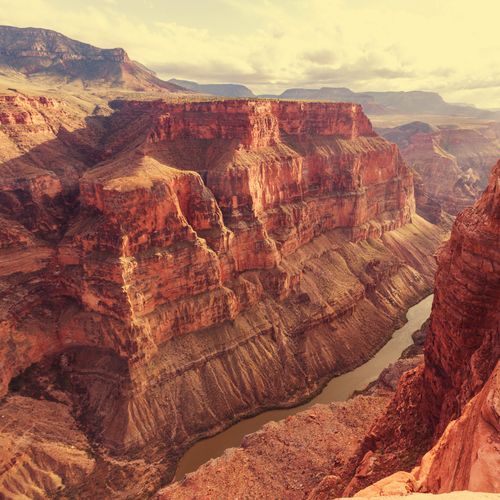
1. Grand Canyon National Park
Arizona
Hiking from the rim down to the Colorado River takes you past rock spanning almost two billion years, from stone about 1.8 billion years old at the bottom to a 270-million-year-old layer on top. Along the rim, the Trail of Time starts at the Yavapai Geology Museum and heads toward Grand Canyon Village, each step standing for a million years. At remote Tuweep, lava from Vulcan's Throne and other vents once poured over the rim and dammed the river.
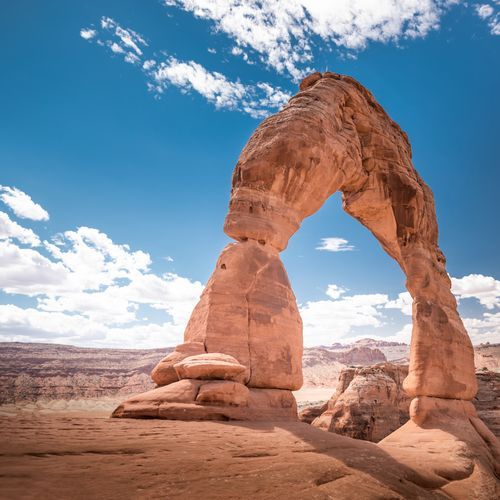
2. Arches National Park
Utah
More than 2,000 cataloged arches crowd a fairly small area, joined by spires, fins and balanced rocks. A salt bed thousands of feet thick lies underneath and drove their formation, shifting the Entrada Sandstone into tall fins that weather into openings. Landscape Arch spans 306 feet yet is only about 11 feet thick at its center, reached by a flat, hard-packed trail that suits families. Look also for rain-filled potholes and cryptobiotic soil, a living ground cover.
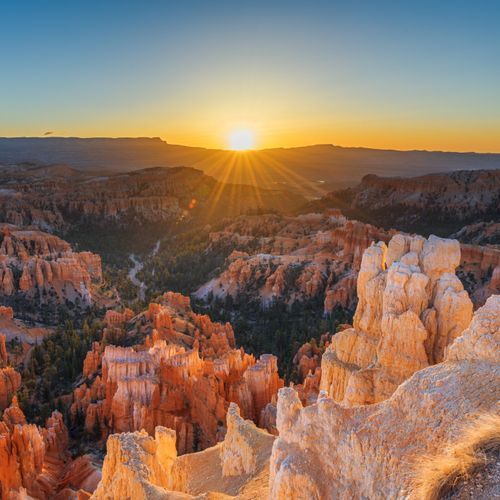
3. Bryce Canyon National Park
Utah
No place on Earth holds more hoodoos than this plateau, perched on the highest step of the Grand Staircase. The rock began as sediment washed into a low basin about 50 million years ago, and uplift later raised it to an elevation where erosion carves pillars and spires. The park is small and easy to cover: walk the rim for views over hundreds of formations, then take a trail down among them. Dark skies reward staying after sunset.
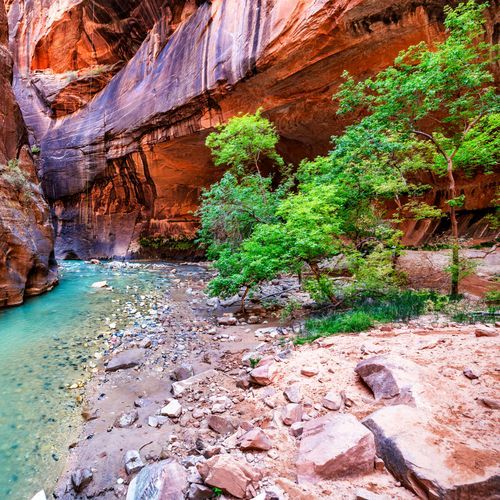
4. Zion National Park
Utah
Here visitors stand on the canyon floor and look up at sandstone walls that rise 2,000 to 3,000 feet in places, carved by the Virgin River's North Fork. Riverside Walk leads to the Narrows, where the route follows the river itself. At Weeping Rock, water seeps straight out of the cliff and feeds hanging plants. The Three Patriarchs are Navajo Sandstone, one of nine exposed formations in the Grand Staircase sequence covering about 150 million years.
5. Yellowstone National Park
Idaho, Montana, Wyoming
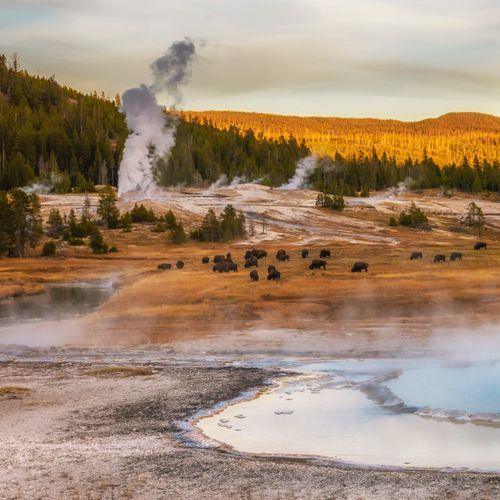
The park records a long volcanic history in stone. At Mammoth Hot Springs, flowing hot water has built tiers of white and orange terraces down a hillside. North of Tower Fall, a cooling basalt flow cracked into hexagonal columns, and more line Sheepeater Cliff beside the Gardner River, on the stretch from Mammoth toward Norris. Specimen Ridge holds trees buried by eruptions 45 to 50 million years ago. Obsidian Cliff was quarried for tools over 11,000 years ago.
6. Yosemite National Park
California
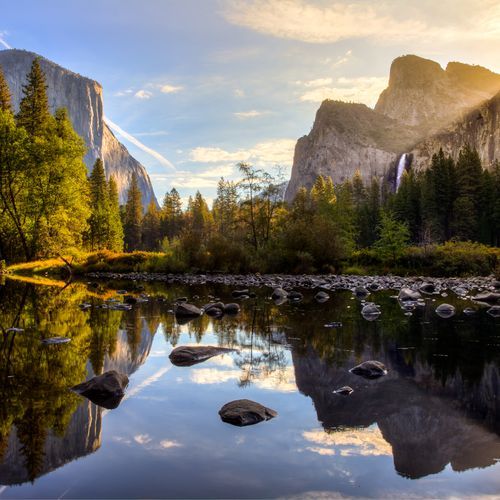
Nearly every landform in the park is cut from granite that cooled deep underground. In Yosemite Valley, El Capitan anchors the west end and Half Dome the east, with Cathedral Rocks, Sentinel Rock, the Three Brothers and North Dome in between. Bridalveil Fall drops from a glacier-carved, U-shaped trough, and granite peeling away in sheets rounded the domes. Climbers come for the cliffs, and the eastern edge near Mount Dana shows older metamorphic rock.
7. Death Valley National Park
California, Nevada
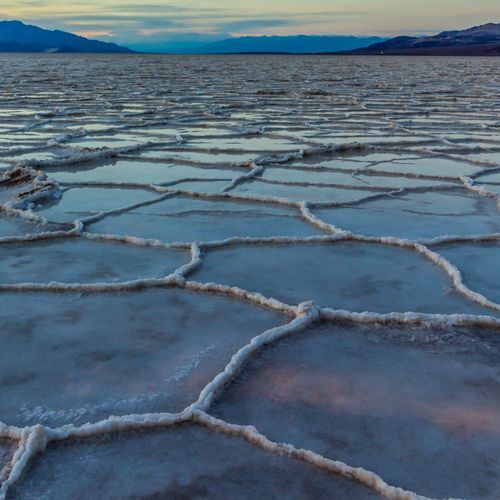
At Badwater Basin, a boardwalk and a trail lead onto salt flats sitting 282 feet under sea level, lower than anywhere else on the continent, where a temporary lake can form after heavy rain. Along Artists Drive, minerals have stained the rock many colors, and a short scramble gets you close. Dantes View looks down across the valley, and the Black Mountains expose metamorphic rock 1.8 billion years old. Faulting, wind and water are still reshaping the land.
8. Canyonlands National Park
Utah
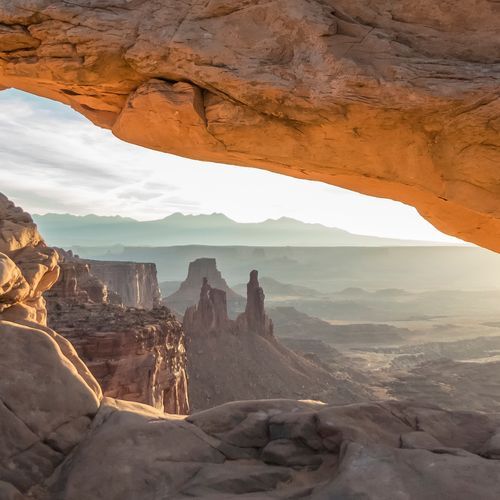
The Green and Colorado rivers meet here and divide the park into three districts. Island in the Sky, a level mesa and home to Mesa Arch, overlooks the White Rim bench 1,200 feet below and the rivers 1,000 feet lower still. The Needles takes its name from banded Cedar Mesa Sandstone spires, seen well from Chesler Park. Upheaval Dome is most likely the eroded remains of an impact crater. The Maze requires four-wheel drive, and river trips need a permit.
9. Badlands National Park
South Dakota
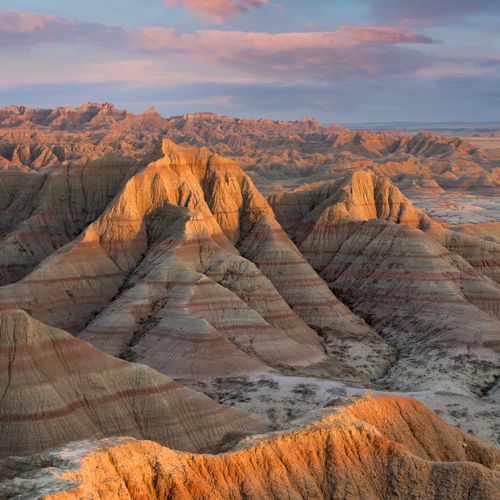
Streams carved soft layers here into buttes, pinnacles and spires, and the ground still wears away about an inch a year. Yellow Mounds Overlook is the most colorful stop, where fossil soils have weathered to yellow beneath a red cap. After rain, red bands of ancient soil stand out against the buff buttes. Gray-black Pierre shale holds remains of a shallow sea, including the coiled-shell cephalopod Baculites, and petrified wood lies exposed across the landscape.
10. Capitol Reef National Park
Utah
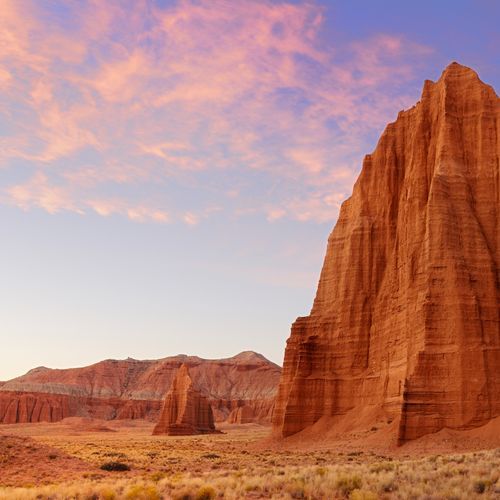
A 100-mile fold in the crust defines this park: rock on the west side of the Waterpocket Fold sits more than 7,000 feet higher than on the east. Erosion of the tilted layers has opened canyons, arches and white Navajo sandstone domes. In Grand Wash, a route climbs toward Cassidy Arch on the north wall. Cathedral Valley adds tapering monoliths, volcanic dikes and black basalt boulders, and the backcountry drive around the fold reaches Surprise and Headquarters canyons.
11. Petrified Forest National Park
Arizona
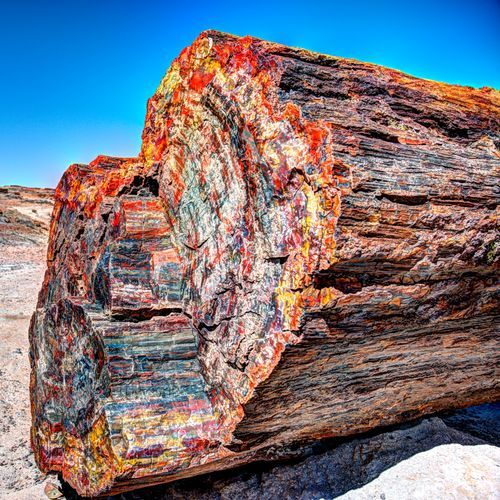
Logs from the Late Triassic, around 225 million years old, turned to quartz here as silica from volcanic ash replaced the wood and iron oxide tinted it. Driving the 28 miles from one end to the other takes about an hour. The south end holds the densest petrified wood, with Rainbow Forest Museum and the colorful logs of Jasper Forest. Blue Mesa Trail winds through eroded hills, and the north end overlooks the Painted Desert, favored at sunrise and sunset.
12. Joshua Tree National Park
California
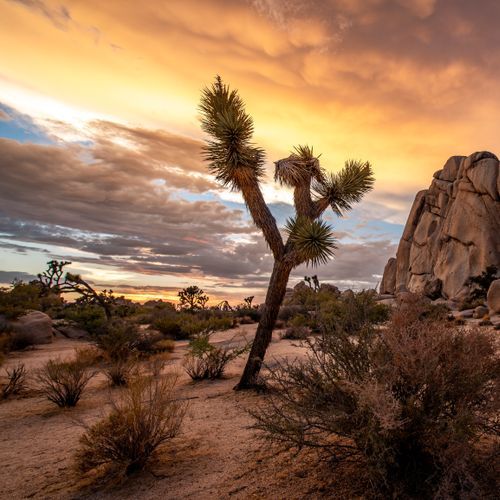
Piled boulders are the draw: monzogranite that cracked as it cooled underground before groundwater and erosion rounded the blocks. Skull Rock sits beside Park Boulevard, with scrambling on neighboring piles and a 1.7-mile loop to Jumbo Rocks Campground. The Wonderland of Rocks is built of the same granite, and the San Andreas Fault can be seen from several overlooks. Climbers must stay 50 feet from rock art, which is easily damaged.
13. Hawaiʻi Volcanoes National Park
Hawaii
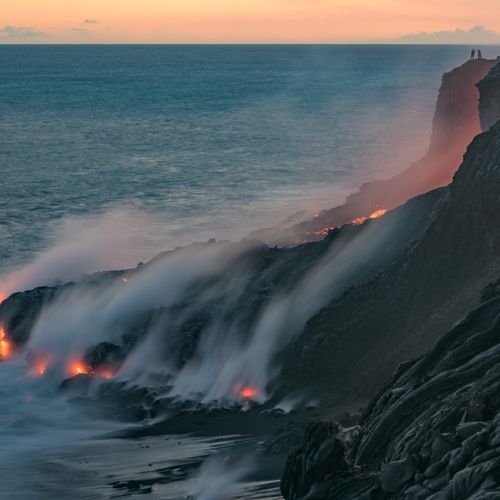
Lava here is young and still changing the land. Along Chain of Craters Road, pullouts look over broad flow fields and the remains of a lava channel. Where the road ends, a walk of about 1,000 feet reaches Hōlei Sea Arch, roughly 90 feet tall and cut into a flow about 550 years old. The cliffs are unstable, so stay in the viewing area. Calderas, pit craters, lava tubes, steaming vents, smooth pāhoehoe and jagged ʻaʻā appear across the park.
14. Carlsbad Caverns National Park
New Mexico
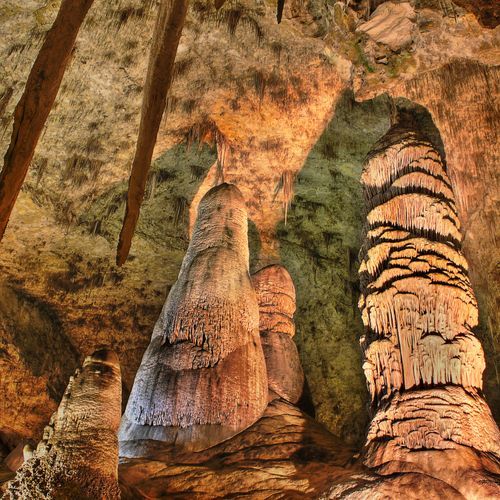
Instead of water alone, sulfuric acid hollowed these caves: hydrogen sulfide rising from oil fields below mixed with oxygen and dissolved limestone laid down as a reef some 250 million years ago. Gypsum in the cave records that process. Inside Carlsbad Cavern, the Big Room and the Hall of Giants hold stalactites, stalagmites, draperies and soda straws. Above ground, uplift raised the old reef into high sea ledges. Lechuguilla Cave is generally not open to visitors.
Best parks by month
Best parks by theme
- Big Trees
- Tide Pooling
- Epic Hikes
- Human History
- Wildlife Watching
- Birding
- Dark Skies
- Waterfalls
- Volcanic Landscapes
- Geysers & Hot Springs
- Caves
- Glaciers
- Sand Dunes
- Canyons
- Mountain Majesty
- Desert Landscapes
- Beaches
- Snorkeling & Diving
- Paddling
- Scenic Drives
- Fall Color
- Wildflowers
- Winter Adventures
- Wild & Remote
- Great with Kids
- Fossils